



If you had mapped the Middle East’s technology sector twenty years ago and compared it to what exists today, the distance between the two would be difficult to explain without the word transformation. Telecommunications networks that once carried voice calls now carry biometric data, digital identities, and real-time payment instructions across infrastructure that took years and enormous capital to build. None of that happened on its own, and none of it was inevitable. It happened because professionals who understood both the technology and the market showed up consistently and helped clients navigate decisions that had no established playbook.
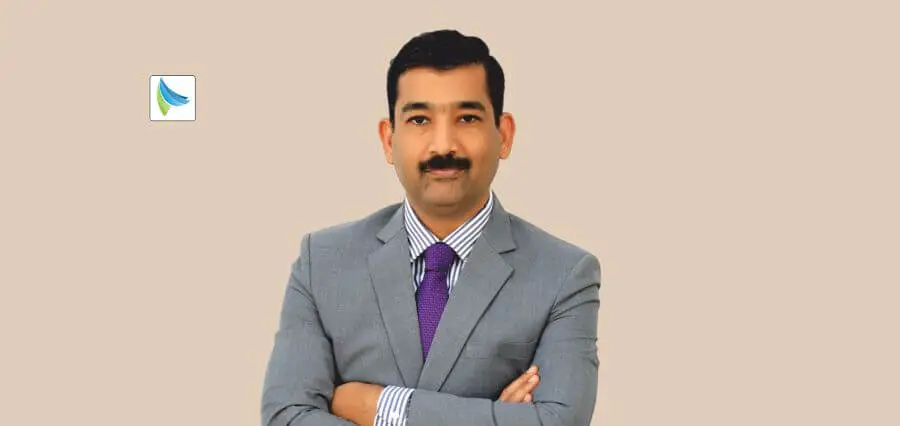
Youssef Houry is one of those professionals. His more than two decades of experience across telecommunications, digital security, smart card technologies, and digital transformation have not followed a tidy arc from one role to the next. They have followed the logic of a career built at the intersection of technical understanding and strategic relationship development, where each new challenge required bringing both to bear simultaneously. At VALID Middle East, the Dubai-based subsidiary of a group founded in 1957 with a global footprint across identity, payments, and digital security, he leads commercial strategy from exactly that intersection.
He mentions, “Sustainable growth comes from understanding customer challenges, delivering measurable value, and building long-term trust. This philosophy continues to shape my leadership approach today.”
From Engineering Foundation to Commercial Vision
The engineering foundation that anchored Youssef’s early career was not incidental to his later commercial success. It was its precondition. Understanding technology at the level of how it actually works, rather than simply how it can be positioned in a sales narrative, gave him something that pure commercial professionals rarely possess: the credibility to engage meaningfully with technical stakeholders at the highest levels of client organizations.
Over time, as he transitioned into business development and sales leadership roles across the Middle East, that technical foundation became the trust currency of every executive relationship he built. C-level conversations in telecommunications and digital security are not won through polished presentations alone. They are won through the demonstrated ability to understand a client’s operational reality at sufficient depth that the proposed solution feels genuinely tailored rather than generically applied.
What he discovered through that evolution was a conviction that would become central to everything he subsequently built: that the word sales undersell the actual nature of the work. He prefers the term commercial role, and the distinction is precise rather than merely semantic. A sales role closes transactions. A commercial role creates the conditions within which the right solutions reach the right clients at the right moment, producing outcomes that justify ongoing partnership rather than simply completing a single engagement.
He asserts, “Sales is much more than revenue generation. It is about understanding market dynamics, identifying opportunities, and creating value for customers and stakeholders.”
The Milestone That Demonstrated What Was Possible
Among the most significant chapters of Youssef’s career was the successful expansion of business operations across multiple Middle Eastern markets and the establishment of strategic partnerships with some of the region’s most prominent telecommunications groups. The achievement demanded navigating complex and frequently shifting market dynamics, building senior executive relationships across cultures and organizations with very different internal priorities, and leading high-performing teams operating simultaneously across different countries with different regulatory environments and different competitive landscapes.
What makes this milestone most instructive is not the scale of what was accomplished but the approach that made it possible. Success in that kind of expansion is rarely a matter of superior product specifications or pricing advantage alone. It is almost always a function of relationship depth, of having invested consistently and authentically in understanding what matters most to the people on the other side of the table and of being trusted enough that they bring you into conversations before the formal procurement process has begun.
Equally significant was his contribution to the broader evolution of the sector: supporting the transition from traditional telecom and identity solutions toward digital transformation initiatives involving digital onboarding, biometric authentication, eSIM platforms, and comprehensive secure digital services. Being part of that transition and helping clients navigate it rather than simply supplying components of it, reinforced his understanding of the strategic dimension of commercial leadership.
He highlights, “These experiences reinforced the importance of innovation and strategic thinking in driving long-term business success across complex and competitive markets.”
Digital Transformation and the New Commercial Reality
Digital transformation has changed the operating environment for commercial leadership in ways that are both enabling and demanding in equal measure. The enabling dimension is real and significant: data analytics, automation, artificial intelligence, and digital engagement platforms have given sales organizations unprecedented visibility into customer behavior, market dynamics, and the performance of their own commercial activities. Decisions that once relied on accumulated intuition can now be informed by real-time data. Customer engagement can be personalized on a scale that was operationally impossible a decade ago.
The demanding dimension is equally real. Digital transformation has raised customer expectations in ways that show no sign of reversing. Organizations that can deliver seamless, intelligent, and genuinely valuable digital experiences set the benchmark for everyone operating in the same space. Those that cannot find themselves competing on price in markets where differentiation on price is neither sustainable nor strategically satisfying.
For Youssef, navigating this reality requires maintaining a discipline that digital abundance can paradoxically undermine: the discipline of strategic focus. Not every technology trend represents a genuine opportunity worth pursuing. Not every innovation aligns with business objectives in ways that create sustainable value for both the organization and its clients. The leaders who make the most effective decisions in this environment are those who can distinguish between genuine strategic opportunities and attractive noise.
He states, “Innovation should always serve a clear business purpose and deliver tangible value to customers. Strategic discipline is essential. Not every innovation aligns with business objectives.”
Leadership That Creates the Conditions for Excellence
Youssef’s philosophy of leadership is built on a premise that he applies consistently across every team he has led: that the leader’s primary job is not to direct but to enable. High-performing teams are not created through command. They are built through the establishment of a culture where trust is genuine, direction is clear, individual contribution is genuinely recognized, and continuous development is treated as an operational priority rather than an HR aspiration.
Coaching sits at the center of this approach. Sales professionals, like all professionals operating in high-pressure environments with complex and constantly evolving challenges, perform at their best when they are continuously developing. Not simply improving their technical knowledge but deepening their understanding of the markets they operate in, the clients they serve, and their own strengths and development areas. Leaders who invest authentically in that development create a different quality of team commitment than those who treat people primarily as delivery mechanisms for commercial targets.
The qualities he identifies as most essential in effective sales leadership are integrity, accountability, empathy, and resilience. None of these is a personality trait to be selected for hiring alone. All of them are leadership practices to be modelled consistently, especially in the moments of difficulty and uncertainty that define whether a team’s culture is genuine or performative.
He reflects, “High-performing teams are created when leaders establish a culture of trust, provide clear direction, and recognize individual contributions.”
Navigating the Challenges That Define the Era
The challenges facing commercial leaders in the current environment are real and not easily resolved. Managing sustained uncertainty in a business environment shaped by rapid technological change, shifting customer expectations, economic volatility, and intensifying competition requires a level of organizational agility that most companies are still in the process of developing.
For Youssef, the most effective response to these challenges is simultaneously simple to articulate and demanding to execute: stay relentlessly customer-focused, invest continuously in talent, embrace data-driven decision-making as a genuine operational discipline rather than a technology project, and build the organizational adaptability that allows change to be responded to rather than simply endured.
The organizations that will define the next decade of commercial leadership in the Middle East’s digital economy are those that understand agility not as a capability to be added when conditions demand it but as a structural characteristic to be built before it is needed.
He envisions, “Organizations that foster innovation and adaptability are better positioned to respond to change and maintain a competitive advantage.”
Advice for the Generation Building What Comes Next
To emerging commercial professionals and business executives, Youssef’s counsel is grounded in the full arc of a career built across technologies, markets, and cultures that have each required continuous reinvention.
Stay curious, because the pace of change in technology and in customer expectations means that yesterday’s expertise is a diminishing asset without continuous renewal. Embrace challenges that push beyond comfort, because the most significant professional growth almost always happens in the territory that feels most uncertain. And focus on creating genuine value rather than pursuing short-term metrics, because careers built on value creation compound in ways that careers built on transaction volume rarely do.
The combination of strategic thinking, strong ethics, genuine relationship investment, and authentic passion for innovation is not simply a formula for professional success. It is a description of the kind of commercial leader that organizations genuinely need, and that clients genuinely trust, in a market environment that has never been more demanding or fuller of possibility.
He reminds, “Those who combine strategic thinking, strong ethics, and a passion for innovation will be well positioned to build meaningful and lasting careers.”
Youssef Houry has spent more than two decades proving that the most powerful commercial advantage available to any professional is not a product advantage or a pricing advantage. It is the trust of clients who know that when you bring them a solution, you have genuinely understood their problem first.