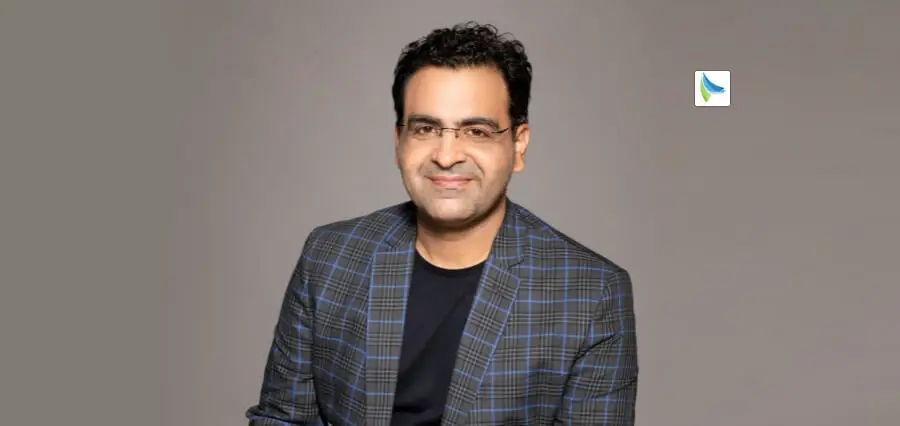





Prior to the emergence of terms such as artificial intelligence, cloud computing, and cybersecurity, Damian Michael realized the importance of technology in creating trust. At the very beginning of his career, he worked as a field technician where he witnessed how the lack of proper infrastructure had impacted both businesses and public institutions. Instead of seeing this problem as a part of normal business in the industry, he realized that there was an opportunity to do something different.
This vision resulted in the creation of Innovo Networks, which is an organization that provides ICT solutions that are integrated and reliable. Now, as the Managing Director, Damian ensures that this approach to business is sustained through his belief in governance and innovation. What Damian’s journey has been about is more than business success; it has been about making business value from everyday challenges.
Discover how Damian Michael is redefining ICT leadership by proving that lasting innovation begins with trust, governance, and purpose.
From Field Technician to Founder
Michael’s path into technology leadership began with a simple observation. Early in his career, keeping mission-critical systems running across Cape Town, he watched how fragmented, unreliable ICT held businesses and public institutions back. He noticed a gap between what organizations were sold and what they needed, and that gap became the catalyst for Innovo Networks.
He built the company as an operator owning connectivity, voice, and security end-to-end, backed by partnerships with Vodacom, Liquid Telecoms, and other major providers. Measurable impact motivates him most, whether helping a municipality serve citizens better or a business operate more securely. “Today, I see AI adoption outpacing governance, and wants Innovo Networks to prove organizations can harness AI without sacrificing the discipline that earns lasting trust,” he says.
Innovation Anchored in Reliability
That discipline shapes how Michael balances innovation against sustainability. He tests every idea against one question: Does it create measurable value, or is it just interesting? He treats innovation for its own sake as a distraction, building around customer needs rather than chasing trends. The company’s Video PBX platform illustrates this. Running on Huawei Cloud infrastructure for roughly eight years, it has maintained a measured 99.99 percent uptime while serving more than a thousand users since 2013, a record that gives Innovo Networks license to introduce new capabilities without gambling on the basics. AI-driven automation, when layered into a client’s environment, sits atop that foundation rather than replacing it. Continuous engagement has shaped sector bundles such as Bonded Internet, Finance, and Health Shield, built to solve real operational problems, not sell isolated tools.
A Milestone Measured in Decimals
Asked about his career’s most transformative milestone, Michael points to the quiet accumulation of trust rather than a single dramatic event. Building Innovo Networks into a strategic partner across financial services, healthcare, and the public sector, anchored by that eight-year uptime run, taught him that credibility is earned in decimals rather than press releases.
A harder lesson arrived through a contractual dispute, when a client’s own conduct effectively constituted acceptance of delivered goods, yet Innovo Networks absorbed the loss, proof that goodwill cannot substitute for airtight commercial terms and clearly defined agreements. The journey taught him that entrepreneurship is not about having every answer, but about assembling the right team and recognizing that people remain the true foundation of an organization.
Betting on AI, Built on Governance
Asked which trend shape business over the next five years will most, Michael answers without hesitation: artificial intelligence, though never as a standalone capability. Its impact depends on the foundation beneath it: cloud computing for scale, cybersecurity to protect data, and governance to keep AI accountable.
Innovo Networks built its own AI governance framework, aligned with the IBM AI Risk Atlas and covering drift monitoring, hallucination controls, prompt injection defenses, and POPIA compliance, before allowing agentic tools near client workflows. Michael believes the businesses that thrive ahead will combine human expertise with AI-driven insight responsibly enough to prove their systems remain accountable and safe by design.
Leading Through Trust and Accountability
Michael’s leadership philosophy rests on trust, accountability, and continuous improvement. He believes people perform best when empowered to own their responsibilities, and that innovation often comes from whoever sits closest to the problem, not the top of an organization chart.
Accountability converts trust into performance: every proposal carries agile sprint backlogs, risk registers, and RACI matrices, because a responsibility not written down is not truly real. That discipline enables collaboration over territorial behavior, since everyone knows where their piece of a project ends and a colleague’s begins. Strong cultures, he insists, are built on people trusting the system enough to take risks.
The Test That Reshaped His Approach
The most significant test of Michael’s resilience was commercial rather than technical. Innovo Networks found itself formally pursuing a Letter of Demand after a client’s own asset-handling conduct had legally constituted acceptance of delivered stock yet left the company absorbing the loss.
Being contractually correct still meant a difficult process, forcing him to confront how heavily he had relied on goodwill over a watertight process. That experience taught him to combine data-driven decisions with strategic intuition, since leaders cannot wait for perfect information. Every engagement carries defined commercial terms upfront, whether a 36-month opex arrangement or a 12-month capex model.
Innovation Tied to Client Outcomes
Michael keeps innovation tethered to client value by leading with business outcomes rather than technology, understanding strategic objectives before recommending any solution. FinanceIQ for financial services firms and HealthShield for healthcare practices consolidate what each sector genuinely needs under one accountable relationship. FinanceIQ pairs connectivity, cybersecurity, and managed ICT support with Innovo’s own AI governance layer, GovernAI, so clients purchase assurance as much as infrastructure. Long-term relationships depend on trust, with clients wanting a partner who anticipates needs and offers honest guidance, reflected in Innovo’s partnerships with Vodacom and Liquid Telecoms.
Rethinking Digital Transformation
If Michael could correct one misconception about digital transformation, it is the assumption that it is primarily a technology project, where buying the right tools automatically produces improvement. He sees it as a business transformation initiative in which technology serves only as the enabler. Many organizations are already drowning in point solutions, a firewall from one vendor, backup from another, a bolted-on AI chatbot from a third, with no single party accountable for how they interact or fail.
That fragmentation is why Innovo Networks has moved toward unified platforms consolidating email security, backup, firewalls, and EDR/MDR capabilities under one operating model. Switching on an AI tool, he stresses, is not transformation without a governance layer monitoring drift, hallucination, and POPIA obligations.
Defining Success Beyond the Balance Sheet
Beyond financial growth, Michael defines success through impact, relationships, and legacy, measured partly by what never happens: the outage that never takes down a hospital’s systems, the breach that never reaches a municipality’s citizen data, the AI deployment that never drifts into an answer nobody can explain.
He measures fulfillment by opportunities created for his people, and by leaving customers, employees, and communities better off than he found them. Integrity, accountability, innovation, and service have guided his journey: integrity builds trust, accountability drives performance, innovation creates opportunity, and service keeps the work meaningful. “Financial growth has followed from getting priorities right, but was never the starting point,” he notes
A Vision for Governance by Default
Looking ahead, Michael’s vision centers on helping South African organizations, from mid-market firms to public sector operators, adopt AI with the same confidence they place in electricity or connectivity, because its governance is treated as standard, not an afterthought.
Innovo Networks has already extended its AI governance framework beyond its own operations for a public-sector client, and he hopes governance-by-default thinking becomes as unremarkable as firewalls are today. He hopes to leave a legacy showing that infrastructure discipline and AI ambition are not in tension and wants the next generation of leaders to measure success not by revenue alone, but by lasting value created for people and society.
Advice for the Next Generation
Michael remains energized by the convergence of artificial intelligence, communications, cybersecurity, and cloud technologies, a moment he believes lets businesses become more adaptive and intelligent than ever. His advice to fellow leaders is straightforward: stay curious, invest in people, and never lose sight of the customer. South Africa’s ICT sector does not lack ambition, he argues, but operators are willing to combine deep infrastructure discipline with next-generation AI governance within the same offering. For Damian Michael, organizations that prioritize trust and meaningful value creation will always remain relevant, a conviction that continues to shape every decision at Innovo Networks.