

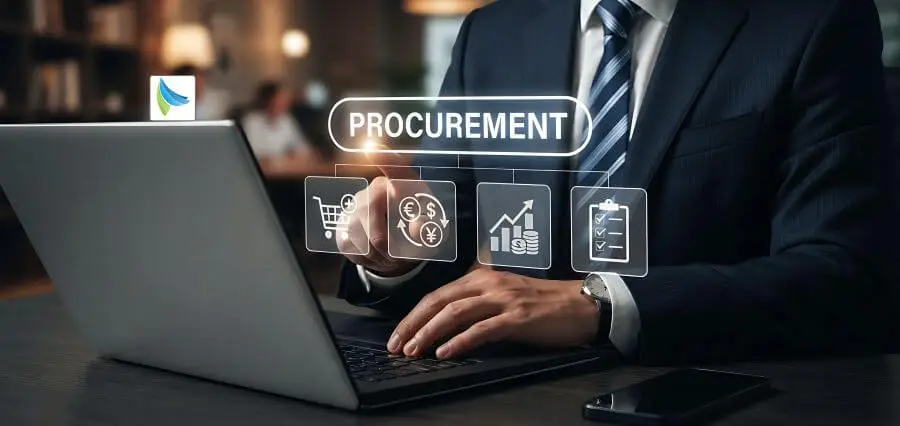
Enabling Smarter Procurement
Purchasing is one of the oldest functions in business. Every organization that needs materials, services, or goods to operate has always needed a way to source and acquire them efficiently and at the right cost. For most of business history, this process relied on personal relationships, paper-based systems, and a great deal of manual effort. The fundamentals of what procurement needs to achieve have not changed. What has changed dramatically is how those fundamentals are delivered. Digital procurement solutions are reshaping how businesses buy, how they manage supplier relationships and how procurement contributes to the broader strategic goals of the organizations it serves.
From Paperwork to Platforms
Not long ago, procurement meant purchase orders printed and signed, invoices processed by hand, supplier contracts filed in physical folders, and approval processes that moved at the speed of whoever was available to sign off on them. The inefficiency built into these processes was accepted as the cost of doing things properly.
Digital tools have made that acceptance unnecessary. Procurement platforms now handle the sourcing, ordering, approval and payment processes that once consumed significant administrative time, doing it faster, with fewer errors, and with a level of transparency that paper-based systems could never provide. Digital procurement solutions have turned what was once a largely administrative function into something far more strategic and far more capable of adding real value to the organizations using them.
Visibility Across the Entire Purchasing Process
One of the most significant shifts that digital procurement has produced is the improvement in visibility. In a manual procurement environment, getting a clear picture of what was being spent, with which suppliers, on what categories and under what terms was a time-consuming exercise that often produced incomplete or outdated information by the time it reached the people who needed it.
Digital procurement solutions provide this visibility in real time. Decision-makers can see exactly where money is being spent, identify patterns that were previously invisible and make purchasing decisions informed by accurate and current data. This level of insight changes the nature of procurement from a transactional function into a genuine source of business intelligence that informs strategy at the organizational level.
Strengthening Supplier Relationships Through Technology
Procurement is fundamentally a relationship function. The quality of a business’s supplier relationships determines the reliability of its supply, the terms it is able to negotiate and its ability to respond effectively when disruptions occur. Technology does not replace the human dimension of these relationships, but it significantly improves the environment in which they operate.
Digital procurement solutions create shared platforms where buyers and suppliers can communicate clearly, track orders and deliveries in real time, manage contracts transparently and resolve issues quickly. When both parties are working from the same information and can see the same view of their shared activity, misunderstandings reduce, disputes resolve faster and the relationship becomes more productive for both sides. Stronger supplier relationships built on better information and cleaner processes are one of the most tangible benefits of digital procurement adoption.
Managing Risk More Effectively
Every supply chain carries risk. Suppliers can fail, prices can shift unexpectedly, quality can vary and geopolitical events can disrupt the flow of goods and services in ways that were not anticipated. Managing these risks effectively has always been a core procurement responsibility, but the tools available for doing so have historically been limited.
Digital procurement solutions offer procurement professionals much more effective mechanisms for risk identification and mitigation. Metrics such as supplier performance, supplier financial stability, and market intelligence may all be tracked and analyzed using digital solutions in ways which make it possible to mitigate risks before they ever materialize. Those companies who have invested in developing digital procurement competencies will be more resilient when faced with disruption due to their understanding of potential weaknesses.
Connecting Procurement to Broader Business Strategy
Procurement has often been treated as a back-office function, important but not central to strategic conversation. Digital tools are changing this perception by demonstrating how much strategic value a well-run procurement function can deliver. Cost management, risk mitigation, supplier innovation and sustainability all run through procurement, and digital platforms make the contribution of procurement to these strategic areas visible in ways that were difficult to demonstrate before.
Digital procurement solutions help procurement leaders make the case for the function’s strategic importance by providing the data and the analytics needed to connect purchasing decisions to business outcomes.
In Summary
The evolution of business purchasing through digital tools is still ongoing. Digital procurement solutions have already transformed what procurement is capable of delivering, but the full potential of the technology is still being realized across organizations of different sizes and sectors. The businesses that invest seriously in their digital procurement capability now are positioning themselves for a future in which procurement is recognized not as an administrative necessity but as a genuine driver of organizational performance and competitive strength.