



Every few years, a few individuals manage to see where an industry is heading before everyone else does. They don’t wait for proof that an idea will work. They build early, learn as they go, and stay patient while the rest of the market catches up.
This kind of thinking matters most in fields like media and technology, where things change fast. What people want from apps, content and platforms today can look completely different in just a few years. Businesses that succeed here are usually the ones that spotted the shift early and were ready for it, not the ones that reacted after it happened.
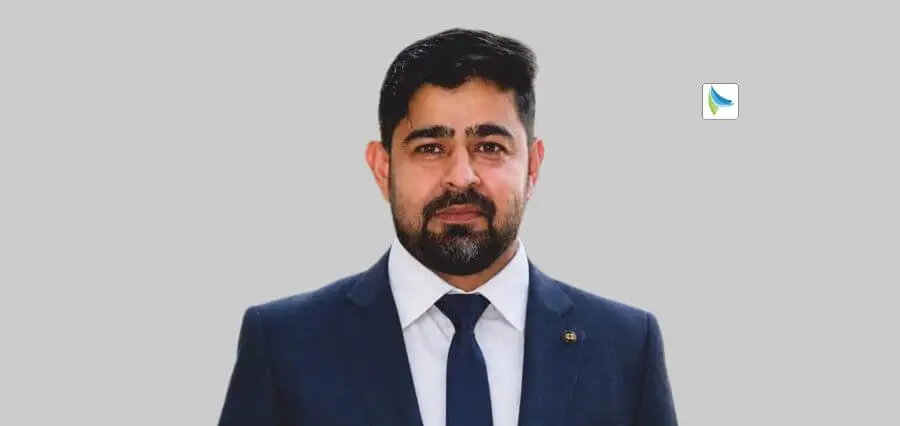
Shabir Momin, Managing Director & CTO of NewMedia Holding Pte Ltd, has built his career around this kind of early thinking. Over the years, he has worked across mobile streaming, digital content, artificial intelligence and blockchain, often stepping into these areas long before they became popular.
What makes his journey worth following is not just the range of industries he has touched, but how he approaches timing, risk and people. He has learned to spot patterns others miss, take chances before the market is ready, and build teams that trust him even when the path ahead is unclear. As technology and media continue to move closer together, his way of thinking offers a useful window into how real innovation actually happens.
Let’s explore how Shabir’s early vision, entrepreneurial mindset, and approach to innovation have shaped his journey in technology and media!
A Curiosity That Started Early
Shabir’s technology journey began not simply with a career decision, but with a natural inclination toward technology and a deep desire to understand how things worked.
“I believe it is how I am wired, more inclined to tech,” he explains. His deep interest in technology made him start early, driven by curiosity and the desire to know how things worked and what could be changed to make something more efficient or work differently.
That curiosity quickly translated into an intense learning process. He recalls that he used to work and learn almost 16–18 hours a day, allowing him to gather a great deal of experience in a relatively short period.
There was also another factor that shaped those early years. Everyone around him was older than him, which made him “shameless in asking for help,” learning from others and being forgiven for making mistakes.
That environment helped build an entrepreneurial mindset grounded in learning rather than hesitation. Asking questions, understanding from others, experimenting, and learning from mistakes became part of how he approached technology and business.
Understanding That Change Is the Only Consistency
Building businesses at the intersection of technology and media has meant operating in industries where consumer behaviour can change quickly. From mobile streaming with ZengaTV to digital content and creator platforms, Shabir has experienced this evolution firsthand.
For him, there is one principle that remains constant
“The only consistency is change and evolution; consumer expectations and behaviour are constantly changing,” he notes.
The opportunity, therefore, lies in understanding what people need and creating solutions that make their lives easier while offering greater value.
Being able to build something that makes life easier for consumers and gives them more for less is what he sees as evergreen. But achieving this consistently is not easy, and getting it right all the time is even tougher.
That reality has shaped his approach to entrepreneurship. Success does not come from assuming that every idea will work. It comes from continuing to attempt, learn, adapt, and try again.
For Shabir, the important thing is simple: “Keep trying is important.”
Seeing Opportunity Beyond the Obvious
Identifying whether an emerging technology can become a meaningful business opportunity is rarely based on one signal. Shabir believes many variables play a part, and even strong gut feelings do not guarantee success.
No matter how much an entrepreneur wants to be right about a gut feeling, only a few ideas ultimately hit the jackpot. Others may not become transformational successes but can still provide returns.
At the same time, he points to another category of opportunity: long-cycle, infrastructure-level technologies that have a very high probability of succeeding. This creates the need for balance in how time and money are invested.
A balanced investment across both possibilities is therefore important, exploring emerging opportunities while also committing to technologies with stronger long-term foundations.
AI provides a clear example of this thinking. He believes the opportunity is not limited to the creation or use of AI tools, but extends to deep investment in AI-based infrastructure and capabilities.
Connecting Different Industries Through Common Fundamentals
Shabir’s entrepreneurial portfolio spans areas that may appear very different on the surface, including digital media, OTT, AI, Web3, AR/VR, and space technology. Yet he sees a strong connection between them.
“The fundamentals of all businesses are the same,” he says. “The approach to solutions is usually very similar; what is different is offering and packaging.”
The ability to step back and look at a business from a distance becomes important here. Rather than remaining deeply focused on day-to-day operations, entrepreneurs need to be able to map what they are seeing to the broader need gap.
Someone who is too deeply involved in operations may struggle to see the need for change at an infrastructure level. Instead, they may continue finding small patches to fix day-to-day issues.
This can become a problem when the business itself has already moved forward, but the methods being used remain outdated.
For him, recognizing that shift requires perspective. It means looking beyond immediate operational requirements and understanding when an entirely different approach may be needed.
Building Before the Market Is Ready
Shabir’s experience with mobile live-streaming offers an important lesson about timing. When he introduced the technology, bandwidth and device limitations presented significant barriers. The market was not necessarily ready for the solution at the scale it could eventually support.
The experience taught him that entrepreneurs may invent something new way before its time. The challenge is knowing when to hold it and launch when the market is just about getting ready, a point that might not always be easy to measure.
There is also another option: launch a little early, but prepare for a longer gestation period.
When a solution enters the market before demand has fully matured, entrepreneurs need to be innovative in finding revenue streams that can sustain the business until the market becomes ready.
His conclusion is direct: “It’s better to be early than late, but very early needs a deeper pocket.”
Investing in AI Before the Mainstream
Shabir’s current work in AI is also the result of a long-term approach rather than a recent reaction to market momentum.
His involvement in AI goes back a long time through the robotics business, and around seven years ago, he adapted AI to media while anticipating the changes ahead. At that time, one of the first challenges was convincing his own teams of the opportunity.
Nevertheless, the organization invested and kept building.
That patience is now beginning to pay dividends. The same approach applies to blockchain-based revenue streams for the media industry through tokenization and rights management, which the team has been developing for the last six years.
These experiences reinforce the importance of investing before a technology becomes obvious to everyone. By the time a trend becomes mainstream, the opportunity to establish an early position may already have changed.
For him, long-term conviction is therefore as important as identifying the technology itself.
A New Environment of AI and Blockchain
Looking at the broader technology and media landscape, Shabir sees opportunities across many areas. Some require entirely new innovations and solutions, while others may simply require straightforward integrations that solve existing problems more effectively.
He believes a new world is being built with AI and blockchain as its base, and that this will change the dynamics of business significantly.
For entrepreneurs, this creates an opportunity that he describes as “once-in-a-century kind.”
The scale of the opportunity comes from convergence. Technologies that were once developed separately are increasingly becoming part of the same environment, creating possibilities for new business models, new forms of engagement, and new approaches to media and technology.
His focus is therefore not restricted to a single emerging technology. His approach is to understand how multiple technologies may come together and what that convergence could mean for the future.
Curiosity, Risk, and Connecting the Dots
Entering emerging spaces ahead of mainstream adoption requires more than curiosity alone. For Shabir, it is a combination of curiosity, calculated risk-taking, experimentation, and gut instinct.
But these elements are also connected to the ability to understand how one development can lead to another.
He describes forecasting and prediction as the process of following multiple streams of possibilities to arrive at the most probable one. The objective is not necessarily to know exactly what will happen, but to understand patterns and possibilities well enough to make informed attempts.
With every attempt, successful or otherwise, entrepreneurs gain another opportunity to recognize patterns.
“You attempt and make few successes; one gets to see patterns in it,” he explains.
This ability to connect the dots has become an important part of his decision-making. Rather than viewing individual technologies or market developments in isolation, he looks at how they could influence one another and what they might eventually create together.
Building Teams on Trust
For all the importance Shabir places on technology and innovation, he identifies people and trust as the foundation required to turn unconventional ideas into commercially viable businesses.
“The most important thing is the team having faith and trust in you that when you are jumping off a cliff, they should have the confidence that the lead knows what it’s doing,” he says.
He compares this level of trust to the military, where one person may be trusting another with their life. Without that faith, an employee remains simply an employee. With faith and trust, however, a team can achieve what may initially appear impossible.
But trust does not mean the absence of debate. Understanding and adding to the conversation, brainstorming, and contributing honestly to the solution-finding approach are equally important.
For him, a great team is not one where people speak simply to show off or make a point. It is one where people contribute because they genuinely want to find the right solution.
Building this kind of culture takes time. He believes the first three years are about gaining trust and faith, while the next four years are about developing what he calls blind faith.
“Everything built after that is just magic,” he notes.
Preparing for the Next Convergence
Looking ahead, Shabir expects technology, media, and entrepreneurship to increasingly converge into a new environment, changing the ecosystem itself.
His organization has already built technology and secured licenses for this emerging ecosystem, and the preparation has been underway for more than six to seven years.
That long preparation reflects the same philosophy that has guided his journey from the beginning: identify the signals, understand the possibilities, invest early, remain patient, and build before the opportunity becomes obvious.
There is still more being developed, although the details remain confidential for now. What is clear is that Shabir Momin’s approach to the future is not based on waiting for change to arrive. His career has consistently reflected an effort to understand what could come next and prepare for it while others are still watching the present.
From starting in technology at a young age to leading ventures across emerging fields, his journey continues to be driven by curiosity, experimentation, trust, and the ability to connect the dots. As AI, blockchain, media, and other technologies move toward greater convergence, that mindset may prove as important as the technologies themselves.