



Financial technology rarely gets built by people who started in fintech. More often it gets built by engineers who spent decades laying the infrastructure other industries later depend on, learning along the way that technology only matters when it reaches the people who need it most. Few careers illustrate that trajectory as clearly as one that began on telecommunications networks, moved through national technology policy, and has now arrived at the frontier of digital payments in one of the region’s largest economies. It is a path defined less by a single breakthrough than by a steady, patient accumulation of infrastructure, institutions, and trust.
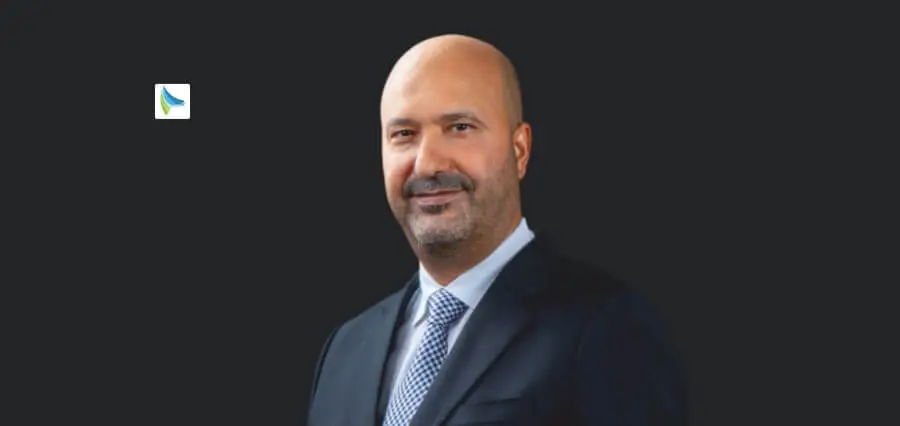
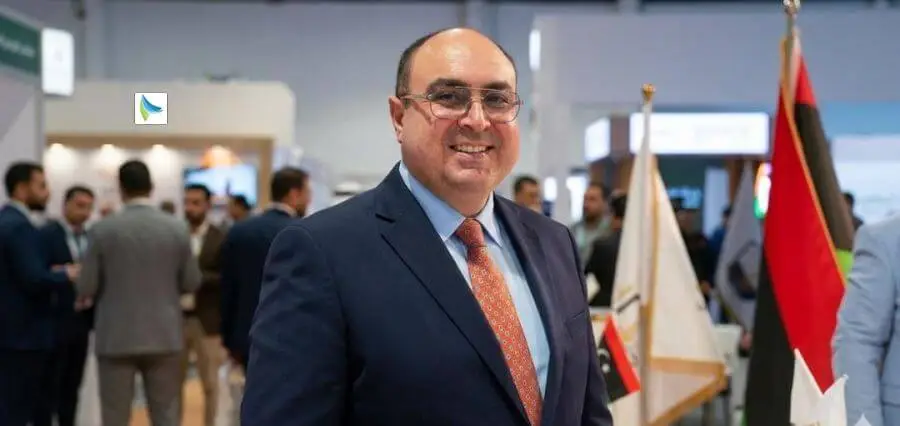
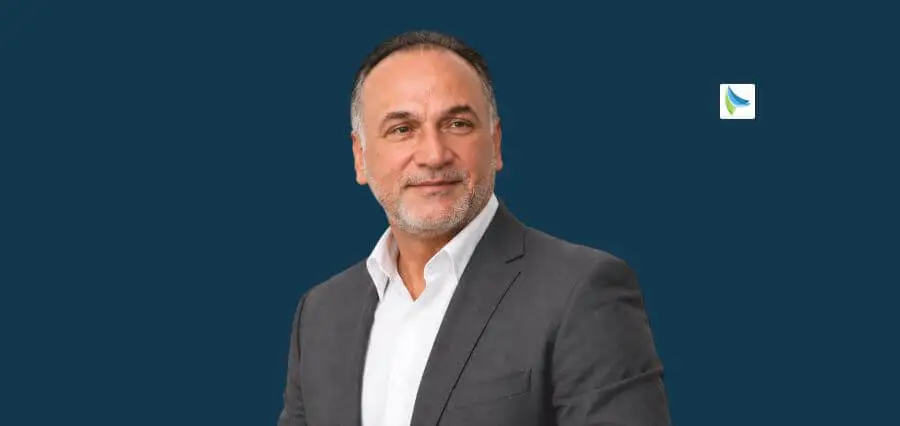
Sameh El Mallah is Chief Executive Officer of Damen for E-Payments, a Cairo-based financial technology company established in 2018 that sits at the center of Egypt’s push toward a more inclusive, digitally enabled economy. His path to that role spans more than three decades across telecommunications, information technology, digital transformation and financial technology, and it has left him with a leadership philosophy built less on theory than on direct experience of what technology can do when it is deployed with purpose.
He reflects, “Throughout this journey, my leadership philosophy has been shaped by a simple principle: leadership is about empowering people, creating opportunities, and enabling meaningful change through technology.”
An Engineer’s Foundation
El Mallah began his career as an engineer, a starting point that gave him a lasting foundation in problem-solving and systems thinking. Early in his career, he worked on large-scale telecommunications projects at Siemens Egypt, contributing to the development of nationwide communication networks. That experience taught him a lesson that has stayed with him ever since: strong infrastructure is the foundation for economic and social development, not a byproduct of it.
He later moved into leadership roles at Raya, where he managed complex technology projects and led business operations in both Egypt and Algeria. Those years expanded his understanding of how technology can drive business growth while addressing the practical needs of real markets rather than abstract ones.
A defining chapter in his career came at Intel, where he spent more than a decade helping governments, educational institutions, healthcare organizations and private sector companies accelerate technology adoption. Working across Egypt and the Levant gave him a broader perspective on how digital transformation improves lives, creates opportunities and strengthens economies at scale.
As CEO of Silicon Waha, he contributed to a national vision focused on developing technology parks in Egypt’s second-tier cities, an experience that reinforced a belief he still holds today: innovation should not be confined to major urban centers. It should create opportunities for talented young people across the entire country, regardless of how close or far they are from the capital’s established technology hubs.
Why Digital Payments
El Mallah’s career has always centered on technology’s ability to solve real-world challenges, and he has consistently gravitated toward sectors that create impact at scale, from telecommunications to ICT adoption to digital infrastructure development. Digital payments, in his view, represent the next stage of that same evolution.
He notes, “Financial technology has the power to transform how individuals, businesses, and governments interact. It improves accessibility, increases efficiency, and helps create a more inclusive economy.”
What attracted him specifically to this sector was the opportunity to contribute to a larger national transformation. Egypt has made significant progress in its digital transformation journey, and El Mallah sees digital payments as playing a critical role in that vision, enabling greater transparency, convenience and access to financial services for millions of people.
What continues to motivate him is the scale of the impact involved. Every digital transaction, in his framing, represents more than a payment. It reflects greater accessibility, improved customer experiences and increased participation in the formal economy and being part of that shift is both professionally rewarding and personally meaningful to him. That sense of meaning, he explains, is what has carried him across three distinct industries without ever losing sight of the throughline connecting them.
Defining Leadership in a Fast-Moving Industry
Asked how he defines effective leadership in an industry defined by constant innovation, El Mallah points to a balance between vision and adaptability. Technology changes quickly, customer expectations continue to evolve, and new opportunities emerge daily, which means leaders must remain forward-looking while staying grounded in execution.
He affirms, “Leadership starts with having a clear vision of where the organization is heading and ensuring that every team member understands and contributes to that vision. However, vision alone is not enough.”
Leaders, he argues, must also be willing to adapt, challenge assumptions and embrace change as it comes, rather than defending a plan simply because it came first. Just as important is the discipline of empowering people, since no leader succeeds alone, particularly in technology-driven industries. Building strong teams, encouraging innovation, and creating an environment where people feel valued and trusted are, in their assessment, essential to long-term success. Ultimately, he sees effective leadership as the work of inspiring people to achieve results while maintaining integrity, accountability and a commitment to continuous improvement, values he considers non-negotiable regardless of how quickly the underlying technology changes.
Growth Built on Trust
Across more than three decades of building networks, implementing technology solutions and now providing financial services, El Mallah has learned that sustainable growth depends on one asset above all: trust. A strong customer-centric approach, in his view, is what consistently proves effective, since organizations must understand their customers’ needs and continuously improve their offerings to create meaningful value.
Operational excellence matters just as much. Growth should never come at the expense of quality, reliability or security, and strong governance. Disciplined execution and clear performance standards help organizations scale without eroding customer confidence.
He states, “By combining customer focus, operational discipline, and strategic collaboration, organizations can achieve sustainable growth while maintaining trust.”
Partnerships form the third pillar of that approach. Throughout his career, El Mallah has worked closely with governments, educational institutions, industry organizations and private sector stakeholders, and he has consistently found that collaboration accelerates innovation and produces stronger outcomes for everyone involved. That instinct for collaboration, built across telecommunications, ICT adoption and now financial technology, has become one of the more consistent threads running through his entire career.
Innovating With Purpose
For El Mallah, innovation begins with understanding a problem before pursuing a solution. The most successful innovations, he believes, are those that address real challenges and deliver measurable value, and his own approach has always been to stay closely connected to market needs while keeping an eye on emerging technologies and trends.
He notes, “Throughout my career, whether at Intel, Silicon Waha, ACT, or Damen, I have seen that organizations thrive when they embrace change rather than resist it.”
Adaptability matters particularly in sectors shaped by evolving regulation and fast-moving technology, where organizations must remain agile while maintaining compliance and operational stability. He encourages his teams to experiment, learn and continuously seek better ways of doing things, while insisting that innovation stay anchored to strong governance and responsible decision-making. That combination of freedom and discipline, in his experience, is what separates innovation that lasts from innovation that simply generates headlines.
He affirms, “Sustainable innovation is not about moving fast without direction; it is about moving forward with purpose.”
Challenges That Reveal Character
Among the most significant challenges of El Mallah’s career has been leading organizations through periods of transformation, whether introducing new technologies, driving digital adoption, expanding into new markets, or implementing organizational change. Transformation, he notes, often requires people to move beyond their comfort zones, and that discomfort is not incidental to the process. It is part of it.
A closely related challenge has been navigating industries where change is constant: technology advances quickly, customer expectations shift, and competitive landscapes evolve, forcing leaders to make decisions with incomplete information while still maintaining confidence and direction.
He reflects, “Challenges should not be viewed as obstacles but as opportunities to learn and grow.”
Those experiences reinforced him with the value of clear communication, particularly during periods of uncertainty, when people look to their leaders for clarity, transparency and confidence. Perhaps the most important lesson he draws from these episodes is a simple one: success may demonstrate capability, but challenges reveal character. It is a distinction he returns to often, both in how he evaluates his own decisions and in how he coaches the people around him.
Building a Culture of Trust and Accountability
El Mallah traces a strong organizational culture back to a single foundation: trust. People perform at their best, he believes, when they feel respected, empowered and connected to a shared purpose, and he works to create environments where diverse perspectives are welcomed, and teams collaborate toward common objectives. Some of the best ideas, in his experience, emerge precisely when people from different backgrounds and disciplines work through complex challenges together.
Accountability carries equal weight in his approach. High-performing teams require clear expectations, measurable goals, and genuine ownership of outcomes.
He states, “Don’t view accountability as control.”
Continuous learning has remained a constant theme throughout his own career, and he sees it as essential to organizational survival in a fast-moving field. Because technology evolves rapidly, organizations must continuously develop new capabilities to stay competitive, which is why he actively encourages curiosity, professional development and knowledge sharing as some of the most important drivers of innovation and growth. He treats this as a leadership responsibility rather than an optional benefit; something built into how teams operate rather than added when time allows.
The Trends Reshaping Financial Services
Asked which emerging trends will most shape the future of financial services and digital transformation, El Mallah points to several forces converging at once. Artificial intelligence, he believes, will continue to transform decision-making, customer engagement, risk management and operational efficiency, and organizations that successfully leverage it will be better positioned to deliver personalized, intelligent experiences.
Data analytics will become increasingly central as organizations work to understand customer behavior more precisely and build more tailored solutions. Digital ecosystems and integrated services will also reshape how businesses operate, with the future defined by cross-industry collaboration that enables seamless interactions between customers, businesses, and institutions.
He affirms, “Cybersecurity will remain a top priority as digital adoption accelerates. Trust will continue to be one of the most valuable assets for any organization operating in the digital economy.”
Financial inclusion, he adds, will remain one of the most consequential trends of all, since technology holds the potential to expand access to financial services and create genuine opportunities for individuals and businesses that have historically been underserved. Taken together, these forces point toward an industry that will look meaningfully different within a few short years, and El Mallah intends for Damen to be positioned at the center of that shift rather than reacting to it after the fact.
Balancing Ambition with Responsibility
El Mallah does not see ambitious business goals and long-term value creation as competing priorities. Sustainable business success, in his view, depends on creating value for every stakeholder at once, starting with customers who sit at the center of every successful organization. Delivering reliable, secure, and innovative solutions is what builds the trust that sustains long-term relationships.
Employees matter just as much, since organizations achieve their goals through people. Investing in talent, creating opportunities for growth and fostering an inclusive culture all contribute directly to long-term performance. Stakeholders and partners play an equally critical role, and building relationships based on transparency, integrity and shared objectives lays the foundation for sustainable growth.
He states, “When organizations focus on delivering value consistently, business results naturally follow. Long-term success is achieved by balancing ambition with responsibility.”
A Vision for the Future
Looking ahead, El Mallah wants to continue contributing to Egypt’s digital transformation journey and supporting the development of a more inclusive, technology-driven economy. Having worked across telecommunications, information technology, innovation ecosystems and financial technology, he has witnessed firsthand how technology can accelerate progress and create opportunity at a national scale.
He affirms, “I believe the future belongs to organizations and leaders who combine innovation with purpose.”
His goal is to continue supporting initiatives that expand access to technology, strengthen digital capabilities, and empower future generations of professionals and entrepreneurs. As for the legacy he hopes to leave, El Mallah is clear that he wants to be remembered not only for the organizations he led, but for the impact those organizations created: a leader who helped people grow, embraced innovation responsibly and contributed to building a stronger digital future for Egypt.
He closes with the conviction that runs through his entire career: business achievements alone do not measure leadership. The opportunities a leader creates for others, the positive change they inspire, and the lasting impact they leave behind are what matter most.
From telecommunications networks to national technology parks to the digital payments infrastructure now reaching millions of Egyptians, Sameh El Mallah has spent three decades building the systems that let opportunity travel further. The mission, as he describes it, continues.