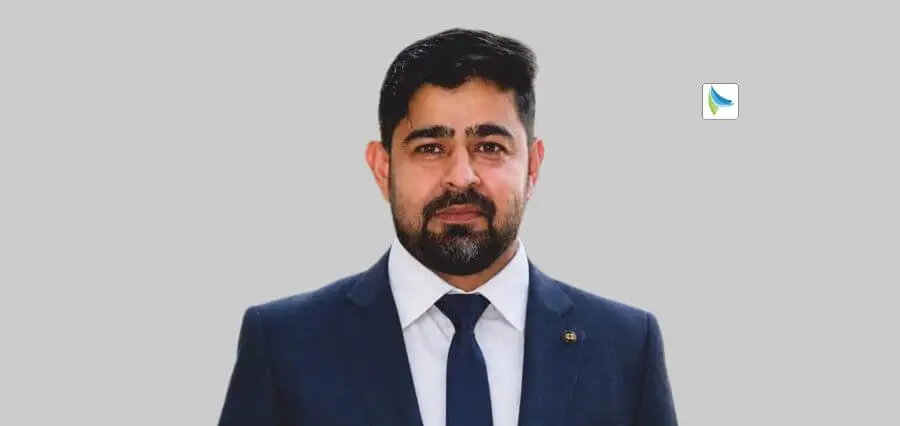
What does a career look like when it is built entirely around people rather than around a profession? It looks like Dr. Alan O’Beirne’s. It moves through the Royal Air Force and Outward Bound, through the Alps and the Himalayas, through Switzerland’s hospitality industry and Bermuda’s, through personal loss and professional reinvention, and through an emerging expertise in crisis, disaster, and emergency management that the world is only beginning to take as seriously as it deserves.
It does not follow a straight line because the question it is answering, how do you serve people well in every environment and every circumstance, does not have a single answer. It has many. And Dr. O’Beirne has spent a lifetime finding them. In 2026, with an Honorary Professorship from Kennedy University in Paris and a Chartered Doctoral Fellowship to his name, that lifetime of searching has arrived somewhere unmistakably significant.
From the Oil Rig to the Royal Air Force
The career of Dr. Alan O’Beirne does not read like a conventional professional biography. After finishing school at Broughton Secondary School in Edinburgh, he did not go directly to university. He worked on an oil rig construction site, a physically demanding and hierarchically clear environment that taught him early what real responsibility looks like when it is stripped of pretension and reduced to its most essential elements. From there he joined the Royal Air Force, where the lessons became more systematic and more deeply structured: discipline, teamwork, preparation, and the particular kind of readiness that military training installs not just in outward behavior but in the character of the person receiving it consistently over time, in ways that remain long after the formal service has ended.
These were not detours from a career. They were their foundations. When he eventually left the RAF and joined Outward Bound, the pieces of his professional identity began to assemble themselves around a core conviction that has remained constant across the decades that followed. He reflects, “Leadership is not about a title, position, or authority. It is about responsibility, consistency, and the ability to inspire confidence through action.”
At Outward Bound, he witnessed something that had already existed in his own formation but now became visible through the people he worked alongside: the outdoors functioning as a genuine and powerful tool for human development. People arrived unsure of themselves and left knowing something about their own capacity that no classroom had managed to show them. That observation became the intellectual engine of his professional life and the lens through which he has read every subsequent chapter of his career with increasing clarity and personal conviction.
The Mountains and What They Teach
From Outward Bound, the mountains called him back directly and deliberately. He worked as a tour guide for two British travel companies in the Alps and the Himalayas, leading people through terrain that demands deep respect, thorough preparation, and the ability to adjust a plan mid-execution without losing the confidence of the people depending entirely on the person in front of them. The capabilities that emerged from that period are not metaphorical. They are the literal operational disciplines of crisis and emergency management applied in the field every day: reading a situation accurately, communicating clearly under sustained pressure, prioritizing people over plans, and remaining calm in environments that are actively discouraging exactly that response in everyone around you.
He notes, “Guiding people through unfamiliar places taught me the importance of preparation, communication, safety, adaptability, and care. These lessons are naturally connected with hospitality, where success depends on understanding people and anticipating their needs before they are even expressed.”
The move into hospitality that followed was not a change of direction. It was a natural translation of the same values into a different context and a different kind of responsibility. In Switzerland, and then in Bermuda where he has since remained, he found that the industry rewarded exactly the capabilities he had spent the previous chapters of his life developing. Understanding people deeply, anticipating needs before they become requests, creating an atmosphere of genuine trust and welcome, remaining calm under operational pressure, and taking real personal responsibility for the experience of others: these are the disciplines of good guiding, good military service, and good hospitality, and the common thread connecting all three is precisely and consistently the same set of human values applied with care in different environments across very different decades.
Crisis Management as a Leadership Philosophy
What makes Dr. O’Beirne’s profile distinctive in the hospitality world is the serious academic and professional attention he has given to crisis, disaster, and emergency management, a field that most hospitality leaders consider adjacent to their core work and he considers absolutely central to it and to any honest understanding of what genuine leadership responsibility requires.
The Honorary Doctorate he received from Dunster Business School on July 5, 2025, reflected a sustained and deepening engagement with the field that has shaped how he thinks about leadership, planning, and human responsibility across every role he has held. His Honorary Professorship from Kennedy University in Paris, received on January 13, 2026, extended that recognition into the academic sphere, positioning him as a genuine contributor to the field rather than only a practitioner within it. His Chartered Doctoral Fellowship from the Institute of Management Specialists, conferred on June 16, 2026, completed a formal framework of recognition that sits alongside rather than above the practical experience that produced and earned it over many years of sustained and serious engagement with the subject.
The core argument he makes about crisis management is not complicated, but it runs directly against how most organizations actually behave in practice when conditions are comfortable. Good business is not only about expanding during good times. It is about preparing for difficult times and protecting people when challenges arrive, and the pressure is at its highest point. The organizations that manage disruption most effectively are those that built the systems, the culture, and the leadership capacity well before the disruption became visible to anyone inside or outside the organization. Those that manage it worse are those that waited until the crisis was already fully present before thinking seriously about what they would do when it came.
He states, “A strong organization is one that can protect its people, adapt quickly, and keep its values intact under pressure. The pandemic did not make business easier, but it made many lessons considerably clearer for those willing to pay attention.”
The COVID-19 Test
Nothing tested that conviction more directly than the COVID-19 pandemic, which arrived in the hospitality industry with a particular brutality, attacking its fundamental premise: that people gather freely, move between places, and share experiences together in physical proximity. Almost overnight, the industry Dr. O’Beirne works within had to face profound uncertainty, restrictions, reduced travel, changing guest expectations, and sustained emotional and operational pressure that no existing playbook had adequately or honestly prepared anyone for in advance.
His response was grounded in the same philosophy that had shaped every previous chapter of his career without exception. Panic does not solve a crisis; clear thinking does. The first priority was honest; consistent communication grounded in an accurate reading of the actual situation. The second was genuine adaptability: reviewing how work was done, what safety and hygiene genuinely required, how staff welfare could be maintained under sustained pressure, and how guest confidence could be preserved when so much was genuinely uncertain for everyone involved at every level. Rather than treating the pandemic only as a setback to survive and move past, he treated it as a lesson in resilience and necessary reinvention. Systems were reviewed and meaningfully improved. Crisis readiness became a priority for people and organizations that had not previously recognized the need to invest in it before the moment of actual crisis had already arrived and made the need impossible to ignore.
The Strength of Admitting Weakness
Dr. O’Beirne is unusually direct about his own limitations, and that directness is itself instructive for anyone considering what honest leadership actually looks like in sustained practice over time. He acknowledges two patterns that have created genuine difficulty across his career: being too hard on himself and taking on too much because he believed something needed to be done properly rather than trusting others fully to meet the standard he held.
The recognition he has developed over time is that leadership also means knowing when to delegate effectively, when to rest and genuinely recover, and when to extend real trust to others without reservation or quiet second-guessing. His strengths are the product of a life genuinely and repeatedly tested: resilience built through personal loss including the recent death of his older brother from Huntington’s disease, the ability to connect with people across profound differences of background and expectation, a natural curiosity that has driven continuous learning across every stage of life, and a discipline rooted in military formation that has never left him regardless of the environment.
He affirms, “Know your strengths, accept your weaknesses honestly, and use both as tools for growth. Success is not about being perfect. It is about being willing to keep improving, keep listening, and keep becoming better over time through experience and honest self-reflection.”
A Life Across Continents
Dr. Alan O’Beirne’s personal life carries the same genuine breadth as his professional one. His sister and her family remain in Edinburgh. His brother’s family lives in Bermuda. His partner of fourteen years is based in the Philippines. He is the proud great-uncle of twin nieces who bring considerable joy. These are not incidental biographical details. They are the human architecture within which the professional achievements find their real meaning and their most honest motivation, reminding him consistently of what the work is ultimately for and who it is ultimately intended to serve.
His advice to aspiring leaders reflects the integrated understanding of professional and personal life that has defined his entire journey across continents, industries, and decades. Begin by leading yourself before seeking to lead others. Build resilience through genuine experience. Surround yourself with people who challenge and support you simultaneously. Stay true to your values, because integrity and a clear sense of purpose carry further and more sustainably than any shortcut the circumstances might make available.
He says, “Keep growing, keep learning, and never allow setbacks to define your future. Success is not built in one moment. It is shaped through discipline, resilience, humility, and service to others across the whole of a life lived with genuine purpose and consistent intention.”
From a village on the Scottish coast to the Himalayas to Bermuda, Dr. Alan O’Beirne has built a life and a career on the consistent and deliberate application of that belief. The recognition that has followed is significant. The journey that produced it is considerably more so.