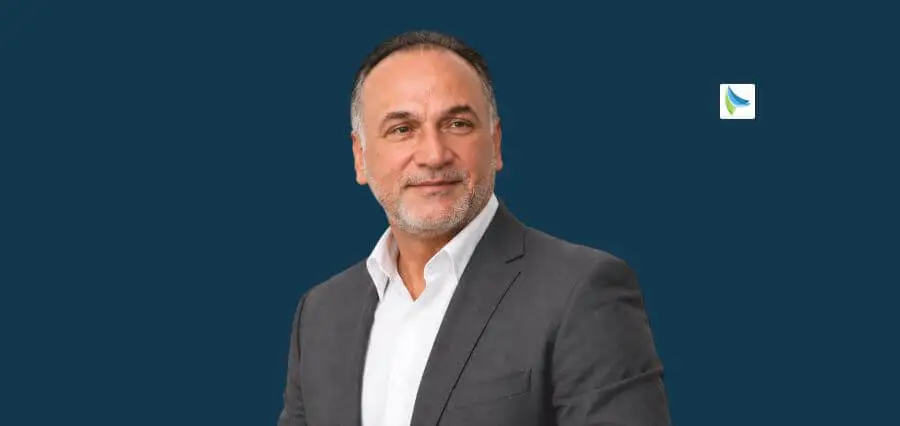




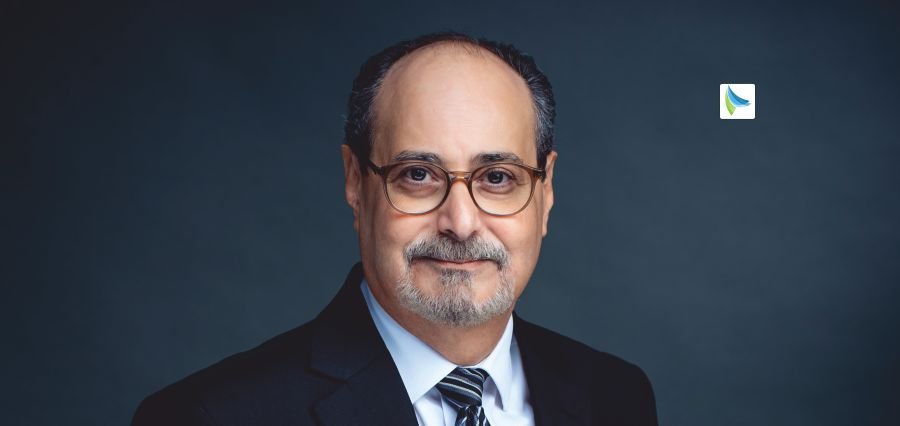
There are moments in a professional career that do not simply inform the way a person works. They reshape the way a person sees. For Samer Sallam, Director of Human Resources and Administration at Penta Global Engineering, one such moment came not in a boardroom or a performance review but at a traffic light. A man approached his car carrying a small child, asking for money to feed his family. Samer recognized him immediately. It was an employee he had terminated months earlier, in the direction of management, despite having reservations he had not acted on. He listened to the man describe the hardships that had followed the loss of his job. He could not hold back his tears.
That moment has never left him. Across four decades in Human Resources, spanning industries, organizations, and continents, it has served as the compass by which he measures every difficult decision he is asked to make. Not as a reason to avoid hard calls, because business realities sometimes demand precisely that. But as a permanent reminder that behind every HR process, every policy, every headcount decision, there is a human being with a family, a livelihood, and a future shaped in part by the choices made in those corporate conversations.
Samer Sallam began his career in Human Resources in 1986, immediately after graduating from university. He entered the profession at entry level, learned from mentors of diverse nationalities and genuine professional depth, and built his understanding of the function from the ground up across more than four decades of continuous practice. He has operated in promoter-led organizations and multinational environments, across engineering, technology, consumer, and industrial sectors. Today, at Penta Global Engineering, he brings that accumulated experience to a leadership role that spans both human resources and corporate administration, two functions that, in his view, share the same foundational requirement: the ability to serve people with honesty, fairness, and care.
The Difference Between Managing and Leading
Samer is precise about a distinction that many organizations claim to understand but consistently fail to practice. There is a meaningful and consequential difference between managing people and leading them and confusing the two produces organizational cultures that are compliant on the surface and disengaged underneath.
Throughout his career, he has encountered senior executives who understood leadership primarily as the exercise of authority, using position and, in some cases, fear generating the behavior they wanted from those around them. He has observed the outcomes of that approach with considerable clarity. Fear silences people. When employees become reluctant to share opinions, challenge assumptions, or offer honest feedback, the organization loses something it cannot recover from a management report: the collective intelligence and creativity of its own workforce.
He states, “Leadership is not about being the loudest voice in the room. It is about creating an environment where every voice can be heard.”
The leaders who earn genuine commitment rather than simply compliance are those who make themselves approachable regardless of hierarchy, who listen before they speak, who treat every contribution as worthy of acknowledgment even when they cannot act on it. In today’s workforce, where employees are more informed and more willing to express their views than at any previous point in the profession’s history, the traditional authority-led management style is not simply ineffective. It is actively counterproductive. The organizations that fail to recognize this are losing talent, suppressing innovation, and building cultures that talented people are motivated to leave.
Culture Is Not an HR Initiative
One of Samer’s most consistent convictions, tested and reinforced across four decades of practice, is that organizational culture cannot be built by the HR department alone. It requires something considerably more demanding: the active, visible, and sustained commitment of leadership at every level of the organization.
He has seen the consequences of its absence clearly. Companies focused solely on financial performance that treat employees as a cost rather than an investment. Engagement programmes designed by HR and ignored by line managers. Recognition initiatives launched with genuine intent and abandoned when quarterly pressure arrived. These experiences have shaped his view of what genuine cultural transformation actually requires.
In one of his previous organizations, he worked alongside a long-serving manager whose management style had been built on rigid authority and control. As the organization introduced initiatives around respect, recognition, open communication, and genuine employee engagement, something began to shift. The manager witnessed his team becoming more willing to contribute, collaborate, and go beyond their formal responsibilities. He saw, in practice, the difference that a positive culture produced in the people around him.
He reflects, “Over time, he recognized that achieving results did not require rigid control or fear-based management. What began as a reluctant adjustment ultimately became a personal transformation.”
That story illustrates the principle Samer returns to repeatedly: positive cultures are contagious. When leadership demonstrates the desired behaviors consistently, the message travels. Even those most resistant to change begin to adapt when they witness the tangible benefits in the people and performance around them.
Talent Is Not a Score on an Assessment
Across four decades of talent management practice, Samer has used most of the methodologies the profession has produced. The 9-Box Grid. 360-degree feedback. Psychometric assessments. Competency frameworks. Each has value. None is sufficient on its own, and he has seen every one of them misapplied in ways that cost organizations should have kept.
His concern is not with the tools themselves but with the tendency to let them substitute for judgment. He has watched genuinely talented individuals be overlooked because they did not fit a predefined profile or perform well under a particular assessment format and then go on to become highly effective leaders in other organizations that were willing to see them differently.
The lesson he draws from those observations is not that assessment is useless. It is that potential cannot simply be measured. It must be tested, challenged, and given the space to develop at its own pace. Some people demonstrate leadership capability early. Others require time, experience, and the confidence that comes from someone believing in them before they fully believe in themselves.
Many of the professionals Samer mentored in the early stages of their careers, HR Officers and junior team members who received his attention and investment at a time when it was not yet obvious, they merited it, now hold senior HR and business leadership positions. Their success has not made him complacent. It has reinforced a belief he holds with considerable force: talent exists throughout every organization. The challenge is not finding it. It is recognizing it and then taking responsibility for developing it.
He notes, “We must never lose sight of the human factor and should always strive to make the most informed, balanced, and objective assessment possible, one that serves both the individual’s potential and the organization’s long-term success.”
Communication Is Not a Soft Skill
During periods of organizational change, economic uncertainty, or structural transformation, the quality of communication that leadership maintains with its workforce determines whether employees remain engaged partners in navigating the difficulty or become passive observers waiting for news from outside.
Samer’s experience is direct on this point. Mistrust does not usually arise from difficult circumstances themselves. It arises when employees feel disconnected from the organization’s reality and uninformed about what is actually happening around them. When organizations withhold information to avoid creating concern, they create something considerably worse: a vacuum that rumors and speculation fill in the absence of fact. The information eventually arrives through informal channels, distorted and amplified, producing more anxiety than the truth would have generated.
Transparency, as he practices it, is not a communication strategy. It is leadership posture. It means treating employees as trusted partners rather than audiences to be managed. It means sharing challenges honestly while maintaining the focus on solutions. And it means understanding that employees do not expect their leaders to be infallible. They expect them to be honest.
He affirms, “Transparency is not a sign of weakness. It is a sign of leadership. Employees do not expect perfection from their leaders, but they do expect honesty.”
The Question AI Cannot Answer
As Samer considers the decade ahead for the HR profession, he holds a view on artificial intelligence that is neither dismissive nor uncritical. He does not doubt the genuine value that AI tools bring to the profession: faster document production, more sophisticated data analysis, improved efficiency across administrative processes. He uses technology deliberately and encourages his teams to do the same.
His concern is more specific and more important than a general anxiety about automation. The capabilities that make a genuinely effective HR leader, the judgment that comes from experience, the emotional intelligence that allows a professional to read what a situation requires beyond what the data shows, the courage to stand behind a principle when pressure is pushing in the opposite direction, these qualities are not developed by delegating decisions to algorithms. They are developed through practice, through error, and through the long and sometimes uncomfortable process of learning what leadership actually demands.
He says, “Use AI as a tool to support your work, not as a substitute for your own thinking. Challenge yourself to solve problems first. Form your own opinions. Do not be afraid to make mistakes, because mistakes are often our greatest teachers.”
That instruction carries the full weight of four decades behind it. The profession Samer has practiced and shaped is, at its core, a human one. The organizations that remember that whatever tools they deploy in its service, will be the ones that build cultures people choose to stay in, leaders’ people genuinely follow, and workforces capable of performing at their best not because they are required to, but because the conditions for it have been deliberately, carefully, and humanely created.