




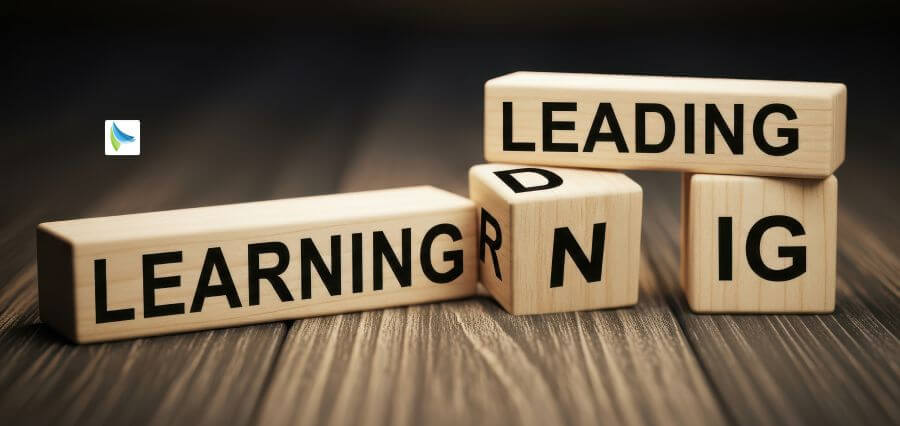
Leading Through Learning
Today’s fast-moving world defines that leadership is neither confined to any level of authority, nor to years of experience, nor to position. The best leaders are never done learning. Growth isn’t a phase; it’s a mindset. With markets in perpetual motion, technologies rapidly changing, and teams becoming increasingly diverse, the ability to learn, adapt, and lead through change has become a competitive advantage.
The Changing Nature of Leadership
For years, leadership was about having the right answers. Now it’s about asking the right questions. For leaders operating in a landscape of continuous innovation and uncertainty, relying on what one presently knows or on traditional hierarchies for decisions simply will not suffice. The leader instead has to be in a constant mode of learning and seeking diversity of perspective, modeling curiosity as a core organizational value.
Learning can no longer be an option; rather, it’s a must. The speed at which change is effected in the various industries demands that leaders be agile thinkers-people who can reimagine their strategies and grow others in the process of growing themselves. It is a leader’s capacity to learn which dictates their effectiveness and that of an organization to thrive through disruption.
Learning as a Leadership Mindset
True learning is not about professional development but a way of life and leadership. Growth-oriented leaders look at each challenge as an opportunity to learn something new, each failure a source of feedback, and each success to hone the craft. They are humble enough to admit what they do not know and confident enough to seek out what they need to learn.
It ripples in the organization: the more leaders learn out loud, question, and grow, the more curiosity and experimentation get normalized in teams. It allows employees to be innovative, take initiative, and drive continuous improvement that fosters engagement and excellence.
Adaptability: The Key to It All
In today’s environment, the most valued skill for any leader is adaptability; right at its very core is learning. Leaders who learn on a continuous basis pivot faster, make better decisions, and with confidence lead their people through times of uncertainty.
The adaptable leader, in that respect, will always be one step ahead; transformation for them is not disruption but evolution. They also keep their skills, knowledge, and perspective fresh, not by replacing them but by continuously adding to it. This lifelong learning lets them stay relevant and resilient with new technologies on the rise, shifting dynamics of markets, or changing consumer behavior.
Creating a Learning Culture
To lead through learning means building an environment where curiosity and growth are at the heart of daily practice. The visionary leaders recognize that organizational learning occurs not only in training programs or performance reviews but with shared experiences, open dialogue, and solving problems together.
Emotional Intelligence and Learning
Continuous learning calls for you not only to invest in technical skills or industry knowledge but most especially in your EQ. Leaders who know themselves and others build better relationships, resolve conflict more effectively, and engender trust in their teams.
It is in learning to listen, to empathize, and to communicate authentically that the transactional leader begins to make the transition into the transformational variety. Intellectual curiosity blended with emotional awareness lets people in the workplace feel valued and understood and naturally stimulates great performance.
One of the major but challenging experiences in the ways people learn is that of failure.
Arguably, the most important lessons of leadership are those learned from failures. Success builds confidence, but failure sharpens perspective. The truly visionary leader thinks of failures not as weaknesses but as opportunities for growth.
Leaders are creating resilience in themselves and their teams by embracing failure as the very nature of invention. They unlock deep lines of communication around mistakes and extract insight to help improve both systems and strategies. In this way, they create more durable organizations-and more secure, fearless leaders.
Continuous Learning in the Digital Era
Technology has created an environment where learning is easier than it ever has been, from digital platforms and online courses to podcasts and peer networks. It has made leaders continually learn and expand their knowledge bases. Yet, it’s not the access to information that’s the challenge, but how to apply the information effectively.
The forward-looking leader curates what he or she learns with intention, focusing in on insights that align with their goals and organizational vision. Weaving learning into the fabric of daily routine turns what was an intermittent exercise into a continuous practice of growth.
Conclusion
In flux, learning is not a luxury-it’s the leadership itself. The best leaders are never done growing-inquisitive in the face of uncertainty, curiously turning every experience into insight. They realize growth is a lifelong journey and not a destination; leading by learning may be how they unlock the full potential of their teams, organizations, and themselves.
Leadership that learns is leadership that lasts. Growth isn’t just the secret weapon in pursuit of excellence; it’s the heart of transformation.