


From Molecules to Miracles
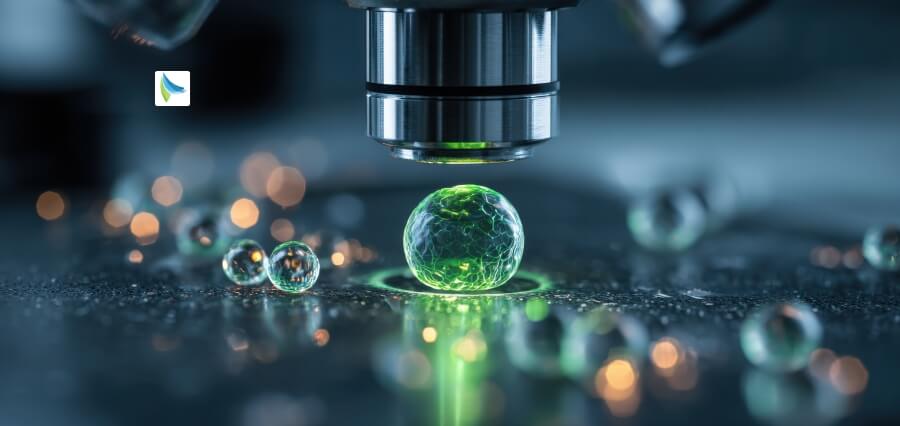
Imagine a world where you are zipping tiny machines, that are smaller than a speck of dust, running through your body to fix issues at the source itself. It is not science fiction; it is a reality of nanotechnology in medicine in the current world. Nanotechnology is the technology of materials and devices that are in the range of 1 to 100 nanometers. In comparison, a nanometer is a billionth of a meter, or about a few atoms. Such small instruments are transforming the world of healthcare, making simple molecules become medical wonders.
The Birth of a Revolution
The history of nanotechnology in medicine started in the late 20th century. The idea was originally popularised by physicist Richard Feynman in 1959 in his talk, “There’s Plenty of Room at the Bottom,” indicating that we could control the atoms to create small, miniature machines. It did not, however, receive application to health by scientists until the 1980s and 1990s. Some of the initial innovations were the application of nanoparticles or super-small particles to deliver drugs more efficiently. In the early 2000s, the U.S. National Nanotechnology Initiative invested billions of dollars in research and accelerated development in such fields as cancer treatment and diagnostics.
Healing at the Cellular Level
One of the largest victories today is in drug delivery. Traditional medicines tend to pervade the body and have side effects such as nausea or loss of hair in chemotherapy patients. Nanoparticles alter that by attacking particular cells. As an example, they can transport cancer drugs directly to the tumours, which serve as receiving sites, and which release the drugs only on reaching the tumour. Such accuracy decreases the damage to normal tissues and increases the success of the treatment. This is becoming even smarter in 2025 with the development of AI-controlled drug delivery systems that can dynamically adjust the dosage based on the needs of the patient.
Fighting Cancer with Nano Warriors
Nanotech has been the major driver of good cancer treatment recently. To illustrate, nanoparticles can hyperthermically or photoablate tumours once a light or magnetic field is applied to them. In this way, from the outside, surgeons can be bypassed. Other than that, remotely bioorthogonal enzyme-like agents called nanozymes are among the recent cancer-fighting inventions. Besides, only tumours will be able to activate the drugs by the nanozymes that are inside them due to alleviation of side effects, which could otherwise be substantial. Moreover, a new horizon opening up now is gene therapy, through which nanoparticles will deliver DNA or RNA directly to the cells and will thereby be able to fix genetic defects, thus providing a lifeline to cystic fibrosis or muscular dystrophy-type diseases.
Smarter Diagnostics and Real-Time Health Monitoring
Diagnostics are progressively benefiting from nanotechnology as well. Early disease detection becomes possible through nanosensors that are able to identify biomarkers in blood or tissue. As an illustration, biosensors intended for wearing purposes and made from nanoscale materials continue to monitor the most important measurable body functions and thus, they can also serve as early warning systems for doctors. By 2025, these tools will turn into standard practice in daily healthcare monitoring, and along with smartphones, they will deliver prompt user notifications. Nanotech is also playing a significant part in imaging. Through the introduction of nanoparticles, MRI and CT scans have turned into being more efficient in terms of giving doctors clearer images of organs and tissues and thus, early detection of diseases is facilitated.
The Era of Personalised Medicine
Nanotechnology combined with machine learning is a revolutionary innovation in the field of precision medicine. On one hand, AI through data analysis attempts to figure out what would be a perfect nanoparticle set that is specifically tailored for each person’s genetic makeup and disease type. This customised regimen can make the drug work more efficiently and less costly than the present situation. Besides that, there is a positive trend towards conscious nanotech, which aims at producing therapies that are not only eco-friendly but also planet-friendly in the long run.
Challenges and Ethical Concerns
But it’s not at all smooth sailing. Challenges remain, like ensuring these tiny particles are safe. Some worry about long-term effects, such as toxicity or how they interact with the immune system. There’s also the double-edged sword: while nanotech can cross the blood-brain barrier to treat brain diseases, it raises concerns about unintended consequences. Ethical issues, like access to these advanced treatments, need to be addressed to avoid widening health gaps. Regulators are working on standards, but keeping up with rapid innovation is tough.
The Future of Medicine
But the story doesn’t end here. For example, among other obstacles, the assurance of safety remains an unsolved issue. What is more, until now, there have been only a few studies that have looked to understand the short-term and long-term effects, including toxicity and immune response.
The question of morality is another, which is debated, the double-edged nature of the technique, that crosses the blood-brain barrier to target brain diseases, but causes worries about possible side effects. Alongside that, there is the issue of fairness in terms of the availability of those high-tech treatments, which is of great concern and should be solved before escalating the difference in health conditions among people. Monitoring and setting new regulation standards is the current job of officials, but at the same time, it is difficult to keep track of speedy innovations..
In conclusion, from humble molecules to life-saving miracles, nanotechnology is reshaping medicine. It promises a healthier world with fewer side effects and more targeted care. As we navigate the challenges, the rise of this tiny tech holds immense hope for humanity’s well-being. With continued research and responsible use, the miracles are just beginning.
Read More: