



Some change direction when the world gives them challenges. Then some change the world. When the world is changing with the rise of artificial intelligence in industries, healthcare, and human connection, the leaders we need to pay the most attention to aren’t necessarily the ones with the biggest voice in the room. They’re the ones who have been through something, learned from it, and didn’t let the experience go to waste. They’re the ones who look at the broken system and see not roadblocks but opportunities. They’re the builders, the researchers, and the quiet forces of nature. And every once in a while, someone comes along who embodies all three.
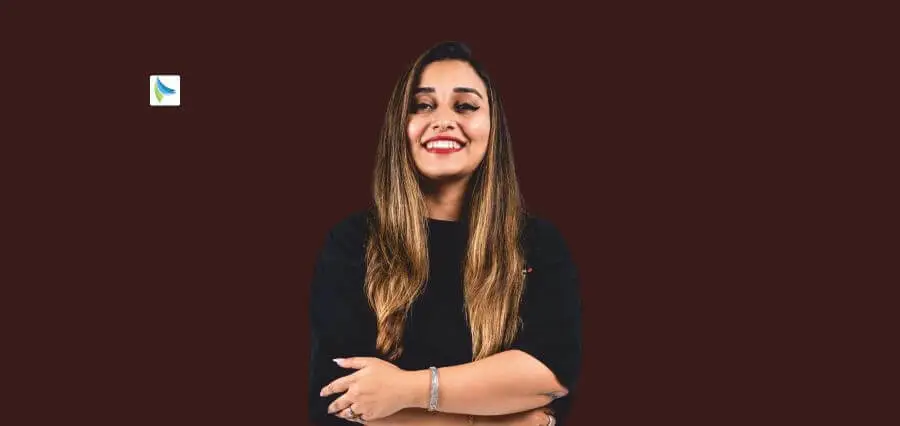
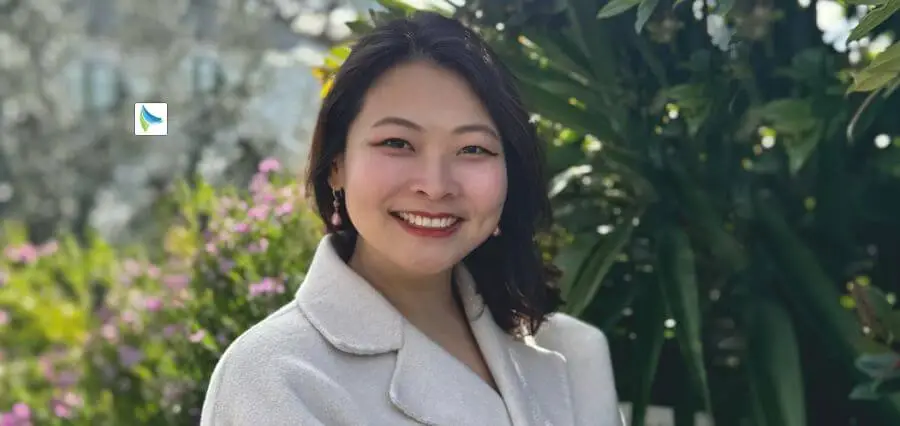
Sabira Arefin is one of those transformational leaders. She is the Founder and CEO of the Institute of Global Health and co-founder of IDMap.ai. She works at a crossing point that few people occupy- where the precision of data science meets the warmth of human care, and where the question driving every decision is not “how do we scale?” but “who does this actually reach?” With over fifteen years of experience across data technology, healthcare innovation, and entrepreneurship, Sabira brings both technical depth and a deeply human perspective to everything she touches. Her belief that data saves lives is not a line she rehearses. It is something she has lived.
A Question That Refused to Stay Silent
When Sabira was diagnosed with cancer, the experience did not paralyze her. It opened something. It made her ask a question she could not let go of: how many people around the world never receive the early warning that could change or save their lives? And behind that question sat another- how many communities simply do not have access to the care and infrastructure that make a timely diagnosis possible at all?
These were not abstract questions. They were personal. They grew from the reality of someone who had faced a health crisis and come out the other side, asking why not everyone gets that chance. Her purpose, she says, did not come from a strategy meeting. It came from a moment that demanded she do something meaningful with the time she had been given.
That moment reshaped how Sabira leads. She calls her approach operational empathy- a way of running teams and building systems that protect human energy and dignity, not just productivity. Sabira does not lead with fear. She does not chase output at the cost of the people producing it. Instead, she designs structures that support her people, holds high standards, and stands beside those working to meet them. Surviving cancer taught her that real strength is built on compassion, not exhaustion.
Built From the Ground Up
Sabira’s path to establishing the Institute of Global Health and IDMap.ai was not a straight line. It was a series of deliberate steps across different industries, each one teaching her something she would eventually need. She worked as an ERP Analyst at Expedia, a consultant at CNA Insurance, a Senior SMART Analyst at Countrywide Home Loans, and held a strategic role at Cisco. These were not just jobs. They were a masterclass in how large organizations handle data, and how they fail when they handle it poorly.
Sabira took every one of those lessons with her. She holds an MBA in Health Sector Management from Duke University and has completed the Global Healthcare Leaders Program at Harvard Medical School. She is currently pursuing a Doctorate in Business Administration focused on AI and healthcare innovation. For Sabira, learning is not something you do once and move on. It is a practice she returns to every year, because she believes that a leader who stops learning eventually stops leading.
IDMap.ai- Where Integrity Meets Intelligence
IDMap.ai is a big data platform that compiles business and consumer datasets in real time, using AI and machine learning to manage identity verification, fraud detection, and compliant analytics. It serves clients across marketing, banking, government administration, and healthcare. Sabira built it on a principle that has never wavered: data only earns its value when it is handled with integrity.
Sabira’s thinking is simple and grounded. Fraud and misuse hide inside disorganized and poorly governed data. When systems are structured, traceable, and regulation-ready, organizations make confident decisions. In healthcare, that confidence is not a comfort; it is a lifeline. It determines whether resources reach patients or disappear into the gaps of a broken system. At IDMap.ai, accountability is not added at the end. It is built into how the platform works from the very beginning.
IDMap.ai is one part of a larger story Sabira is still writing. She has also built InteleMap, an AI-powered relationship mapping platform; IntentMarketingX; PromohealthX; VirtualDoctorX; and VirtualMedC, a telehealth startup where she currently serves as a strategic advisor. Each venture carries the same core belief- technology should be built for genuine impact, not just market position.
The Institute of Global Health- From Research to Reality
The Institute of Global Health was built on an idea that sounds simple but demands everything: health innovation must leave the laboratory and reach the people who need it. Sabira calls it a research-to-reality ecosystem- the space where discoveries travel from academic papers into programs, and from programs into communities. The institute offers certifications and courses in longevity science, mental health in the workplace, teen mental health, caregiver support, and healthcare systems specialization.
Sabira’s focus on underserved communities in the Arab world gives the institute its particular urgency. She does not describe AI as a tool for corporate efficiency in these contexts. She describes it as social infrastructure- something that expands access, protects identity, and makes early intervention possible for people whom modern healthcare has long passed over. Sabira is not imagining a better future. She is actively building one.
One of her most forward-looking commitments is what she calls proactive longevity engineering- an AI-powered approach that draws on risk, behaviour, genetics, and environment to model health outcomes long before illness appears. The goal is a clear shift: from treating sickness to designing for health, from hospitals and crises to foresight and prevention. At the institute, that shift is already underway.
“Data Saves Lives”- The Work Behind the Words
Sabira does not talk about her cancer experience as though it defines her. She talks about what she did with it. The urgency she carried out of that period became fuel for a research agenda focused on catching illness earlier, reaching patients faster, and equipping communities with predictive tools that shift outcomes. Sabira has published widely on AI applications for early cancer detection and contributes to research on chronic disease, ageing, and brain health. Her work appears in leading journals, including The Lancet Group Regional Health, and spans AI in dental diagnosis, mental health technology, and cross-border data privacy.
In telehealth, Sabira focuses on the relationship between AI and trust. She argues that AI should work as an invisible layer of protection between doctors and patients; not replacing the human relationship, but making it safer. Engineers and clinicians collaborate directly at IDMap.ai, with patients at the center of every design decision. The technology operates quietly. The human connection stays in front.
The same human-first approach shapes Sabira’s work on cross-border data collaboration across the Arab world. Rather than pushing nations toward identical technical standards, she builds through shared principles: consent-based access, identity integrity, encryption, and interoperability. “Values first”, she says. “Systems follow naturally when values are aligned”.
Leading With Clarity and Care
Running teams that include both clinical researchers and fast-moving developers is not a simple balancing act. Clinical research moves carefully and methodically. Tech startups move with speed. Sabira holds both rhythms deliberately. She teaches her teams that speed without integrity is not progress. They move quickly where it is safe. They slow down where precision demands it. That discipline comes from strong systems and honest values, not pressure.
Sabira builds her teams around psychological safety. Inclusive mental strength, as she puts it, means creating environments where excellence and humanity are not in competition. People who feel genuinely valued perform at a higher level than people who feel pressured. Sabira leads with emotional intelligence and clarity, and she believes that the quality of a team’s work directly reflects how that team is treated.
Her books carry this thinking to a wider audience. Sabira is an Amazon bestselling author with titles including Nurturing Mental Strength and Fostering Inclusive Leadership in Women, AI Revolutionizing Healthcare, Empower Her, Leveraging AI for Early Cancer Detection, and The Power of Manifestation in Everyday Life. Each is written in plain, accessible language and grounded in real experience.
Opening the Door for Women Who Come Next
Sabira shows up in rooms where Arab women have rarely been seen, and she does it deliberately. Her advice to women entering AI and big data is practical rather than inspirational: build competence before chasing visibility, learn systems from the inside out, protect your values even when the environment does not reward them, and stop waiting for permission from a room you were never invited to design.
Her career backs up every word of that advice. Sabira has built multiple companies, earned advanced degrees, published peer-reviewed research, and spoken at international conferences on AI ethics, women’s leadership, and global health. She has received the Marquee Who’s Who Award, the Stellar Business Award for innovation in data technology, and a Top 10 Entrepreneur designation from International Business Times.
Still in Motion
Sabira is not someone who talks about the future in vague terms. She names what she is building and then goes and builds it. These include data frameworks that protect vulnerable populations, AI models that predict illness decades in advance, and regional partnerships across the Arab world built on shared values. Her vision for the Institute of Global Health is to make it the region’s definitive research-to-reality hub, where the best ideas move beyond publication into systems that communities can actually feel.
Sabira has conquered a serious illness, built real companies, written books that reached real readers, and founded a health institute because she saw a gap and decided she was the one to close it. None of it came easily. All of it came from the same place- a question asked in the middle of a health crisis, and a refusal to stop until the work was done. Data saves lives. She has spent her career proving it.