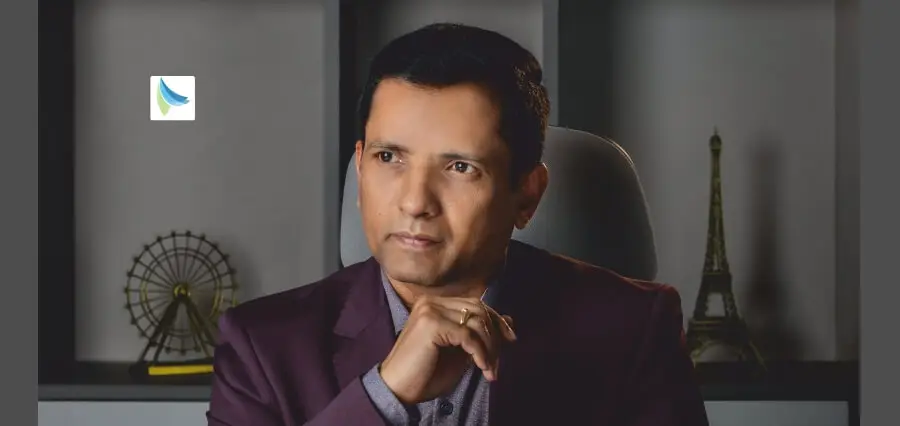




Finance rarely gets the credit it deserves when everything is done right. It usually happens without fanfare when accounting, auditing, cash flow, and reporting remain accurate and on time. Yet these outcomes require discipline, consistency, and strong leadership. For Mohamed Obeid, his career has been built around creating that reliability. Today, he is working toward something more. At Unifonic Inc., where he is currently serving as the Senior Director of Accounting and Financial Operations, his progress to the current position can be attributed to gradual professional progression.
He began by developing expertise in the fundamentals of accounting, where precision, discipline, and attention to detail were essential. Over the years, his responsibilities have expanded to include budgeting and reporting, financial operations, credit control and collections, treasury, tax, auditing, and financial systems. His responsibility also extends across multiple group entities operating in different countries and locations. A key part of his role is partnering with and supporting the commercial team, balancing initiatives that drive revenue and incentivize growth with the necessary financial discipline to protect profitability and support the company’s overall growth ambitions.
A Journey of Purposeful Growth
Mohamed considers his experience with Unifonic Inc., one of the most defining chapters of his professional journey. His long tenure has given him a close view of the company’s transformation. He joined a smaller, fast-growing organization and has witnessed its evolution into a complex international business operating across multiple markets. During this journey, the company has completed acquisitions, strengthened its governance, and prepared for the demands of the capital markets.
This experience has also shaped his approach to leadership. Early in his career, he believed a strong leader needed to understand every detail and solve every problem personally. Over time, he learned that effective leadership requires a different approach. Today, he focuses on developing capable people, establishing clear ownership, making sound decisions, and building systems that support consistent performance.
For him, leadership is rooted in responsibility and reliability. It means taking ownership when circumstances become difficult, providing clarity during uncertainty, and remaining dependable under pressure. “Leadership is not a title; it is the willingness to take responsibility when circumstances are difficult, to give clarity amid uncertainty, and to stay dependable when pressure climbs,” he says.
Clarity at the Core
When describing his leadership style, Mohamed uses three words: practical, transparent, and accountability-driven. He also emphasizes a simple principle. Behind every role and every KPI is a person.
Three principles guide his approach. Clarity comes first. He believes every team member should understand what the organization expects, why it matters, and how their work contributes to company objectives. Without clear direction, accountability can become difficult and frustration can grow.
Fairness comes second. Consistent standards remain important, but fairness does not always mean treating everyone in the same way. People have different strengths, circumstances, and development needs. Decisions should therefore be made objectively, respectfully, and with an understanding of individual differences.
Long-term responsibility comes third. Protecting the organization’s long-term interests requires maintaining a strong focus on people. Deadlines, financial targets, audits, and transformation programs require consistent attention. Difficult decisions are also an essential part of leadership. High standards and genuine support can coexist, creating the foundation for sustainable performance.
Trust Through Transparency
For Mohamed, trust is built over time through consistent actions. A leader who expects openness from a team must also be predictable and dependable. He remains accessible, communicates openly, and keeps his commitments. He also welcomes different perspectives. Team members should feel comfortable sharing their views, even when they differ from his own.
Ownership is the second pillar of his leadership culture. He does not want people to wait for instructions. He encourages them to understand objectives, take responsibility, propose solutions, and develop confidence in making decisions.
Recognition is equally important. This is especially true for finance teams, whose work often happens behind the scenes. Their contributions may receive attention only when problems arise. He makes a deliberate effort to recognize their achievements. These include successful collections, clean audits, timely closings, improved cash flow, stronger controls, and successful system implementations.
Support goes hand in hand with accountability. Once expectations are clear, performance is measured against them. His responsibility is to provide the resources, coaching, and direction people need to succeed. In return, he expects team members to meet their commitments and raise concerns early when risks emerge.
Navigating Uncertainty
Perfect information is rarely available to finance leaders. Mohamed has learned that waiting for every uncertainty to disappear can sometimes cause more harm than making a well-informed decision. When faced with an unclear situation, he separates the available information into three areas. He identifies what the team knows, what it assumes, and what it still needs to learn.
He then considers the financial impact, operational effects, potential risks, and whether the decision can be reversed. He also considers the cost of taking no action. When necessary, he involves the right stakeholders to gain different perspectives and make a balanced decision.
Experience has also taught him that not every decision requires the same level of certainty. A reversible operational decision can often be made quickly and adjusted later. Decisions involving significant financial, legal, tax, reputational, or strategic consequences require deeper analysis and stronger governance. “I make decisions by balancing facts, experience, risk, and the consequences of inaction,” he says.
Uncertainty remains part of the role. He focuses on making the best decision based on the available facts, experience, and judgment. He takes responsibility for the outcome and adapts quickly when new information becomes available.
Empathy with Accountability
Many managers view accountability and empathy as opposing values. Mohamed sees them as complementary. When someone underperforms, he begins with one question: why?
He looks at several factors. The expectation may not have been clear. The person may have a skills gap or an unreasonable workload. External circumstances may also affect performance. In some cases, the issue may relate to ownership and discipline.
The situation determines the appropriate response. Some cases require coaching or additional support. Others need patience and time. Some require a direct conversation about performance and expectations. “Empathy should help us understand the situation; it should never stop us from addressing it,” he says.
He applies the same principle to accountability. Accountability should encourage improvement, not create fear. In his experience, people respond positively when they trust that standards are fair, feedback is honest, and their manager genuinely wants them to succeed.
Resilience in Leadership
Some of the most demanding periods in Mohamed’s career involved several major priorities at the same time. These included year-end audits, complex accounting matters, acquisitions, liquidity requirements, organizational changes, and increasing reporting demands.
These experiences taught him that pressure is rarely the main challenge. Poor prioritization can create greater difficulties. When everything appears urgent, effective leadership means identifying what matters most, assigning clear ownership, communicating clearly, and keeping the team focused. “I stay composed under pressure, focus on what matters most, and keep the team moving forward,” he says.
These periods also reinforced the importance of composure. A leader’s behavior during stressful situations can quickly influence the entire team. A reactive approach can create a reactive organization. He now focuses on the facts, breaks complex problems into manageable actions, and escalates issues early when necessary. He also ensures that short-term pressure does not affect long-term decisions. The most important lesson became clear over time. Resilient teams are built before a crisis occurs. They depend on trust, strong capabilities, clear processes, and shared accountability.
Innovation with Impact
Mohamed views innovation in finance as a practical necessity rather than a passing trend. Modern finance teams should spend less time collecting and reconciling information manually. They should spend more time analyzing information, challenging assumptions, and supporting better decisions.
This approach has shaped his interest in finance technology over the years. He has followed developments in ERP systems, automation, digitalization, dashboards, and integrated reporting. He has also worked to strengthen the connection between finance and operational systems. Artificial intelligence is now creating new opportunities. It can support areas such as reconciliation, anomaly detection, forecasting, reporting, and financial analysis. “Technology should simplify finance, strengthen decisions, and create greater value for the business,” he says.
A weak process does not become effective simply because it is automated. His approach is clear. First, simplify and strengthen the process. Then, establish clear ownership and strong controls. After that, identify how technology can make the process faster, more accurate, and more scalable.
Innovation also shapes his daily leadership. He encourages his team to question established practices by asking a simple question: Why are we still doing it this way? He believes continuous improvement is a shared responsibility and should involve everyone.
Nurturing Future Talent
Seeing people grow beyond the roles in which Mohamed first encountered them gives him the greatest sense of satisfaction. His approach to professional development is straightforward. He gives colleagues responsibilities that challenge them while remaining available to provide guidance. He places strong value on learning through practical experience alongside formal training.
He encourages team members to lead meetings, manage stakeholders, take ownership of projects, solve problems, and present recommendations. This approach helps them build confidence, strengthen their judgment, and develop greater independence.
Tomorrow’s finance leaders will need more than technical expertise. Strong financial knowledge will remain essential, but future leaders will also need commercial awareness, communication skills, technological curiosity, sound judgment, and the confidence to challenge ideas constructively. They must understand the wider business and translate financial information into clear decisions for CEOs, commercial teams, technology leaders, boards, and investors. Above all, integrity remains essential. Tools and technologies will continue to evolve, but sound judgment, credibility, and trust will remain central to effective finance leadership.
Impact Through Growth
When asked to identify his most significant achievement, Mohamed does not point to a single project or headline figure. Instead, he highlights the journey itself. It has involved growing as a professional while helping build a finance organization capable of supporting a rapidly evolving international technology company.
His experience includes several important milestones. These include financial transformation, ERP and automation initiatives, stronger financial controls, complex IFRS matters, acquisitions and integrations, improved working capital management, treasury development, audit readiness, and preparation for the governance and reporting standards required during an IPO journey.
The people behind these achievements remain central to his sense of accomplishment. Seeing colleagues develop, take on greater responsibilities, and become trusted business partners is more meaningful to him than any achievement listed on a résumé.
He also takes pride in the changing role of finance. The function is moving beyond traditional reporting and control responsibilities. It now contributes to commercial decisions, risk management, liquidity, strategy, and sustainable business growth.
Building a Lasting Legacy
When reflecting on how he wants his leadership to be remembered, Mohamed focuses on what became stronger during his time with an organization rather than the positions he held. He hopes to leave behind stronger processes, better governance, clearer financial information, and more capable teams. More importantly, he wants the people he has led to remember being trusted, challenged, supported, and given opportunities to grow.
His definition of success is straightforward. A good leader should gradually become less essential to daily operations by developing people who can lead independently. In his view, building a team that can succeed without constant reliance on one person is a meaningful measure of leadership. He expects finance to continue evolving rapidly through technology, artificial intelligence, automation, regulation, and increasingly complex business models.
Despite these changes, core leadership principles will remain important. Integrity, accountability, curiosity, resilience, respect, and a commitment to continuous learning will continue to shape effective leadership. “If I can look back and see strong organizations and successful people who became better leaders partly because of the journey we shared, I would consider that a meaningful legacy,” he says.