



Speed is key to the technology world. There is always a new platform; a new acronym, and a new hope that the future of technology will soon be different. But those organizations that make it in the long run have little to do with the current tools. What makes them survive is that they understand a much older concept: technology is meant to serve humans; trust takes time to build; and organizations must one day grow beyond the founders that have started them. Such leaders create businesses that are resilient against disruption; tough times and that can retain customers for decades.
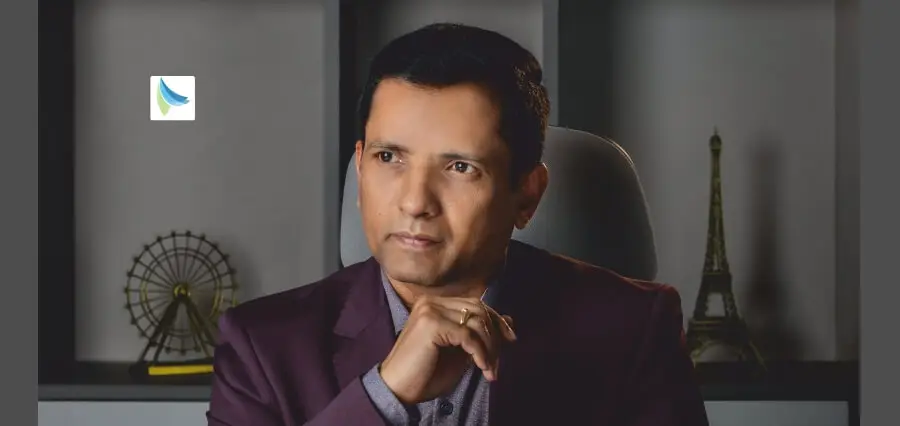
Murali Krishna Kommineni is one of them. As the Founder and Managing Director of Quadrant Systems, Murali heads the technological enterprise with diverse portfolio ranging from software development; data analytics, cybersecurity; integration and digital transformation to the clients from various industries around the globe. Developer at heart, Murali transitioned from developing software to establishing and managing technological enterprises in several countries. On the way, he had to change his career description several times.
The Desk
The story begins modestly. In 2009, Murali launched Quadrant in South Africa as the company’s only employee. A kind acquaintance lent him a desk. For the first six months, no projects arrived. The silence tested his resolve, but it did not break it. Eventually, former customers who remembered his work and trusted his word gave the fledgling business its first opportunities.
Those months left a lasting impression. Technical skill had opened the door, but it had not kept the business alive. Relationships had. Murali distilled the lesson into a principle that still anchors his decisions: “businesses are ultimately built on trust, relationships, and the ability to deliver.”
That conviction shaped how Quadrant grew. Today, hundreds of colleagues work across international markets, and the company has moved well beyond the one-person operation that Murali once ran from borrowed furniture.
The Founder Steps Back
Growth demanded more than hard work. It demanded a different kind of leader. In the early years, Murali solved problems himself. As Quadrant expanded, he recognized that this habit would eventually cap the company’s potential. He shifted his focus to developing leaders, building teams and creating an organization that could operate across different cultures and markets.
The changes ran deep. Quadrant evolved from a locally focused services provider into an international group, and that transition forced Murali to strengthen its leadership structures, governance and operating disciplines. He took care to keep the entrepreneurial instinct that had powered the early years. The company also widened its ambitions. It began developing its own products and pursuing strategic acquisitions, moves that deepened its expertise and opened new markets.
Ownership became the quiet thread through every reform. A growing company cannot route every decision through a handful of people, Murali reasons, so he gives capable colleagues real responsibility and holds them accountable for outcomes. His approach to vision follows the same logic. He sets a clear direction, explains why it matters and shows each part of the organization how it contributes. Then he expects the teams to turn that direction into action.
The Problem Comes First
In an industry crowded with buzzwords, Murali applies a disciplined filter to new technology. His technical background lets him look past the initial excitement and judge what an innovation can realistically deliver. His commercial instincts as chief executive add a second test: Will it scale, does it matter to customers, and does it advance their long-term goals?
He states his starting point without hedging: “I always start with the business problem rather than the technology.”
The same discipline guides Quadrant’s push into artificial intelligence and automation. The company already builds its own AI-driven products, aimed at helping customers cut costs, raise efficiency and simplify operations. He rejects adoption for fashion’s sake. Technology earns a place in the portfolio only when it solves a genuine problem and produces measurable value.
He applies that thinking inward as well. Quadrant staged an internal Hackathon to draw ideas from across the workforce, giving teams room to collaborate and experiment. He wants innovation to rise from within the organization rather than descend from the executive suite. He also pushes colleagues to build new skills in AI and automation, and he frames the technology as a way to augment people and free them for higher-value work rather than replace them.
He holds the business itself to the same scrutiny. What made a technology company successful in the past, he warns, may not carry it through the next decade. So Quadrant keeps learning, keeps building its own intellectual property and keeps close to customers.
Employees First, Clients Always
Quadrant serves clients through a broad portfolio, yet Murali refuses to let breadth turn into a sales script. Every client conversation, he insists, should begin with the customer’s business, the challenges at hand and the outcomes they want. The wide portfolio gives his teams the freedom to see the bigger picture instead of forcing every problem through a single product.
Behind that client focus sits a conviction about people. He believes that serving clients well begins with serving employees well. Colleagues understand customers, solve difficult problems and keep the promises the company makes, so he works to give them room to learn, take ownership and feel valued. He puts the idea in a single line: “Empowered people create stronger customer relationships, and stronger customer relationships create sustainable growth for everyone.”
The philosophy shapes his daily leadership. He does not pose as the man with every answer. Instead, he creates conditions in which people feel trusted to decide, share ideas and learn from experience. He encourages colleagues to look beyond their own roles and teams, because innovation tends to emerge when people with different perspectives challenge established habits. Few things please him more as a founder than watching employees build careers at Quadrant and grow into leaders themselves.
The Test of 2020
No leadership philosophy survives on good weather alone, and the COVID-19 pandemic tested Murali’s thoroughly. Customers cut project spending almost overnight, and Quadrant’s cost base had to shrink with it. Murali faced two unwelcome options: retrench staff or ask employees to accept temporary salary reductions.
He chose the salary reductions. He believed that if the organization navigated the crisis together, it would emerge stronger. Employees accepted the sacrifice, and the company kept its team intact.
The story did not end there. As the business stabilized before the year closed, Murali rewarded the workforce with an additional month’s salary, a direct acknowledgment of the commitment his colleagues had shown. He counts it among the proudest moments of his career.
The episode sharpened his understanding of the job. “Leadership becomes most important when there is no perfect decision available,” he says. Transparency and fairness, he learned, matter more in a crisis than certainty. Employees do not expect their leaders to predict the future, but they do expect honesty and a sense that everyone shares the burden. In his view, protecting the business and caring for its people need not compete. The hardest decisions sometimes allow a leader to do both.
A Legacy Measured in Leaders
Murali now turns to a problem that not many founders have to deal with: what happens to the business after the founder? And he has a direct answer to this problem. According to him, one of the key responsibilities of a leader is to create a corporate entity that is able to develop further independent of any specific individual, including himself.
This principle has significantly transformed Murali’s approach to management. He used to create the company himself. Today, he is busy developing a team of leaders and corporate culture in order to make this company go further. Another thing he does is striking the balance between present day achievements and future opportunities.
He speaks about credit with unusual candor. “Quadrant may have been started by me, but it has been built by our people,” he says. The sentence captures his management style as well as his gratitude. He treats employees as co-authors of the company’s future, not as workers in someone else’s plan.
The future path leads towards a new identity. According to him, Quadrant needs to progress from being just a services firm to one that is involved in developing its own intellectual property and products using AI and automation technology as the key components. South Africa, which has been the starting point of this journey, still plays an important role in this quest. He aims to demonstrate that talents in this country can provide solutions that have applications much beyond this nation’s borders.
But he also wants this transition process to pave new avenues for his people. With technology changes, he wants his employees to gain new skills, innovate and build on them. It would be a significant contribution if, besides developing great technology, Quadrant manages to raise the next generation of technology experts and entrepreneurs.
When he looks back at the journey from having access to a borrowed desk in 2009 to being part of an international organization today, he does not measure success in terms of scale or geography. His goal is rather to be able to pass on an organization that has provided opportunities to its people, gained the confidence of its clients, developed technology that made a difference, and proved what smart people could accomplish when they learn, innovate, and take control of their destiny. For a founder who once waited six months for a first project, it is an ambitious measure, and one he appears determined to meet.