




Saudi Arabia’s economy is moving at a pace that Vision 2030 demands, and the businesses operating within it face a simple truth: the ones that survive rapid growth are not always the boldest or the best-funded. They are the ones whose financial foundations are solid enough to carry the weight of ambition.
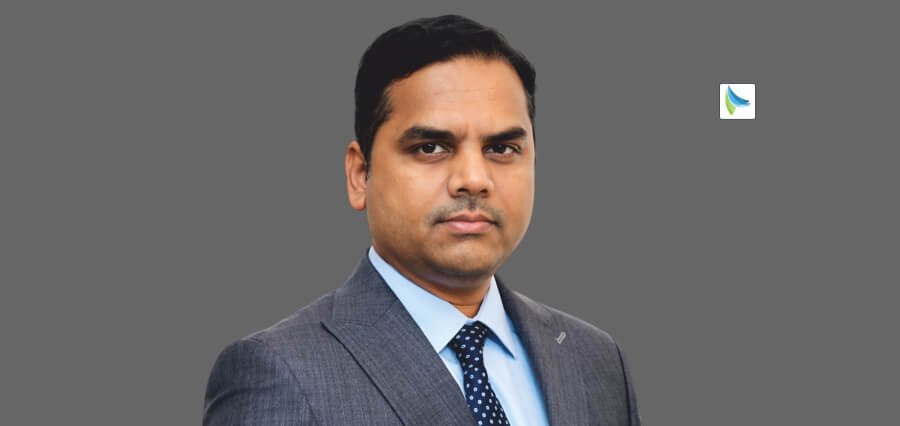
That is the environment Mohammed Abdul Aleem walks into every day as Finance Director at Elite Resources Center, a Riyadh-based manpower outsourcing and HR solutions firm established in December 2016. It is an environment that has shaped the kind of finance leader he has become. Not one who guards the treasury from behind a desk, but one who sits at the strategy table and asks the questions that determine whether a growth decision will hold or collapse six months down the line.
His path to that table was neither linear nor conventional. It ran through kitchens, cost sheets, and a decade of operational finance before it arrived at the boardroom. And that unconventional route, it turns out, is precisely what makes his approach to financial leadership so grounded and so effective.
A Foundation Built in the Margins
Before balance sheets and boardroom presentations, Mohammad spent over a decade in the restaurant industry. He credits that time by giving him something no MBA program teaches in isolation: the discipline of practical financial awareness under real operational pressure.
In that environment, even small inefficiencies had an immediate and visible impact on margins. Cost control, inventory management, and daily cash discipline were not abstract concepts to be reviewed at month end. They were the difference between a profitable day and a loss. Every number carried a consequence that surfaced within hours, not quarters.
That ground-level instinct, the ability to read numbers not just as data points but as operational signals, followed him into every role that came after. When he transitioned into a senior financial controller position, his first significant milestone, he entered a more structured environment where budgeting, forecasting, and financial reporting moved to the center of his responsibilities. But the practical urgency he had developed on the floor of a working kitchen never left him.
It was during this phase that he began to grasp the distinction that would define his leadership: the difference between preparing numbers and interpreting them. Reporting what happened is a function. Understanding what it means and acting before the next cycle begins is a capability.
Then came the experience that permanently shifted his approach: leading the end-to-end implementation of an enterprise resource planning system. The transformation it delivered was not merely technological. The organization moved from fragmented, siloed reporting to a centralized, data-driven environment where decision-making could be both faster and more informed. Finance, for the first time, became anticipatory rather than retrospective.
“This experience fundamentally changed my approach to finance, from reactive reporting to proactive planning,” Mohammad says. That shift became the organizing principle of everything that followed.
What a Modern Finance Director Actually Does
Ask Mohammad to define the role of a Finance Director in today’s business environment, and he will not reach for a job description. He will reach for a conviction.
The finance function, in his view, has outgrown its traditional boundaries. Compliance and control remain essential, but they are now the baseline expectation rather than the differentiator. The real value of a modern Finance Director lies in being embedded in business decisions from the moment they begin to take shape, not when they arrive for financial sign-off.
Pricing strategies, contract structuring, cost management, investment decisions: these are conversations where finance must be present at the start, not consulted at the end. In the manpower outsourcing sector specifically, where client payment cycles vary significantly and where cash flow management can determine whether payroll is met on time, this integration is not optional. It is structural.
He identifies the gap between profitability and liquidity as one of the most consequential and most overlooked areas where finance adds strategic value. A business can report healthy margins while quietly building a cash flow crisis, if collections are slow, if payment terms have been poorly structured, or if receivables aging is not being monitored in real time.
“The role of a modern Finance Director has evolved significantly beyond traditional accounting and compliance responsibilities. While those remain critical, they are now the baseline expectation rather than the differentiator,” he says.
His philosophy of strategic excellence rests on three pillars. The first is data reliability: decisions are only as strong as the information behind them, and clean, timely, accurate financial data is non-negotiable. The second is decision speed: in a dynamic operating environment, delayed decisions carry their own cost, and finance must enable faster turnaround without weakening control. The third is business alignment: financial strategies must reflect what is happening on the ground, because a plan that cannot be executed has no value regardless of how well it reads on a spreadsheet.
The Receivables Initiative That Changed the Business
The clearest illustration of Mohammad’s philosophy in action is an initiative he led at Elite Resources Center that addressed a problem hiding in plain sight.
The organization was growing consistently in revenue terms. But collections were lagging, and the gap between invoiced income and available cash was creating liquidity pressure that threatened the business’s ability to operate smoothly. Most organizations respond to this pattern by intensifying follow-up: more calls, more reminders, more escalation. He responded by diagnosing it differently.
He identified the issue not as a collection failure but as a structural weakness in how credit, pricing, and client accountability were connected. His team introduced tighter credit controls and linked client payment behavior directly to the terms of future contracts and pricing decisions. A more disciplined follow-up mechanism was built into the process rather than left to individual judgment. The ERP system was configured to deliver real-time visibility into outstanding receivables and aging analysis, eliminating the lag that had previously allowed overdue balances to grow unnoticed.
Accountability for collections was also formally embedded into team responsibilities. It stopped being a task that belonged to everyone in general and no one in particular.
The outcome was a measurable reduction in the average collection period, a direct improvement in working capital availability, and the restored ability to meet payroll commitments on schedule. In a people-intensive business where salary payments are central to staff trust and operational continuity, that last outcome carried weight well beyond the balance sheet.
“This initiative demonstrated that improving cash flow is not just about chasing payments. It requires a structured and strategic approach,” he says.
Technology as a Tool, not a Destination
Mohammad’s relationship with technology is defined by the same pragmatism that runs through the rest of his practice. He is a genuine advocate for digital tools, ERP systems, real-time dashboards, and analytics-driven forecasting. But he is equally firm about what technology cannot replace.
The finance profession is undergoing a structural shift driven by AI and automation. Routine tasks such as reconciliations, standard reporting, and elements of forecasting are increasingly handled by automated systems. This is not a threat to financial leadership. It is a reallocation of where human judgment needs to be applied. As the processing burden lightens, the expectation of finance professionals to deliver insight, interpretation, and strategic partnership grows correspondingly.
At the same time, the demand for real-time visibility is intensifying. Monthly reporting cycles are no longer sufficient for businesses that need to respond to fast-moving markets, changing client behavior, and unpredictable cost pressures. Finance must move at the speed of the business, not behind it.
“The key is not just having access to data but using it effectively. I focus on generating actionable insights rather than excessive reporting. The goal is to support decision-making, not to create complexity,” he says.
His preparation for this shifting landscape is deliberate: invest in digital capability, sharpen data infrastructure, and build a team that brings commercial awareness alongside technical skill. The combination of technological efficiency and practical business judgment is what will define effective financial leadership in the years ahead.
Building Teams That Own Their Work
Every system, process, and governance framework ultimately depends on the people operating it. Mohammad’s approach to building his finance team reflects the same principles he applies to the business: clarity of purpose, genuine ownership, and exposure that develops breadth alongside depth.
He is deliberate about ensuring that team members understand not just what they are doing but why it matters. When a finance professional can see the connection between their work and the organization’s outcomes, their engagement and the quality of their output both improve. Ownership, in his team, is not assigned through job titles. It is developed through trust, responsibility, and the confidence that comes from being given meaningful work and the space to deliver it.
He also invests in giving his team visibility into the wider business. A finance professional who understands how a sales decision affects margin, how a delayed payment affects payroll, and how an operational inefficiency quietly erodes profitability brings a fundamentally different quality of thinking to their role than one who operates in isolation.
On governance and controls, he takes a balanced position. Clear policies, defined approval hierarchies, and system-enforced controls are essential. But layers of unnecessary processes create friction that slows decisions without adding protection. The goal is a governance structure precise enough to manage risk and learn enough to enable agility.
“I ensure that team members understand the purpose behind their work, not just the tasks. When people see how their role contributes to the overall business, their engagement improves,” he says.
Strategic Excellence in Practice
In a profession often reduced to compliance and reporting, Mohammed represents something more demanding and more valuable: a finance leader who treats his function as a driver of organizational performance rather than a constraint on it.
His career, from the operational intensity of the restaurant industry through financial control and into the strategic complexity of manpower outsourcing in one of the region’s most dynamic markets, has built a leader who understands both the detail and the direction. He has brought systems of clarity to organizations that were making decisions in the dark. He has restructured processes that were quietly undermining financial health. And he has built teams that take genuine ownership because they understand what they are contributing to.
Elite Resources Center operates in a sector where financial precision is not a differentiator but a prerequisite, and where the demands of Vision 2030’s economic transformation are raising the bar for every business operating in the Kingdom. In that context, a Finance Director who positions his function at the center of strategy rather than at the edge of it is exactly what sustained growth requires.
“Strategic excellence is not defined by one successful initiative. It is about the ability to build systems and processes that enable the organization to make the right decisions repeatedly,” he says.
That is work. Quiet, structural, and indispensable. And it is exactly what Mohammed delivers.