




Every organisation today sits on mountains of data, runs pilots that never scale, and deploys AI tools that promise transformation but deliver confusion. The gap between technological ambition and human outcome has never been wider, and most brands are still searching for someone who can bridge it without losing sight of the customer on the other side. That bridge requires more than technical fluency. It demands the rare ability to hold strategy, empathy, and governance in the same hand, and to make them work together inside complex, regulated environments where the stakes are not quarterly metrics but people’s health and wellbeing. Very few leaders in the world operate at that intersection with both the depth and the track record to prove it.
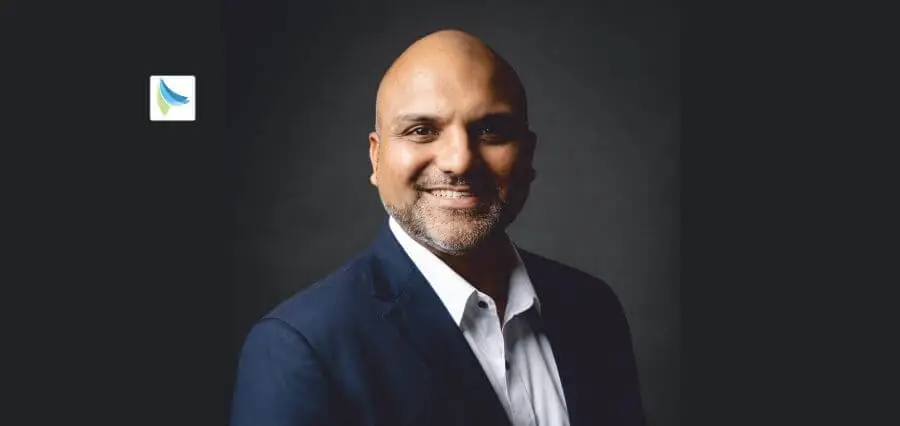
That leader is Dr (H.C.). Jaslyin Qiyu.
Prior to joining Cigna Healthcare to steer marketing and customer experience across Singapore and Australia, she has spent over two decades dismantling the idea that technology and humanity pull in opposite directions. In her world, AI earns trust before it earns scale, governance is a brand decision before it is a legal one, and every customer interaction, no matter how automated, must hold up in the moments that matter most.
A Journey Forged Across Continents and Careers
Dr. Jaslyin did not take the conventional road to the top. Across more than two decades, she navigated the demanding corridors of financial services, management consulting, and healthcare, cutting her teeth at institutions like Citibank, EY, and Credit Suisse before arriving at Cigna Healthcare, where she now serves as Chief Marketing Officer and Customer Experience Head for Singapore and Australia.
Each chapter of her career added a new layer to her understanding of what marketing truly means: not a function confined to campaigns and creative briefs, but the connective tissue binding strategy, customer experience, and commercial outcomes into one coherent whole.
The path was never linear, and she would have it no other way. She built Mad About Marketing Consulting in 2023, a deliberate step away from the conventional corporate ladder. The firm earned the industry’s attention quickly, winning Consultancy Firm of the Year recognition from Corporate Vision and IE 100. The award validated a model that many had doubted: that fractional senior marketing leadership could deliver real impact without the constraints of a permanent seat. Returning to corporate at Cigna brought both worlds together, fusing the agility of a founder with the scale of a global healthcare brand.
“My journey was never linear, and that’s precisely what shaped the leader I’ve become,” says Jaslyin. Today, she carries a title that is as demanding as it is rare. The dual accountability of Chief Marketing Officer and Customer Experience Head forces a discipline that most organisations separate at their own peril. She acknowledges the wisdom of the Chief Executive Officer in intentionally combining the two roles because he knows what gets lost when they come apart.
Defining the Role: Architect of Relevance
Ask Jaslyin how she defines her role, and she answers with uncommon clarity. She sees herself as an architect of relevance, a phrase that carries more weight than it might initially suggest. In her view, a future-ready brand does not announce itself through its technology investments or its data infrastructure. It reveals itself in the quiet moments when a customer reaches out during a health crisis, files a claim under stress, or navigates the healthcare system for the first time.
That is the test she applies consistently. Does the brand hold up when the customer is vulnerable? Does the marketing promise survive contact with reality? These questions shape every decision at Cigna Healthcare, from campaign strategy to the design of customer service workflows. Holding both marketing and customer experience accountability is not a burden; it is a safeguard against the dangerous temptation to optimise for impressions at the expense of outcomes.
Jaslyin asserts, “Holding both marketing and CX accountability prevents you from optimising for impressions at the expense of outcomes, and that’s where brand integrity is truly tested.” The brand does not treat empathy as a tone-of-voice decision. It treats empathy as a governance decision, something built into systems and workflows, not layered on top through carefully chosen words in a communication.
AI With a Human Heart: The Governance Imperative
In an era when the marketing industry races to automate, personalise, and scale, Jaslyin operates from a principle that many peers acknowledge but few operationalise: the human-in-the-loop mandate. Technology and data, she insists, derive their value entirely from the quality of judgment applied to them. AI and automation should augment human decision-making, not replace it, particularly in emotionally sensitive moments that define a customer’s relationship with a brand.
This is not a philosophical position. It is a practical framework. Before joining Cigna Healthcare, she built AI governance tooling and explainability frameworks, creating decisioning workflows with deliberate checkpoints for human review. She designed systems capable of explaining their outputs to regulators and customers alike, a capability that grows more critical as regulators worldwide turn their attention to AI in consumer-facing environments. “AI and automation should augment human decision-making, not replace it, especially in emotionally sensitive moments,” she adds.
Her recognition as one of CX Network’s Top 50 AI Leaders in Customer Experience for 2026 reflects the industry’s acknowledgement that she has moved beyond theoretical frameworks into applied, consequential work. Speaking at industry summits and contributing to CX Network’s APAC research, she stays in active dialogue with peers who wrestle with the same questions from different vantage points, bringing those insights back into Cigna’s operations.
Breaking Out of Pilot Purgatory
The most persistent obstacle Jaslyin encounters in marketing transformation is not technological. It is organisational. Most enterprises possess more data and more tools than they have the capability to use well. The missing ingredient is a shared mental model for transformation and the institutional courage to move beyond experimentation into commitment.
She has written about what she calls “pilot purgatory,” the comfortable limbo in which organisations celebrate the experiment rather than commit to the change. Teams launch proofs of concept, generate enthusiasm, collect internal accolades, and then stall. The pilot neither scales nor dies; it simply persists, consuming resources and generating the illusion of progress. She mentions, “Most enterprises have more data and tools than they have capability to use well. What’s missing is the courage to move beyond pilots.”
Breaking out requires a fundamental reframing: AI is not an IT project. It is core business infrastructure. That reframing demands genuine collaboration across legal, compliance, technology, and finance, not just a seat at the table, but shared ownership of the outcome. She builds those bridges deliberately, treating regulatory and compliance stakeholders not as gatekeepers to manage around, but as essential partners in sustainable innovation.
Three Pillars of a Future-Ready Brand
When pressed on the strategies she considers essential for building resilient, future-focused brands, Jaslyin identifies three priorities with the directness of someone who has stress-tested each one.
The first is treating data governance as brand strategy. Trust does not emerge from privacy policies and compliance disclosures. It earns itself through transparency, in how a brand collects data, how it uses that data, and how it communicates those choices to customers. Brands that treat governance as a marketing asset, rather than a legal obligation, build durable relationships that survive the inevitable moments of friction.
The second is designing for the vulnerable moment. Resilient brands distinguish themselves not in the smooth, predictable customer journeys but in the difficult, emotionally charged ones. When a customer files a health insurance claim under duress, how the system responds, and how quickly, accurately, and empathetically it responds, defines the brand more powerfully than any campaign.
The third is investing in human AI fluency before investing in more AI tools. The bottleneck in most organisations is not the technology itself but the human capacity to use it wisely. “Upskilling teams in AI adoption readiness and literacy, data interpretation, and ethical judgment is the most future-proofing investment a brand can make right now,” says Jaslyin.
Staying Sharp in a World That Refuses to Stand Still
In a landscape that evolves faster than any individual’s ability to master it, Jaslyin credits intellectual humility as her most critical professional asset. She does not claim expertise across every emerging tool; she claims the discipline to evaluate them. What problem does this solve? Who carries the risk if it fails? What does good governance look like in practice? These questions shape her engagement with every new technology that crosses her desk.
Jaslyin asserts, “My competitive edge isn’t knowing every new tool. It’s having the curiosity and appetite to evaluate them for what problem they solve and what good governance looks like.” She stays current by staying connected, to industry summits, to APAC research communities, and to the peer networks where practitioners compare notes on what actually works versus what merely demonstrates well in presentations. The Top 50 AI Leaders in CX designation for 2026 reflects not just her output but the quality of her contribution to a conversation that the industry urgently needs to get right.
The North Star: AI That Augments Human Empathy at Scale
Looking forward, Jaslyin’s ambitions extend beyond Cigna Healthcare’s Singapore and Australia operations. Her north star is demonstrating, concretely, measurably, and publicly, that AI-enabled customer experience can be both more effective and more ethical simultaneously. She rejects the framing that positions these goals in tension with each other.
There exists, she acknowledges, a version of AI in marketing that is extractive, opaque, and corrosive to the trust that brands spend decades building. There also exists a version that genuinely augments human empathy at scale, one that makes every customer interaction more informed, more responsive, and more human, not less. She intends to build the second version and to help others do the same. “There is a version of AI in marketing that is extractive and corrosive to trust, and there is a version that genuinely augments human empathy at scale. I want to build the second version,” she adds.
That mission takes shape through deepening AI governance and customer experience transformation, be it at Cigna or beyond, continuing to develop responsible AI frameworks, and contributing to the broader policy conversation about what excellence looks like when AI operates in customer-facing contexts. The platform she has built, through thought leadership, academic recognition, and on-the-ground execution, positions her at a table where those conversations happen. She uses that position purposefully.
A Message to the Next Generation
To the marketers entering the profession today, Jaslyin delivers a message that carries the weight of lived experience. Do not wait until you feel ready, because readiness is a myth in a landscape that never stops evolving. Engage with data and technology now. Ask the uncomfortable questions in rooms with data scientists and engineers. Let intellectual humility earn the respect that authority cannot demand.
Equally important: protect the instinct for the human side of marketing. The greatest professional risk for the next generation is over-indexing on optimisation at the expense of empathy and narrative intelligence. The most effective marketing leaders hold both fluencies simultaneously, the analytical rigour to interrogate a dataset and the emotional intelligence to understand why a customer’s story matters. She mentions, “Build your point of view early. Your perspective, shaped by your specific path, is genuinely differentiated. Own it.”
In a world increasingly crowded with AI-generated uniformity, authentic human perspective becomes the scarcest and most valuable marketing asset of all. That is not a warning she delivers with pessimism. It is a challenge she extends with conviction, to every marketer willing to hold both the data and the humanity in equal measure.