




Technology has genuine power to transform how businesses operate, compete, and grow. The organisations that realise that potential are not always the largest or the best resourced. They are the ones that make the right decisions at the right time, with clear accountability and a realistic understanding of what implementation actually requires. That combination of strategic clarity and practical discipline is what separates digital transformation that delivers lasting value from change programmes that produce impressive presentations but little lasting impact.
Growing businesses deserve access to that quality of thinking. The expertise that helps organisations connect technology choices to financial outcomes, build governance before deploying tools, and manage change as seriously as they manage delivery should not be reserved for enterprise-scale organisations alone.
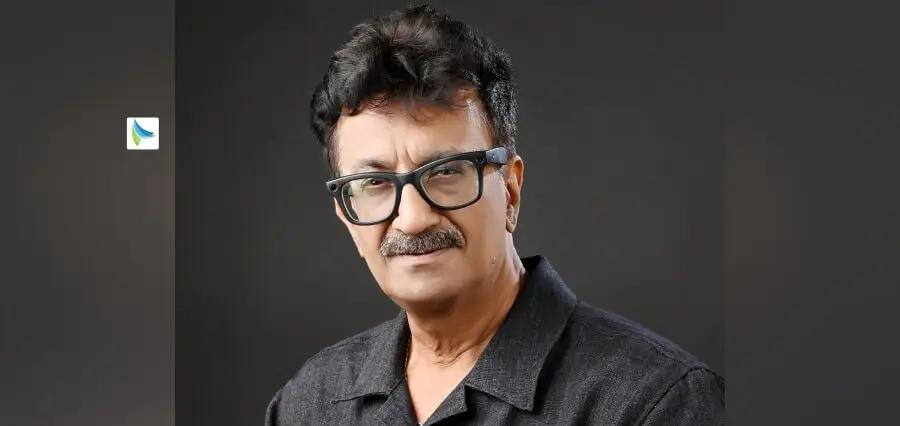
Somjat Maksomboon, Founder and Managing Director of Novaris Business Solutions Co., Ltd., built his company around exactly that belief. His background spans computer engineering, enterprise architecture, IT leadership, and business transformation. This gives him a perspective that connects technical understanding with commercial accountability, helping growing organisations make better decisions and build capabilities that genuinely last.
From Technical Expertise to Business Leadership
Somjat’s career began with computer engineering and a natural instinct to understand how systems work. Over time, his responsibilities moved beyond technical design into enterprise architecture, project management, digital transformation, and technology leadership. This progression changed how he approached complex business challenges.
As an IT director, he became responsible for infrastructure, cloud, security, core business platforms, and analytics. He also managed departmental profit and loss and reported to a chief executive and a board. These responsibilities required him to consider more than whether a technical solution would work. He had to understand its cost, expected return, operational implications, and the consequences of leaving a problem unresolved.
He also experienced the pressure of being accountable when systems failed and decisions had to be made quickly. These responsibilities taught him to distinguish between the technical problem and the decision behind it. While technical problems can often be solved, business decisions may remain unresolved because the direction is unclear, accountability is missing, or the organisation is not ready to absorb change.
This understanding now shapes his approach to transformation. Rather than beginning with a technology solution, he first examines the decision that needs to be made, who is accountable for it, and what evidence would help that person decide with confidence.
Building Novaris Business Solutions
Somjat established Novaris Business Solutions in 2026 after repeatedly encountering a gap in the market for technology and business advisory services.
Small and mid-sized businesses across Southeast Asia often face a difficult choice. Enterprise platforms can be priced beyond their budgets, while local tools may not meet the standards their operations require. Many also cannot justify employing a full-time technology director, even though that expertise could help them avoid costly decisions.
Novaris was established to make enterprise-level thinking accessible without requiring the same level of permanent staffing. The company works with business owners and management teams across IT strategy and advisory, business transformation, digital operations, process improvement, business intelligence, automation, artificial intelligence, cybersecurity, compliance, e-commerce, and managed services.
As Founder and Managing Director, Somjat’s responsibilities have evolved alongside the company. In its early months, he handled consulting, delivery leadership, and proposal writing. As the business develops, more of his time is devoted to designing how engagements are delivered and building a partner network across the Gulf, Southeast Asia, and Europe.
This model allows Novaris to assemble the capabilities needed for each client rather than build every engagement around a particular product or service. It also reflects his belief that “The founder’s role is to make the business less dependent on any one individual project while remaining accountable for the overall results.”
His goal is to build a firm that gives growing businesses access to the expertise and delivery discipline often associated with much larger organisations.
Connecting Strategy, Data, and Artificial Intelligence
Somjat approaches digital transformation through three connected layers. The first concerns data, which must be governed, accessible, and organised rather than scattered across spreadsheets, sales channels, and disconnected systems. The second connects that data to models and tools in a reliable and repeatable way. The third consists of the applications people use, including dashboards, assistants, and automation.
He has observed that organisations often begin with the visible layer, introducing dashboards or AI tools before addressing the underlying data. This can create the impression of faster progress, but problems emerge when the foundation cannot support the desired outcomes.
His perspective on AI adoption has also evolved. He previously considered choosing the wrong tool one of the greatest risks. He now believes the greater risk is making AI decisions before resolving basic infrastructure and data challenges. A company may switch AI models quickly, but reorganising its data can take a year and disrupt existing operations.
His approach therefore begins with a business question that is costing the organisation money. He then examines whether the available data can answer that question before selecting a platform. Adoption must also be treated as a real project cost because technology can be deployed in weeks, while changing people’s behaviour takes months.
This sequence connects business needs with technical decisions and helps organisations avoid investing in tools before they understand the problems those tools are expected to solve.
Leadership Through Accountability and Clarity
Four principles guide Somjat when he builds teams and manages transformation programmes.
The first is clear ownership. “An action without a name and a date is not an action.” Transformation initiatives rarely fail only because of one dramatic event. They can also lose momentum when teams agree that tasks are important but nobody accepts responsibility for completing them.
The second principle is making trade-offs visible. When clients want a wider scope, faster delivery, and lower costs simultaneously, he believes leaders should explain what is achievable and what each choice will cost. An honest conversation about constraints is more useful than making promises that create dissatisfaction later.
The third is encouraging open disagreement during planning while maintaining alignment during execution. Technology decisions affect finance, operations, legal teams, and the people who will use the systems. If concerns cannot be discussed during design, disagreements may emerge during implementation, when they are more expensive to resolve.
The fourth is protecting delivery teams from unnecessary pressure. Repeated status requests can prevent people from doing the work they are expected to complete. He therefore values a clear weekly reporting rhythm that gives leaders visibility without constantly interrupting delivery.
Underlying these principles is a practical approach to governance. When something goes wrong, the organisation should be able to identify who was accountable and which decision was recorded. Without that clarity, governance risks becoming a formality rather than a working management system.
Making Digital Transformation Work for People
Somjat has found that the hardest part of moving from manual processes to digital capabilities is often not the software. It is the absence of a clearly documented process.
In many organisations, operational knowledge resides with experienced employees and in spreadsheets refined over years. Different people may describe the same process differently, with each account reflecting part of the reality. Installing software without resolving those differences simply transfers the confusion into a digital environment.
For this reason, an important early deliverable is an honest map of current operations. It needs to capture exceptions, workarounds, and steps that remain in place because of earlier incidents. Only then can the organisation determine what should change and how technology can support the revised process.
The human dimension is equally important. Employees may see a spreadsheet or manual process as evidence of their value to the organisation. If a project is presented as removing that work, they may resist the change. He believes the effort should instead be framed around helping people move into better roles.
This makes transformation a leadership responsibility as much as a technical one. His approach is to begin where the operational pain is measurable, deliver improvements that people can experience within weeks, and use the resulting trust to support more difficult changes.
For him, “Trust is built in small releases.”
Staying Current While Remaining Practical
He continues to study emerging technologies and holds more than 150 professional certifications. Somjat values structured learning because it requires him to engage with material in greater depth than he might through casual reading alone.
However, he does not treat every announcement as a reason for clients to change direction. His main question is whether a development would change a decision a client needs to make. Many announcements do not meet that test, while some less prominent developments can have practical consequences.
He expects the distinction between data platforms and AI platforms to become less clear as their capabilities converge. He also considers agentic AI useful for internal applications, although he believes it remains more fragile than demonstrations may suggest. For many business problems, he sees smaller, more focused models as attractive because they can be cheaper, faster, and easier to trust than large general-purpose models.
His practical advice to business owners is to spend 30 to 60 days organising the underlying data before introducing another AI tool. This work may attract less attention than deploying a new platform, but it can determine whether the investment delivers value.
He measures the usefulness of his own learning by whether he can explain a technology in terms of a number on the client’s profit and loss statement. “Staying current is not the hard discipline. Staying useful is.”
Milestones That Shaped His Leadership
Several professional milestones have influenced Somjat’s development. One was his selection as a judge for the 2026 Cyber Security Awards in the United Kingdom, representing the Asia-Pacific region. Reviewing entries from international security firms alongside industry leaders and chief information security officers gave him an opportunity to assess innovation, business impact, and technical merit across different markets.
Another milestone was building a corporate AI programme from the ground up. This involved forming a cross-functional team, developing an AI charter that established governance principles and ownership, creating a structured process for business units to submit use cases, and shaping an investment framework that treated change management as a cost rather than an afterthought.
The experience reinforced his view that governance should come before deployment. An AI programme needs clear responsibilities and a consistent way to assess proposals rather than allowing investment decisions to be driven by whichever team makes the strongest case.
Establishing Novaris’s first formal partnership was another important achievement. The process took several months, longer than he had expected, but it reinforced the distinction between signing an agreement and creating a partnership that delivers value for clients. The real work begins after the paperwork is complete.
His MBA, with a double major in management information systems and strategy, also forms part of his professional background. Yet the milestones that have most influenced his approach have often involved practical work, careful decisions, and the discipline required to turn plans into results.
Managing Responsibility as a Founder
Somjat does not describe the first year of building a company as balanced. Instead, he has found that structure is more practical than trying to maintain an ideal balance at every moment.
He protects a small number of fixed commitments during the week, including learning time. Keeping it in his calendar as an appointment helps ensure that professional development does not disappear beneath daily responsibilities.
He also applies the same weekly discipline to his own business that he recommends to clients. A scheduled review, a clear list of risks, and decisions made at defined times help reduce the exhaustion that can come from continuous decision-making.
One of the most difficult disciplines has been deciding which problems do not require his attention during a particular week. A founder can become involved in almost anything, making it easy to devote substantial energy to the wrong priority.
He has also learned to distinguish activity from effectiveness. Some of his most valuable working hours produce no visible deliverable because they are spent thinking carefully about a client’s problem rather than reacting to messages about it.
Advice for Future Technology Leaders
Somjat advises aspiring technology and business transformation leaders to learn how to read a profit and loss statement. “Technical ability can bring professionals into important discussions, but connecting technical choices to financial outcomes helps them contribute to business decisions.”
He also encourages them to take responsibility for budgets, not only technical delivery. Managing the financial consequences of a decision changes how a person evaluates solutions. Instead of recommending an ideal architecture in isolation, leaders must consider what the organisation can afford, absorb, and operate.
Writing things down is another important habit. Recording decisions, owners, dates, and assumptions reduces disputes about what was agreed and allows teams to return their attention to the work.
He also urges professionals to resist the pressure to adopt every new technology. The tools that matter to a client in three years may already exist and may not appear particularly exciting today.
His final advice is to be useful before trying to be impressive. Solving one small problem properly can establish more trust than presenting an elaborate three-year roadmap before a client has asked for one.
Building the Future of Novaris
Somjat’s future goals for Novaris Business Solutions centre on a focused partner model, accessible enterprise-grade capabilities, and continued involvement in delivery.
He wants to deepen the company’s network across the Gulf, Southeast Asia, and Europe, connecting technology partners with growing businesses that need their expertise. In his view, capabilities developed in one market may address the needs of a mid-sized company in another, provided the relationship is supported by disciplined delivery.
He also wants to make enterprise-grade services accessible to companies that cannot operate at enterprise scale. Repeatable delivery, published governance, and transparent pricing are central to this goal. A company with 200 employees should be able to access capabilities that work to the standards expected by an organisation with 20,000 employees.
Personally, he intends to remain close enough to delivery to keep his advice grounded in reality. He believes that when founders rely only on strategy discussions, their recommendations can drift away from the practical challenges businesses face.
His measure of success remains straightforward. A year after the invoicing stops, is the client still using what Novaris built? For Somjat Maksomboon, lasting use is a more meaningful measure than the number of tools deployed or the plans presented.
His approach to technology and business transformation brings together technical understanding, financial accountability, structured execution, and practical leadership. Through Novaris, he aims to help growing businesses make better technology decisions and build capabilities they can continue to use. Ultimately, his focus remains on ensuring that transformation delivers value beyond implementation and creates results that endure.