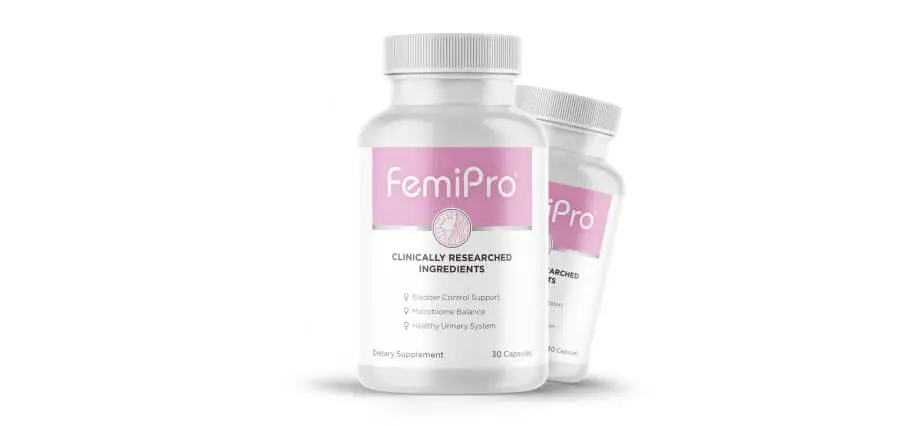




If you’ve ever felt that sudden, panicked rush to find a restroom — or worse, not made it in time — you know how much bladder control issues can quietly take over your life. Many women deal with this for years before seeking help, often assuming it’s just an inevitable part of aging, childbirth, or hormonal changes. FemiPro is a dietary supplement that positions itself as a natural answer to that frustration, targeting what it calls a ‘bladder microbiome imbalance’ as the root cause of leaks and urgency. But is there anything real behind the pitch?
I dug into the ingredients, looked at the research, and pulled apart the marketing claims so you don’t have to. Here’s an honest look at what FemiPro is, what’s in it, and whether it’s worth your money.
>>Click Here To Order Femipro Supplement
What Is FemiPro?
FemiPro is a once-daily capsule supplement sold exclusively through ClickBank, a well-known digital marketplace for health and wellness products. It’s marketed specifically toward women experiencing bladder control challenges — involuntary leaks, sudden urgency, and the general anxiety that comes with not quite trusting your own body.
The central theory behind the product is interesting, and genuinely rooted in emerging science: recent evidence suggests that the urinary tract harbors a variety of bacterial species, known collectively as the urinary microbiome, and that a shift in this microbiome may play an important role in urgency urinary incontinence. FemiPro claims its blend of herbal extracts and probiotics can correct that imbalance, reducing the overstimulation of bladder muscles that causes sudden leaks.
It’s a compelling angle. The question is whether the formula actually delivers on it.
Breaking Down the Ingredients
1. Bearberry (Uva Ursi)
Bearberry is arguably the most well-studied ingredient in FemiPro’s formula. Uva ursi has been used medicinally since the 2nd century — Native Americans used it as a remedy for urinary tract infections, and until the discovery of sulfa drugs and antibiotics, it was a common treatment for bladder-related infections.
The mechanism is reasonably understood: arbutin is the natural chemical in uva ursi that’s mainly responsible for its urinary tract benefits. Once metabolized in the body, arbutin is converted to hydroquinone, which passes through the kidneys into the urinary tract, where it may relieve pain and inflammation in the bladder and help prevent harmful bacteria from growing.
That said, the clinical evidence is still catching up to the traditional use. While uva ursi is widely marketed for the treatment of bladder infections, evidence supporting its efficacy remains limited, with some studies suggesting potential benefits but lacking robust clinical validation. Ongoing trials are comparing it directly to antibiotics in treating uncomplicated cystitis, so the picture should become clearer in coming years.
Bottom line: bearberry has a long history of use and a plausible mechanism, but the science isn’t fully settled. It’s a reasonable inclusion, not a slam-dunk.
2. Cranberry Extract
Cranberry is perhaps the best-known ingredient in urinary health supplements, and here the research is notably stronger. A meta-analysis of nine studies including 1,542 participants found that cranberry consumption reduced the incidence of recurrent UTIs in women compared with placebo.
What makes cranberry particularly effective isn’t just the antioxidants — it’s the anti-adhesion effect. Research has shown that cranberry’s proanthocyanidins may obstruct pathogenic E. coli’s ability to adhere to epithelial cells in the urinary tract, which is one of the primary ways bladder infections take hold.
When cranberry is paired with probiotics — as in FemiPro — the combination seems to work even better. In a randomized controlled trial, significantly fewer women experienced recurrent UTIs with a probiotic-plus-cranberry supplement compared to placebo — 9.1% versus 33.3% over 26 weeks. That’s a meaningful difference, and it lends some real credibility to the core concept behind FemiPro.
3. Probiotic Blend
The probiotic component is central to FemiPro’s microbiome-focused approach. The idea is that reintroducing beneficial bacteria can crowd out the harmful strains that irritate and overstimulate bladder walls.
Research supports this direction in principle. A six-month probiotic-plus-cranberry study saw a significant decrease in recurrent UTIs in the intervention group compared to placebo, with fewer women requiring antibiotic treatment and shorter antibiotic courses when infections did occur.
The problem with FemiPro specifically is transparency. Probiotic effectiveness depends enormously on the strains used, the CFU count (colony-forming units), and survivability through the digestive tract. The specific strains and CFU counts in FemiPro’s blend are not disclosed, which limits direct comparison with the clinical dosages studied in research literature.
4. Granular Berberine
Berberine is a plant-derived alkaloid that has attracted genuine scientific interest in recent years. It is known for its antimicrobial and anti-inflammatory properties, and in FemiPro it’s included to help regulate the growth of harmful bacteria in the urinary tract, promoting a balanced microbiome.
There’s decent evidence for berberine’s broad-spectrum antibacterial activity, and its anti-inflammatory properties could theoretically help reduce the bladder hypersensitivity that causes urgency. However, most of the clinical research on berberine focuses on blood sugar regulation and gut health — its specific application to urinary microbiome balance is still an area that needs more investigation.
5. Mimosa Pudica
This is the most unusual and least-studied ingredient in the blend. Mimosa pudica is a plant with traditional use in Ayurvedic medicine, mostly associated with its anti-parasitic and anti-inflammatory properties. It shows early promise for anti-inflammatory activity, though large-scale clinical data remain limited.
It’s an intriguing addition and not a red flag per se — but calling it ‘scientifically proven’ (as the FemiPro sales page does) is a stretch. The honest characterization is ‘traditionally used, early-stage research.’
What’s Missing: The Proprietary Blend Problem
One of the most significant criticisms of FemiPro is something shared by many supplements in this category: the ingredients are listed, but the amounts aren’t. Everything sits inside a ‘proprietary blend,’ which means you can’t tell if bearberry is dosed at a clinically relevant level or sprinkled in at a fraction of what research suggests is effective.
This matters because dosage is everything in supplementation. The fact that an ingredient has research behind it doesn’t mean any dose of it will work. Transparency in dosing is a standard expectation in quality supplementation, and FemiPro falls short on this count.
Pricing and Value
FemiPro is sold in three tiers:
| Package | Price | Shipping |
| 2 bottles | $79 | +$9.99 |
| 3+1 bottles | $69/bottle | Free (US) |
| 3+3 bottles (Best Value) | $49/bottle | Free (US) |
The ‘best value’ option does bring the per-bottle cost down substantially, but committing to a six-bottle purchase of any supplement you haven’t tried yet is a significant leap. The company does offer a 60-day money-back guarantee through ClickBank, which is a legitimate platform — so your purchase isn’t unprotected.
Also worth noting: international shoppers should read the fine print. Despite homepage language about ‘free shipping,’ standard rates of $15.95 apply to Canada, the UK, Ireland, Australia, and New Zealand.
Who Might Actually Benefit?
FemiPro seems best suited for women who are experiencing mild to moderate bladder urgency or recurrent UTIs and are looking for a supportive, non-pharmaceutical option to complement their lifestyle. The cranberry-probiotic combination in particular has genuine research behind it.
Women who may be good candidates include those experiencing:
- Urinary urgency or sudden, hard-to-defer urge to urinate
- Stress or urge urinary incontinence
- A history of recurrent UTI susceptibility
- Post-menopausal urogenital changes where hormonal shifts alter the urinary microbiome
However, FemiPro should not be treated as a substitute for medical evaluation. If you’re experiencing significant or worsening symptoms, a urologist or gynecologist can identify structural causes, rule out infection, and offer treatments — including pelvic floor therapy — with a substantially stronger evidence base.
The Honest Verdict
Overall, FemiPro reviews are positive. FemiPro isn’t a scam, but it’s also not quite the ‘breakthrough’ its sales page claims. The underlying concept — that the urinary microbiome plays a role in bladder function — is legitimate science. Several of its ingredients (particularly cranberry extract and probiotics) have meaningful research backing them when used together. Bearberry has a long history of traditional use and a plausible mechanism. Berberine is an emerging ingredient with real antimicrobial credibility.
What holds FemiPro back from a strong recommendation is the lack of dosage transparency, the undisclosed probiotic strains, the reliance on unverified customer reviews, and the gap between the marketing language and what the science actually confirms.
If you’re curious about supplementing for urinary health, the ingredient logic is sound enough to give it a 60-day try — especially at the two-bottle introductory level rather than committing to six bottles upfront. Pair it with adequate hydration, reduced caffeine and alcohol intake, and — if symptoms are significant — a conversation with your doctor.
The best supplements work alongside your health, not instead of it. FemiPro is a reasonable option in that supporting role, but it should be approached with measured expectations rather than the miracle-cure enthusiasm its marketing encourages.
>>Click Here To Order Femipro Supplement
Disclaimer: This review is for informational purposes only and does not constitute medical advice. FemiPro has not been evaluated by the FDA and is not intended to diagnose, treat, cure, or prevent any disease. Consult a qualified healthcare professional before starting any new supplement, especially if you are pregnant, nursing, or taking prescription medications.