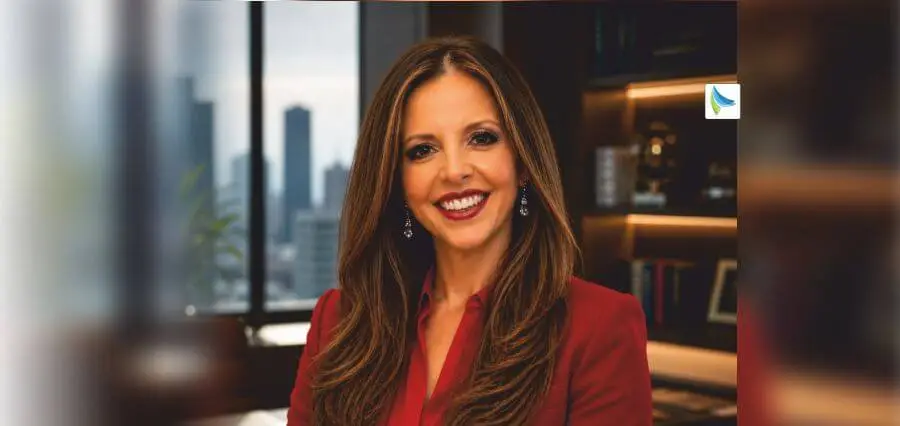




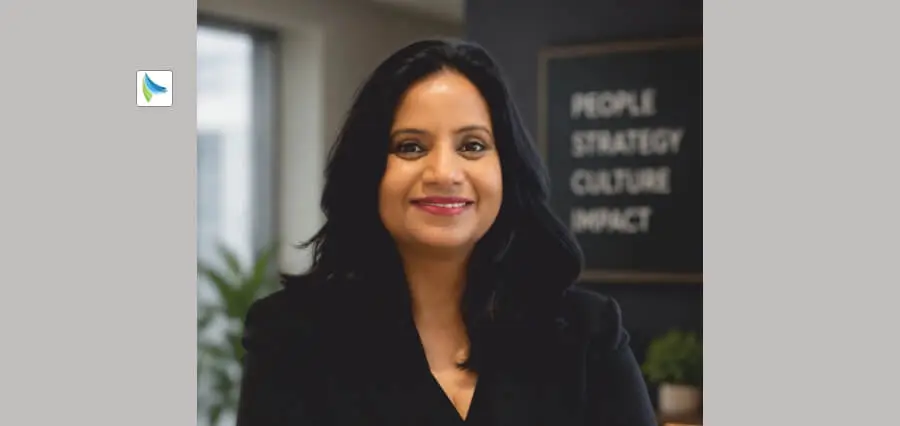
There is a line Ria Mohta returns to consistently, across boardroom conversations, consulting engagements, and executive education programs: business grows through strategy, but strategy succeeds through people. It is not a motivational phrase she borrowed from someone else. It is the conclusion she arrived at through two decades of direct experience, across manufacturing floors, global FMCG organizations, construction conglomerates, and now the advisory work she leads as Board Advisory and HR Transformation Consultant associated with Black and Grey. Every role she has held, every industry she has entered, and every challenge she has navigated has reinforced the same foundational truth. The organizations that grow sustainably are not those with the best strategies on paper. They are those whose people’s strategies and business strategies move together.
Ria’s professional journey does not follow a conventional arc. It follows something more deliberate: a series of intentional choices; each made not advance a title but to solve a business problem she had never encountered before. After completing her MBA, she joined the Parle Group, where the shop floor became her first and most formative classroom. Working in manufacturing alongside Lean Management and Greenfield expansion projects, she learned that productivity, quality, safety, employee engagement, and business performance are never separate conversations. They are deeply interconnected, and the culture that connects them is not built in meeting rooms. It is built where people create value every day.
The PepsiCo Turning Point
If Parle gave Ria her foundation, PepsiCo gave her transformation. It was her first experience of a truly worldclass HR function, one that operated not as a support service but as a genuine strategic partner, influencing business decisions, shaping leadership capability, and contributing directly to long-term growth. The shift in her understanding of what HR could be was fundamental and permanent.
It was also, by her own account, the most personally demanding period of her career. She joined PepsiCo as a young mother to a toddler, living in Chennai without an extended family support system, while her husband frequently worked on long-term projects across the GCC. The tension between professional ambition and personal responsibility was real and daily. What carried her through was the quality of the environment around her: people whose ambition inspired growth rather than competition, and a culture where ordinary people consistently produced extraordinary outcomes.
She reflects, “Culture is not created through policies. It is created through the everyday behaviors of people. Culture is not built by having the loudest voice in the room; it is about creating an environment that continues to influence even the last person in the business to think about business purpose and their contribution to the bigger picture.”
That conviction, formed during one of the most demanding chapters of her life, has never left her. Executive education at XLRI deepened her theoretical grounding. But it was the lived experience of those years at PepsiCo that shaped the leader she became.
From Breadth to Board Level
The trajectory that followed moved with deliberate intention across industries and geographies. At IFFCO, Ria stepped from being an HR Business Partner into a genuinely strategic leadership role, contributing to boardroom discussions across multiple countries, aligning people strategy with business strategy at the highest levels, and experiencing large-scale organizational transformation from the inside. The experience reinforced her central belief: transformation is sustainable only when leadership strategy and people’s strategy move forward together, not in sequence.
The move into consulting marked another deliberate boundary crossing. Corporate HR teaches depth within one organization. Consulting teaches breadth across many. Working with diversified conglomerates across construction, engineering, hospitality, healthcare, and manufacturing challenged her to design solutions contextually rather than prescriptively. Every client had different business realities. Every solution had to be built around the organization’s culture, strategy, and stage of growth.
Leading Talent and Organizational Development for Khansaheb further strengthened her conviction that leadership capability is the greatest competitive advantage any organization can build. CHRO program at Unniversity of Pennislyvania at The Wharton School, alongside aspiring CHROs around the world, expanded her perspective while reinforcing a principle that has held constant: business contexts differ across countries and industries, but great leadership principles remain universal.
She notes, “No two roles have ever been the same. Every experience built the foundation for the next. I have always believed in experiencing first and learning next.”
The Questions That Drive Innovation
When Ria evaluates whether a people’s practice is genuinely innovative or simply new, she applies three questions that have become the filter through which she assesses every initiative she designs or advises.
The first: if we were building this practice today from scratch, would we design it the same way? If not, why are we continuing with the old approach? Second: imagine this initiative failed five years from now. What could be the possible reasons, and what can we do today to prevent them? The third: can the business sustain this approach after implementation without continuously depending on guidelines, manuals, or external intervention?
These questions ensure that innovation is not only creative but genuinely durable. The best solutions, as she describes them, are not the most complicated. They are the ones that people can adopt, sustain, and connect with because they solve a real problem in a way that makes operational sense.
Her framework for identifying trends before they become obvious draws on the same structured thinking. She has carried the PESTLE model as a lens across her entire career, not as an academic exercise but as a way of reading signals that most leaders dismiss as noise. Some of the most valuable insights, she argues, come not from reports but from listening closely to frontline employees, young professionals entering the workforce, and people who challenge conventional assumptions.
Trust as a Compounding Asset
Across two decades of working with stakeholders ranging from shop floor teams to board members, Ria’s view of trust is precise and consistent. It is never established through authority. It is earned through consistency, and it compounds over time the way reputation does, slowly built and quickly lost.
The moments that determine whether trust is built or broken are rarely dramatic ones. They are the small, repeated interactions: keeping commitments, maintaining confidentiality, providing honest feedback, communicating transparently, and standing beside people during genuinely difficult decisions. People may not remember every conversation a leader has with them. They remember how they were treated when something that mattered was at stake.
She states, “Trust compounds like reputation. It is built through small but meaningful moments. Throughout my career, many professional relationships-built years ago continue to remain strong sources of collaboration and trust. That is the true measure of successful stakeholder management.”
The Change She Would Make
If Ria could change one aspect of how organizations approach people’s strategy, it would be fragmentation.
As organizations grow, HR functions tend to divide into specialized silos: Talent Acquisition, Learning, Rewards, Performance Management, Shared Services. Each may individually produce excellent frameworks. The challenge is that when they operate independently from the business realities, they are supposed to serve.
The question, in her view, should never be whether an organization has the best HR practices. It should be whether those practices are creating the behaviors and capabilities required by the business strategy. For large conglomerates operating across multiple industries and countries, that distinction is the difference between HR that looks impressive and HR that moves the business.
She affirms, “HR should not just design programs. It should architect business capability. When leadership development, talent management, culture, and business strategy move together, organizations become more agile, resilient, and future-ready.”
What Comes Next
The future Ria is most excited about is also the one she considers most demanding. Organizations today manage five generations of employees while adapting simultaneously to artificial intelligence, hybrid work, changing global dynamics, workforce mobility, and rapidly evolving employee expectations. The complexity is unprecedented. So is the opportunity for HR leaders who understand that their role is no longer to manage people’s processes but to shape business capability.
Her own philosophy for staying ahead of that complexity is one she describes as reverse ageing: growing more curious, more energetic, and more open to what lies ahead with every passing year. She learns something new every year that challenges her and pushes her outside her comfort zone. It is a discipline she applies to herself with the same rigor she applies to the organizations she advises.
The next generation of HR leaders will be measured not by engagement scores or policy frameworks but by their ability to build organizational capability, leadership pipelines, and cultural resilience. For decades, HR worked to earn a seat at the leadership table. The next decade belongs to HR leaders who help shape the table itself.
That is the contribution Ria Mohta is building toward, not as a function head but as a business leader who specializes in people.