




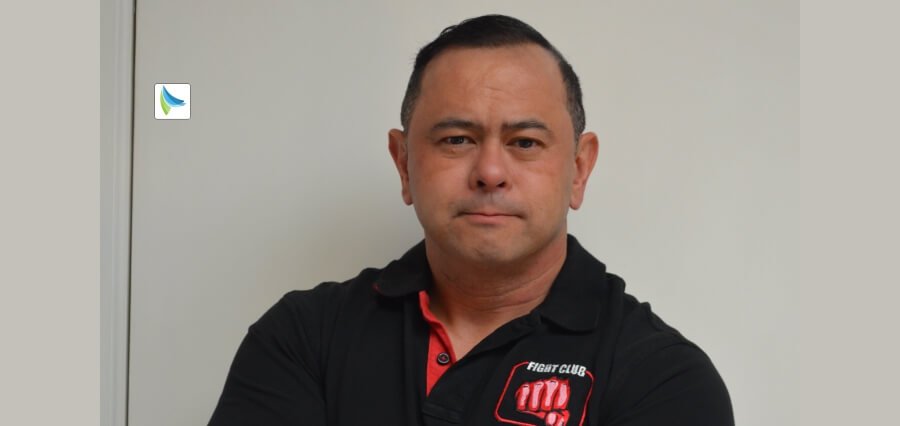
The landscape of modern conflict is accelerating at a velocity that leaves traditional military structures struggling to keep pace. Standing at the epicenter of this shift is Colonel Arnel Pañarez David, a U.S. Army strategist and visionary architect of the military’s digital future. Arnel isn’t just managing change; he is fundamentally re-engineering how the modern warfighter thinks, fights, and wins.
Through his founding of Fight Club International, Arnel David has ignited a “bottom-up” movement, dragging professional wargaming out of the shadows of niche extracurriculars and into the heart of frontline readiness. He is constructing a high-octane ecosystem designed to replicate the raw urgency and radical adaptability of wartime transformation—ensuring the US and NATO remain a step ahead in the relentless arena of crisis and competition.
The Genesis of a Gaming Insurgency
Founded in March 2020 as the global pandemic necessitated new ways of connecting, the initiative—initially known as the UK Fight Club—began with a clear mission: to change the culture around professional wargaming. Arnel David recognized that while gaming talent was present throughout the ranks, the military often lacked the direction and resources to cultivate an environment where such innovations could thrive.
Under Arnel’s leadership, Fight Club has grown into a global network of more than 3,000 members, bridging communities across defense, government, industry, and academia. “The ultimate aim is not better gaming; it is better thinking,”Arnel David explains. By leveraging commercial off-the-shelf (COTS) gaming software, Fight Club allows volunteers to test hypotheses on force structures and operational concepts early and often.
A Culture of “Safe-to-Fail” Innovation
One of Arnel’s primary contributions is the advocacy for a “safe-to-fail” environment. Traditional field exercises, while invaluable, are resource-intensive and often prioritize repetitive drills over iterative experimental learning. Wargaming and simulations, by contrast, offer a path to fast, flexible, and affordable development that challenges rather than confirms assumptions.
This philosophy is embodied in the club’s use of high-fidelity simulations like Combat Mission Professional Edition (CMPE) and Command Professional Edition. These tools allow participants to experience the “chaos, unpredictable, frictional, and frustrating nature of conflict” in a realistic peer-adversary setting—a critical cultural shift for forces accustomed to decades of counter-insurgency operations.
A genuine failure under manufactured pressure through a simulation, he argues, teaches far more than a polished success in a sterile environment. An 80% solution deployed today and improved in the field is, in his view, strategically superior to a perfect solution that arrives after the moment has passed.
AI Is Not a Tool. It Is a Doctrine.
By 2026, the debate over whether AI belongs in defense has closed. Arnel David is not relitigating it. The question he is now driving is sharper: how fast can artificial intelligence become embedded in the way a military actually fights, not just the way it plans?
He frames this as a shift toward what he calls algorithmic maneuver- a fundamental change in how commanders orient themselves to the battlefield. The objective is cognitive superiority: the ability to process data from every domain in real time and turn it into a decision advantage before the first kinetic action occurs. In Arnel’s framing, the commander who masters the algorithm does not simply react to the battlefield. They shape it before it takes form. Fight Club is pushing leaders to better understand this growing phenomenon.
Engineering a “Team of Teams” Approach
Arnel’s strategic edge is defined by his mastery of the “Team of Teams” architecture—a sophisticated leadership model that shatters institutional silos and elicits the raw talent of every member on the team to unify toward a shared goal. Whether it is partnering with tech startups like Strategy Connections to create digital games like War Paths or collaborating with academic institutions like the Defence and Security Oxford Brookes University (DASOBU), Arnel builds environments where every partner can see their professional growth reflected in a common vision. He inspires action. By aligning individual professional growth with an organization’s pulse, Arnel creates a culture where the impossible becomes the baseline.
His mastery of synchronized collaboration has shattered institutional inertia, delivering results that fundamentally re-engineer even the most resilient and traditional organizations:
- The Maven Breakthrough: Arnel David personally spearheaded the delivery of NATO’s first AI-enabled command and control platform, the Maven Smart System, in under six months. A historic feat in Alliance history.
- Architecting a 4-Star Command: Serving as the Chief of Staff for the Chief of Staff of the Army’s Strategic Studies Group, Arnel led a handpicked elite team to disrupt the institutional Army and build Army Futures Command—a monumental reorganization of the service’s modernization enterprise. It was the biggest change for the Army in over 35 years.
- Global Kinetic Growth: What began as a localized effort has ignited a global phenomenon; the Fight Club movement has surged across Poland, Greece, Italy, Türkiye, Spain, Germany, the Philippines, and the United States, pooling international resources to harness the power of gaming for elite strategic performance.
- Task Force Leadership: Throughout his career, Arnel sustained a strong bias for action, taking small and elite task forces that consistently punch above their weight class. By creating “cognitive sanctuaries,” he protects his teams from bureaucratic friction, allowing them to outpace massive institutions and deliver outsized strategic impact with surgical precision.
Arnel’s record of recognition reflects the range of his impact. General Sir Mark Carleton-Smith commended him as part of the Queen’s Platinum Jubilee Birthday Honours List in 2022. The state of Florida honored him with a Citizen Life Saving Award in 2016. He has co-authored analytical work with the Center for Strategic and International Studies, contributed to Real Clear Defense, and has spoken on the Army Mad Scientist series, the Warfighter Podcast, and panels across multiple continents.
The Future: The Soldier-Coder
Looking toward 2030, Arnel David sees a future where every soldier carries the capacity to operate and adapt in the digital domain—a concept he calls Organic Digital Lethality. He is currently developing the doctrine to support the “Soldier-Coder,” a warfighter who can adjust digital tools on the tactical edge with the same ease as fixing a weapon malfunction. Every trooper must be proficient in the use of AI.
By fostering an environment of innovative and inquisitive wargame-led experimentation,Arnel David is ensuring that the military does not just arrive at the next conflict but shapes it before it even takes form. Through Fight Club International, he is providing the next generation of leaders with the sharpest weapon available: a well-trained, agile mind.
Innovating from the Ground Up: Forging the Future of Combat Simulation
A core pillar of Arnel David’s vision for Fight Club International is the belief that the military must not only use existing tools but actively invent new ones to meet the evolving demands of the digital battlefield. While many institutions are hampered by lengthy procurement cycles, Fight Club functions as a hub for innovation, rapidly prototyping new games and tools that bridge the gap between commercial technology and military necessity.
By bypassing the wait for top-down solutions, Fight Club participants collaborate with tech startups and academic partners to deliver groundbreaking tools for high-fidelity training and strategic analysis. These innovations are fundamentally transforming professional military education, evolving it from static, passive lectures into dynamic, immersive experiences that demand active thinking. This shift represents a deeper institutional evolution; military organizations are not just adopting new tools, they are re-engineering their core processes and behaviors to achieve a state of radical innovation and perpetual adaptation.
Forging the Future: One Sprint at a Time
Arnel David rejects the luxury of waiting for perfect conditions. He identifies the mission’s core requirements, maps a high-velocity path through complex institutional terrain, and moves with relentless momentum. Inside organizations built on a bedrock of precedent and procedure, he has engineered teams that operate with the lethal speed of a tech start-up. By delivering in months what institutions historically measured in decades, Arnel David has shattered the myth that discipline and agility are in conflict; he has proven that, when led correctly, they are the exact same thing.
The work is far from over; in many ways, it is only just finding its stride. As the character of global conflict shifts, as data becomes the new terrain and processing speed becomes the ultimate decisive advantage, Arnel’s mission grows more consequential with every passing month. He is the vital catalyst ensuring that government and military organizations do not simply arrive at the defining challenge of this era, but dominate it from the start. Arnel David is not just keeping pace with the future—he is defining it
He does all of this without fanfare. The awards matter less to him than the outcomes. The titles matter less than the work. What drives him is the same thing that has driven him through every assignment, every deployment, and every difficult room he has walked into: the conviction that the people depending on their military deserve a force that is ready, fast, and smart enough to protect them. That conviction does not waver. And neither does he.