



Most careers in industrial automation follow a predictable arc: an engineering degree, a technical role, a slow climb through project titles, and eventually a management position overseeing the same systems from a greater distance. Few of those careers involve a rock band, a guitar mastered without a teacher, or a decision at the height of a stable corporate run to bet everything on the idea that artificial intelligence would soon reshape an entire industry. One leader’s path did all of that, and the throughline connecting a teenage stage performance to a boardroom digital transformation strategy turns out to be the same instinct each time: challenge convention, and see what happens next.
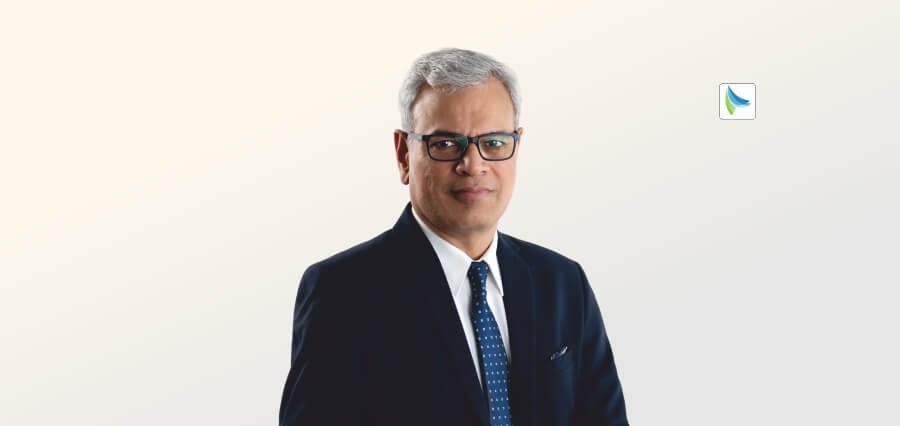
Waleed Rashid currently leads digital transformation across India, the Middle East, and Africa at SIG Group in Dubai, a role built on more than a decade spent inside some of the region’s largest industrial operations. His journey there began far from a boardroom, shaped instead by two very different influences at home, and a childhood spent moving between countries and cultures, long before automation or artificial intelligence had entered his vocabulary at all.
A Global Upbringing Rooted in Discipline and Creativity
Waleed was born in Pakistan, the second child in a household shaped by two distinct influences. His mother, a self-made entrepreneur, taught him independence and resilience, while his father, a mechanical engineer and former military man who later moved into corporate leadership, instilled discipline and professionalism. His family later relocated to Saudi Arabia, where he attended a multicultural school and completed his Cambridge IGCSE and GCE examinations, an experience that broadened his perspective early through friendships across cultures.
He eventually returned to Islamabad to complete a bachelor’s degree in electrical engineering, a period he remembers as much for sports and music as for coursework. He became President of his university’s Music Society and formed a rock band that performed at venues across the city. He reflects, “Music taught me that the most memorable compositions often emerge when people challenge conventions, experiment, and think differently, an approach that has continued to influence my personal and professional life.”
From Intern to Digital Transformation Leader
Waleed’s professional path began in 2011 as an Automation Engineering intern at Industrial Instrumentation and Control Systems (IICS) in Saudi Arabia, a subsidiary of Abunayyan Holding. A brief stint at Siemens’ building automation division in Riyadh followed, but he found the scope too narrow and returned to IICS in 2012 to gain broader experience across the full project lifecycle. By 2014 he had been promoted to Project Manager, overseeing projects for Saudi Aramco, SABIC, the Royal Commission, and Marafiq across the oil and gas, petrochemical, and water sectors. A defining chapter opened in 2017, when he joined Sadara Chemical Company, a joint venture between Saudi Aramco and Dow, to lead its digital function, eventually managing a team responsible for more than 1,500 control systems across 27 plants. Leadership roles at Avanceon and ATCO Group followed, working alongside global technology partners including Honeywell, Schneider Electric, and General Electric, and giving him exposure to project execution, solution sales, and manufacturing operations across markets well beyond the plants he had started out in.
Where Automation Meets Artificial Intelligence
By 2021, Waleed recognized that industrial automation was converging with artificial intelligence, data analytics, and machine learning, a realization that reshaped the direction of his career. That conviction pulled him into SABIC’s corporate digitalization program and later to SIG Group in Dubai, where he now leads the effort to combine deep industrial knowledge with emerging digital technologies to improve operational performance across three continents. He notes, “This realization became the central idea behind the next phase of my career: combining deep industrial knowledge with emerging digital technologies to improve operational performance.”
Balancing Ambition and Family
Waleed is candid that balance rarely comes easily. Building a career across demanding Middle East business environments, while marrying young and becoming a father of two, meant long hours, frequent travel, and periods where work naturally took priority. What kept him grounded, he says, was a strong circle of friends, supportive parents, and an understanding spouse, along with family trips whenever opportunities were allowed. A turning point came from an early manager’s advice. He explains, “One of my early managers once advised me to ‘learn to work from the desk and delegate.’ That advice stayed with me.” Learning to delegate, invest in mentoring, and trust his teams gradually freed up the time he needed to pursue certifications, complete an Executive MBA, and be more present at home.
He affirms, “I have learned that balance is not always about giving equal time to everything, but about being fully present and responsible in whichever role requires attention at a particular moment.” That shift, he says, took years to fully internalize, since attention to detail had always been one of his strongest instincts, and learning to let go of some of that control did not come naturally.
An Appetite for Building, Not Just Earning
Waleed describes his relationship with business as something closer to a calling than a career path. He states, “For me, a career is not simply about receiving a salary at the end of the month; it is about contributing meaningfully to the growth, progress, and long-term success of the organization.” What energizes him most is turning ideas into tangible outcomes, whether that means launching new initiatives, building partnerships with educational institutions, or creating opportunities that extend beyond financial performance alone. He is equally motivated by the belief that strong businesses carry responsibilities beyond profit, from developing talent to supporting the communities they operate within, a view he says has only strengthened the longer he has spent watching organizations succeed or stall based on how seriously they take that responsibility.
The Passion Behind the Drive
For Waleed, the underlying fuel behind his career is simple and urgent. He says, “We have only one life, and time cannot be recovered.” That belief pushes him to make every day count, and to find genuine fulfilment in watching colleagues, friends, and family members grow. He credits his parents’ sacrifices as a lasting source of motivation and describes his own children as the reason he continues pushing forward. He adds, “My passion comes from growth, contribution, and responsibility: growing as an individual, helping others win, and creating a legacy that my family can be proud of.”
Turning Disruption into Discipline: The COVID Chapter
As a Regional Solutions Manager during the pandemic, Waleed faced travel restrictions, limited site access, and supply-chain disruptions across an industry that had always depended on physical presence and face-to-face coordination. Rather than treating the disruption purely as a setback, he restructured how his teams worked, introducing structured virtual meetings, digital progress tracking, and closer follow-up to keep projects moving. He mentions, “Rather than viewing the pandemic only as a disruption, I used it as an opportunity to become more adaptable, digitally capable, and resilient.” The habits built during that period, he says, continue to shape how he manages teams and projects today. Long after travel restrictions and site closures have become a memory rather than a daily constraint.
Strengths, Weaknesses, and the Wisdom of Patience
Waleed traces much of his success back to curiosity, self-learning, and versatility; qualities first sharpened through sports and music rather than the classroom. Teaching himself guitar with limited resources as a student taught him a lesson he has carried into his career ever since. He observes, “Progress is not always determined by the resources available, but by the strength of one’s desire and commitment.” He is equally candid about a weakness he has had to manage impatience with the pace of organizational change, an instinct he learned to temper with influence, stakeholder alignment, and what he calls lateral leadership, rather than simply pushing harder. The lesson, he says, is to remain ambitious while understanding the rhythm of the organization, pushing progress constructively rather than trying to force change faster than an organization is genuinely ready to absorb it.
A Career Measured in Recognition
Waleed’s record includes leading digital and automation initiatives across more than two dozen industrial plants, work that has been formally recognized at nearly every stage of his career. Early on, he received the Employee of the Year Award 2013 from the IICS Project Management Department for his contributions to automation and controls engineering, along with a Certificate of Appreciation from IICS CEO Mr. Abdullah Sulaiman for his role in the company’s Work Process Improvement initiative and a recommendation letter from the Head of Projects recognizing his engineering quality and customer satisfaction record.
At Sadara, his more than two years supporting the Digital Team across 26 plants earned him a Certificate of Appreciation from the company’s Instrumentation, Electrical, and Digital Department, a Shield for Dedicated Services presented at his departmental farewell, and a Creditors Reliability Test Award from Sadara’s CEO for leading a critical initiative that kept automation systems running without failure for 60 consecutive days at close to 90 percent design capacity. His digitalization work at SABIC was recognized with a Certificate of Appreciation from the Corporate Digitalization Program’s Vice President for meeting the 2022 delivery milestones, and his current work at SIG Group earned a Certificate of Appreciation from SIG Global Quality for presenting an AI-driven digital quality management solution during Global Quality Week.
Recognition Beyond the Plant Floor
His work has also taken him beyond the plant floor: he was awarded a shield by Zayed University Dubai, in collaboration with the UAE Office of Artificial Intelligence, for a talk on the next industrial revolution, and another by Amity University Dubai for a guest lecture on digital transformation, while his collaboration with RIT University Dubai on a digital transformation program was featured in Khaleej Times, Education Middle East, The Catalyst, Education UAE, and the Abu Dhabi Education Guide. Long before any of that, he captained his school cricket team to its first championship, formed a rock band that was featured in a local newspaper, and won the Jazz Islamabad Talent Hunt as a university student, achievements he still regards as part of the same throughline of ambition that later shaped his career, evidence that the same competitive drive that showed up on a cricket pitch or a concert stage never really left him once he moved into corporate life.
Advice for Aspiring Leaders
Waleed’s advice to those pursuing leadership roles begins with a caution against rushing. He says, “Leadership should emerge naturally from experience, resilience, and perseverance rather than from a desire for position or title.” He is direct about where credit belongs recognize the people who contributed to any outcome and treat a team’s success as the real measure of leadership. He adds, “A leader becomes successful when the team feels trusted, supported, and motivated to perform. Ultimately, a leader’s success is reflected in the achievements of the team.” Effective leadership, in his view, also requires situational judgment, knowing when to take charge and when to step back, listen, and let others own the outcome, since no single leadership style, in his experience, holds up across every situation a team is likely to face.
A Mantra for Growth
Waleed’s message to aspiring professionals is built around consistency more than talent. He states, “Stay curious, hungry, passionate, disciplined, and consistent.” He believes the gap between an ordinary career and an extraordinary one usually comes down to the extra effort made on ordinary days, not any singular breakthrough. He adds, “The difference between ordinary and extraordinary often lies in the extra effort made every day.”
Waleed closes with a reminder aimed less at strategy than at self-belief. He affirms, “Do not limit yourself, believe that you are capable, and keep moving forward.” From a stage in Islamabad to a digital transformation mandate spanning three continents, that conviction has carried Waleed Rashid through every chapter of a career built on the same idea that first drew him to music: real progress comes from those willing to challenge convention and see what emerges next.