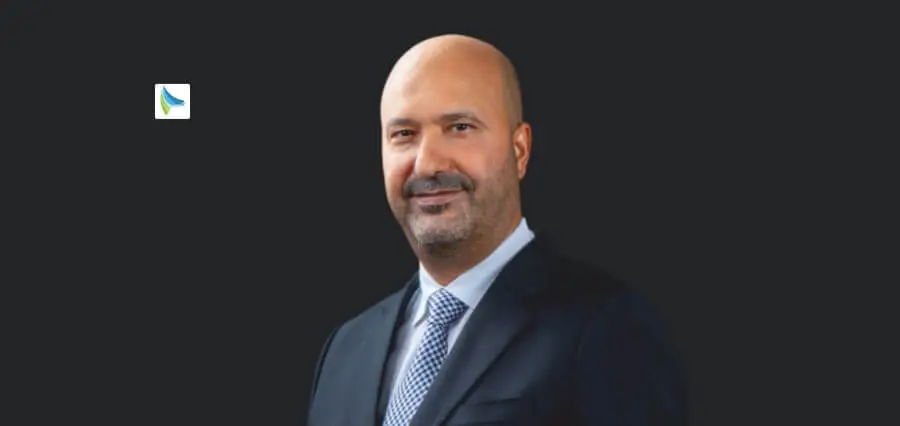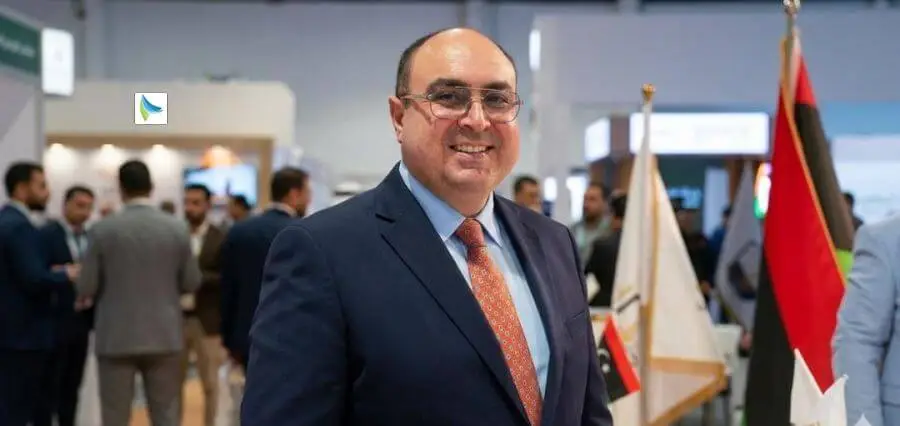





A man who believes in not waiting, not waiting for the world to hand him a stage, instead builds one. A man who quietly, methodically, with the patience of a craftsman and the nerve of a pioneer, fills the stage with something worth watching. Meet Venkata Reddy, who steers an organization that sits confidently at the intersection of knowledge process outsourcing, enterprise technology, financial services, and artificial intelligence. Today, he is the Director and CFO of Venkat Tech Global Solutions Private Limited, but the story behind this title is far more compelling than any designation could convey.
In this feature story, let’s take a deep dive into Venkata Reddy’s journey.
His journey was never a bed of roses; instead, he had to face the brunt of complex institutions, global systems, and relentless strangulation between ambition and execution. He began within the disciplined corridors of finance, where precision and accountability are non-negotiable, and gradually transitioned into the uncertain yet expansive domain of entrepreneurship. It is here that his vision found its fullest expression. As he reflects, scale is not something one studies; it is something one lives. The years preceding Venkat Tech became his proving ground, offering a rigorous, real-world education in how the world’s most formidable organizations sustain themselves and evolve.
Roots in Rigour: The Making of a Finance Mind
Not all careers begin with a grand plan. Some begin with a conviction that mastery of the fundamentals will, in time, open doors that shortcuts never could. Venkata Reddy’s early years were anchored in exactly this belief. He entered the professional world through the structured landscape of finance, and it was here, in the meticulous discipline of numbers and compliance, that he forged the first layer of a career that would eventually span continents and industries.
His formative years at Ernst & Young gave him something that no classroom could fully replicate: exposure to how global organizations think about process, governance, and accountability. The firm’s culture of precision became something he absorbed deeply. From there, a role at Bosch broadened his perspective further, drawing him into the complex machinery of shared services at scale. He saw how multinational corporations manage sprawling back-office operations across time zones and cultures, and he took notes, not just on the systems, but on the failures, the workarounds, and the moments when structure gave way to chaos.
HSBC offered yet another dimension. It was here that Venkata encountered the powerful overlap between enterprise technology and financial operations. Large-scale system implementations, he mentions, “It showed me that the future of finance was never going to be just about the numbers, it was going to be about the infrastructure that made the numbers meaningful.” That insight, absorbed in the middle of one of the world’s most complex financial institutions, would prove to be a defining influence on everything that came after.
State Street and the Scale of Seriousness
If Ernst & Young taught Venkata how global organizations are structured, and HSBC showed him where finance and technology converge, it was State Street Corporation that gave him something even rarer: the experience of leading large-scale offshore operations with real consequences. At State Street, he managed hundreds of professionals across functions, overseeing operations where errors were not merely inconvenient; they were costly. There was no room here for approximation. Precision was not a virtue; it was a survival requirement.
It was in this environment that he developed the leadership instincts that continue to shape him today. According to him, the greatest lesson from those years was not about technical expertise; it was about governance. He states that “You can have the smartest people in the room, but without clear frameworks, without accountability built into every layer of the operation, you will eventually lose control of the thing you are trying to build.” That philosophy of structured governance of designing systems that work even when attention wanders became a cornerstone of how he would later build Venkat Tech.
The years at State Street also deepened his understanding of what clients actually want from global delivery partners. It was not, he understood, simply about cost reduction. Organizations of that scale demand reliability, predictability, and the confidence that their most sensitive processes are in capable hands. He carried that understanding forward, intact, into every conversation about what Venkat Tech should stand for.
The Leap: From Operator to Founder
There is a moment in the lives of certain professionals when a career built for others starts to feel incomplete. Not inadequate, but incomplete. Venkata Reddy reached that moment and responded with characteristic decisiveness. The founding of Venkat Tech Global Solutions Private Limited was not an impulsive act. It was the result of years of accumulated insight, industry knowledge, and a growing conviction that the market needed something different from what established players were offering.
He envisioned a company that would not simply execute outsourced tasks but would serve as a genuine transformation partner for its clients. He mentions that he wanted to build something that could sit at the client’s table as a strategic equal, not simply as a vendor executing instructions from a distance. That ambition demanded a multi-pillar model, one that could speak fluently in the languages of operations, technology, finance, and innovation simultaneously.
The early days of building Venkat Tech were, by any measure, demanding. Launching a company that spans knowledge process outsourcing, IT services, financial consulting, and AI-driven product development is not a linear exercise. It requires the founder to wear many hats at once: strategist, salesperson, talent developer, and operational lead, often in the same afternoon. Yet Venkata appears to have thrived in precisely this kind of complexity. In less than three years, the company grew from inception to a recognized global delivery partner with clients across Europe and North America. He states that the speed of growth has been gratifying, but what matters more to him is the quality of what they are building: “The depth of the capabilities, the strength of the client relationships, and the culture of execution that we are instilling from the very beginning.”
A Vision Encoded in Architecture: The Four-Pillar Model
Ask Venkata Reddy to describe Venkat Tech, and he does not reach for a one-line elevator pitch. He describes an architecture, a deliberate, interlocking structure of capabilities that, taken together, create something far more valuable than any single service line could on its own. The first pillar is KPO and back-office services, the operational engine that drives scalable, process-driven delivery across business functions and e-commerce workflows. The second is IT and software services, enabling clients to pursue digital transformation through application development, cloud infrastructure, DevOps practices, and data solutions. The third, finance and accounting solutions, reflects his own professional origins: ensuring compliance, reporting accuracy, and financial discipline for clients who cannot afford to leave these functions to chance.
The fourth pillar, and the one that speaks most directly to where Venkata sees the future, is AI and SaaS platforms. According to him, “The next frontier of outsourcing is not just about delivering services; it is about building products that encode expertise into scalable technology.” At Venkat Tech, this translates into AI-driven platforms, particularly in the e-commerce space, focused on image enhancement, visual transformation, and workflow automation. These are not peripheral experiments; they are central to the company’s long-term positioning as both a services firm and a product innovator.
What makes this four-pillar model distinctive is not the individual capabilities; it is their integration. Venkata insists that the real value for clients lies in bringing these capabilities together into a unified delivery architecture, rather than leaving clients to manage fragmented vendor ecosystems. He mentions that clients should not have to spend energy managing the interfaces between their technology partner, their operations partner, and their financial advisor. Those boundaries, he believes, should dissolve inside a single, trusted relationship.
The Human Dimension: Leading Across Cultures and Complexities
It is one thing to build an organizational model on paper. It is another to make it work across geographies, cultures, time zones, and the inevitable friction of human dynamics. Venkata Reddy has navigated all of this, and it has shaped his understanding of what leadership at this level actually demands. Managing multi-domain teams of professionals who speak the distinct languages of operations, finance, technology, and analytics requires something beyond authority. It requires a kind of translation: the ability to take a shared objective and render it meaningful to people whose instincts, training, and mental models are fundamentally different from one another.
For European clients, he has learned, cultural alignment is not a soft consideration; it is a commercial imperative. Understanding regulatory expectations, communication styles, and the specific ways in which different markets define trust and accountability has required him to develop a kind of cultural fluency that goes well beyond anything a management textbook could teach. He mentions that “Global delivery is fundamentally a relationship business and relationships are built on trust, and trust is built on understanding the person across the table, not just the contract.” That orientation, relational rather than purely transactional, informs every client engagement Venkat Tech undertakes.
Venkata describes his internal leadership approach as one of radical clarity: precise communication about objectives, transparent frameworks for accountability, and a consistent emphasis on the shared purpose that unites people across different functions. He states that the most dangerous assumption a leader can make is that everyone in the room shares the same mental model of the goal. They rarely do, and his job is to build that shared understanding, one conversation at a time.
The Philosophy of the Long Game
Behind every bold organizational move, every strategic expansion into new domains, and every client relationship built over years of consistent delivery, Venkata Reddy returns to a set of values that sound almost old-fashioned in their simplicity, persistence, patience, self-belief, and focus. He does not apologize for their plainness. According to him, the things that sound simple are invariably the hardest to practice. Anyone can articulate a vision. Far fewer hold the line long enough to make it real.
Persistence, he explains, is what kept the vision alive during the inevitable early periods of uncertainty that every new enterprise encounters. Patience is what allowed him to invest in capabilities, particularly in AI and SaaS, that did not deliver immediate returns but positioned the company for a fundamentally different kind of future. Self-belief is what enabled the original leap from a successful institutional career into the risk and responsibility of building something from nothing. And focus, he mentions, is what separates the leaders who actually achieve their vision from those who are perpetually in motion but never seem to arrive.
He is particularly emphatic on this last point. In a business environment saturated with noise, where every quarter brings a new technology trend, and every conference promises a new strategic framework, Venkata states that “The discipline of staying focused on what you are actually building, of not being seduced by every shiny object, is one of the most underrated leadership qualities of our time.” Persistence, he adds, is not stubbornness. It is the wisdom to know that the best things take longer than we expect and the courage to stay committed anyway.
Building for a Different Future
Venkata Reddy does not speak about the future of Venkat Tech in terms of revenue targets or headcount projections. He speaks about it in terms of the kind of company he wants to have built when he looks back ten years from now, the kind of organization that changed the way its clients thought about what global delivery could be. Vendors, he says, deliver what they are asked for. Transformation partners ask better questions. He states that the organizations winning the next decade of global business are the ones helping their clients see possibilities that the clients themselves have not yet articulated.
The investment in AI-driven platforms, particularly in the e-commerce space, reflects this forward orientation. He mentions that the convergence of services and software is the defining commercial opportunity of the next decade, and Venkat Tech intends to be positioned at that intersection not as a follower, but as a company that shaped the conversation. According to him, “We are not building this for the next quarter. We are building it for the next decade. That changes every decision you make.” It is a statement that captures, with unusual economy, the difference between a company chasing growth and a company earning permanence.
For the next generation of professionals, Venkata offers counsel that is equal parts practical and philosophical. Master your fundamentals, he says. Build domain expertise that is genuinely deep, not merely broad. Develop the ability to combine that expertise with digital fluency, because the world will not reward those who understand only processes or only technology; it will reward those who understand both, and who can move between them with ease. And above all, cultivate the character to stay the course: the persistence to push through difficulty, the patience to build long-term value, and the self-belief to take the kind of risks that matter.
A Story Still Being Written
There is something quietly remarkable about Venkata Reddy’s trajectory, the way it refuses to conform to the expected arc. A finance career that could have remained safely within the world’s most prestigious institutions instead became the foundation for something far more ambitious. A professional life built on governance and discipline became the unlikely seedbed for entrepreneurial risk-taking and technological innovation. And a man who might have found comfortable permanence inside a multinational chose, instead, the harder and more interesting path of building something of his own.
He has built something real, a company that serves clients across two continents, operates across four distinct capability domains, and carries within it a genuine vision of where the industry is going and why. But what is perhaps most striking about Venkata Reddy is not what he has built so far. It is the unmistakable sense that he is only getting started. He mentions, with characteristic composure, that “The matter, but they are not the point. The point is whether we are building something genuinely useful to the world, something that helps global businesses become more capable, more agile, and more human in how they operate. That is the mission. Everything else is just measurement.”
In the end, the architecture of ambition is not built from blueprints alone. It is built from the daily discipline of showing up, of making the harder choice, of holding the line between what is expedient and what is right. Venkata Reddy understands this with a clarity that is rare. And in a business world that rewards noise, his quiet, methodical determination to build something lasting stands out not despite its simplicity, but precisely because of it.