



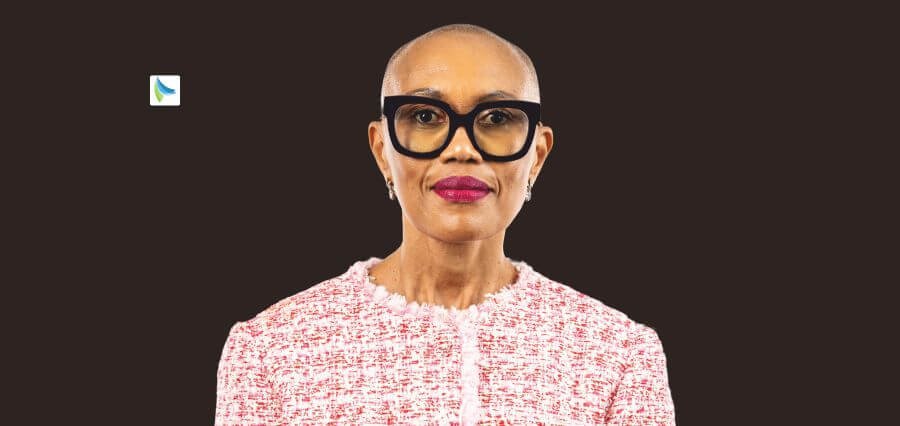
Some have made it to the top, looked back, and merely acknowledged the distance they have travelled. And then there are those who have made it to the top, turned around, and have dedicated the rest of their lives to creating new opportunities for others. It is not often found. And in South Africa’s financial and investing community, there are few who have lived it more than Sindi Mabaso Koyana.
It is significant. Not because of the struggles, which can often make for good reading. It is significant because it explains everything about Sindi. She has not forgotten where she came from. And that has meant everything in the decisions she has made since then. Most importantly, it meant she has not forgotten to stop since she made it.
Today, Sindi served as Chairperson of AWCA Investment Holdings, a women-owned and women-managed investment company she co-founded. She now operates as Managing Partner of AIH Capital, its private equity arm that she recently led the formation of. She is a chartered accountant by training, a corporate leader by experience, and a champion of transformation by choice. Sindi has worked in both the public and private sectors, served on boards at the highest levels, and spent the better part of her career making sure that the doors that opened for her did not close behind her.
Her tale is not one of sudden success or good fortune. It is the more subdued, long-lasting tale of a woman who examined a system that was not designed with her in mind, gained a thorough understanding of it, and then set out to change it from the inside out- one investment, one boardroom, and one young woman at a time.
Roots That Hold
Sindi did not grow up with much. She was raised in a township by a single mother who had little formal education but carried enormous wisdom. From an early age, her mother taught her two things above everything else: stay focused and stay honest. Do not let distractions pull your eye away from the goal. Do not let circumstances define what you can become.
These were not just pieces of parenting advice. They became the values that Sindi has carried into every boardroom, every investment decision, and every mentorship conversation she has had over the course of her career. Her mother was, in many ways, her first teacher of leadership.
Growing up in a township also taught Sindi something that no textbook could: she understood what it feels like to be on the outside of opportunity. She knew the weight of expectation that comes from being the one in a family who might just make it through. That knowledge never left her. It still sits with her today, not as a burden, but as a compass.
After school, Sindi set her sights on accounting. She qualified as a chartered accountant, a significant milestone in any career, and especially meaningful given where she had started. But even as she celebrated that achievement, she was already thinking beyond it. Professional success, she understood early, was not the finish line. It was the starting point for what she really wanted to build.
Over the course of her career, Sindi has worked across both the private and public sectors. Each environment taught her something different. The public sector showed her the complexity of institutional change and the weight of accountability to ordinary citizens. The private sector sharpened Sindi’s instincts around performance, discipline, and value creation. She took the best lessons from both worlds and carried them into the work she does today.
A Seat at the Head of the Table
Once Sindi entered the professional world, she did not blend into the background. She established herself quickly as a thought leader in financial and risk management and corporate governance, not by being loud about it, but by being very good at it.
Over the years, she has built enormous board experience across both the private and public sectors. On most boards she serves on, she chairs the Audit and Risk Committee and the Remuneration Committee. These are the rooms where the hardest conversations happen, where accountability is either maintained or quietly abandoned. Sindi has consistently been one of the people who keep it maintained.
Her time on the Audit and Compliance Committee of FIFA sits as one of the more remarkable chapters of her career. She joined at a pivotal moment during FIFA’s governance reform era, when the organisation was establishing its very first independent committee made up of professionals who had no ties to any football association. It was a historic governance shift, and Sindi was part of it. That experience deepened a conviction she already held: genuine independence is not a formality. It is the cornerstone of effective oversight.
She carries that conviction with her into the boards of MTN Group, Bidvest Group and Sun International, where she currently serves. In a world where regulatory environments are shifting and where the European Union, the United States, and Asian markets are all moving in different directions on ESG and tax frameworks, her approach remains steady. Good governance is not about keeping up with regulations. It is about building businesses with the kind of integrity that outlasts any regulatory environment.
When Sindi takes a stage, and she is highly sought after as a speaker on leadership, Africa’s economic transformation, and the role of women in business, she does not speak from a script of borrowed ideas. She speaks from a life fully lived. From townships and classrooms, from boardrooms and balance sheets, and from the quiet satisfaction of watching a young woman she once mentored step into a leadership role she could never have imagined for herself. The audiences that hear her tend to remember what she says long after the event is over.
AWCA: A Profession Opens Its Doors
Of all the chapters in Sindi’s career, few carry as much weight as the role she played in co-founding and shaping the African Women Chartered Accountants (AWCA).
The organisation was born from a clear-eyed recognition of a gap. The chartered accounting profession in South Africa was simply not reaching young women from previously disadvantaged communities in any meaningful way. The path into the profession felt distant, even impossible, for many young women who had the ability but not the access. Sindi decided that was something worth fixing.
She did not just speak about the problem. She got to work on the solution. Through AWCA, she has played a vital role in bringing the chartered accounting profession within reach of a generation of young women who might otherwise never have imagined it as a possibility. The proof is in the people. Today, many of the women who passed through the AWCA community hold executive positions across South Africa’s business landscape. They are in boardrooms. They are running companies. They are doing for others what Sindi did for them.
At AWCA, mentorship is not a programme that runs in the background. It is the heartbeat of the organisation. Sindi sees it as the thread that connects opportunity to people who have historically been kept away from it. Through mentorship, AWCA opens doors to jobs, to board positions, and to funding and partnerships. It gives talented women the tools to navigate systems that were not designed with them in mind, and the confidence to walk into rooms where they have every right to be.
The AWCA community has also created something less tangible but equally important: a sense of belonging for women who have often felt like outsiders in a profession that was not designed with them in mind. When a young woman from a previously disadvantaged background walks into a room full of senior chartered accountants who look like her and share her background, something shifts. She starts to see herself differently. She starts to believe that the career she once only dreamed about is genuinely within reach. That shift in belief is where real transformation begins long before a single rand of investment changes hands.
Most AWCA members work in financial services, including private equity. That is not a coincidence. It reflects the deliberate, long-term investment Sindi and her colleagues have made in building a professional pipeline- one that channels skilled, capable women into the very sectors where their presence has historically been most absent.
AIH: When a Vision Needs Funding
Running a professional development organisation costs money, and Sindi understood something that many non-profit leaders shy away from saying directly: if you want transformation to last, it has to be funded properly.
This insight led her to co-found AWCA Investment Holdings (AIH) the investment arm of AWCA. The goal was dual from the start: to secure long-term financial sustainability for AWCA, and to drive broader financial inclusivity in the South African economy. AIH was built as a women-owned, women-managed investment company. It was an ambitious model, and it worked.
AIH has since grown into a formidable entity with a strong investment portfolio spanning the financial, industrial, technology, food, and services sectors. As Chairperson of AIH, Sindi had overseen this growth with the discipline of a seasoned investor and the vision of someone who understands that each investment carries a responsibility beyond its balance sheet.
The next evolution of AIH came with the launch of AIH Capital, a private equity firm designed to deepen and expand the organisation’s investment capability. Sindi leads AIH Capital as Managing Partner, alongside her partner Jesmane Boggenpoel, the Chief Investment Officer. Together, they manage a generalist fund, one that is not locked into any single sector, but is guided instead by a clear investment thesis: find exceptional businesses, back exceptional people, and add value through governance, financial discipline, and the opening of new markets.
The decision to remain a generalist fund is deliberate. Many private equity firms today chase specialisation, narrowing themselves into tight sectoral lanes. Sindi’s view is different. The quality of management matters more than the sector they work in. When a business has strong leadership with real skin in the game and genuine integrity, it can create value across almost any industry. AIH Capital’s role is to bring governance rigour, financial expertise, and access to new markets, and let the management teams do what they do best.
Returns Without Compromise
One of the things Sindi is most often asked about is whether it is possible to run an investment company with a strong social mission and still deliver serious financial returns. Her answer is simple: not only is it possible, but it is the only way she knows how to do it.
Sindi does not see a tension between performance and purpose. She has sat in enough boardrooms, across enough sectors and across enough years, to know that credibility is built on delivery. Investors do not commit capital because of good intentions. They commit capital because they trust that the team in front of them can generate returns. AIH’s discipline around governance, risk management, and value creation is therefore non-negotiable. Top-tier returns are not a target. They are the baseline.
At the same time, Sindi has seen firsthand what happens when capital moves without conscience. It concentrates power in the hands of the few. It bypasses communities that have the most to offer and the least access to opportunity. It creates wealth that is narrow and brittle. Sindi’s investment approach is the opposite of this. AIH backs businesses that can scale, create jobs, and strengthen the economy in a way that includes people who have historically been left out.
By investing in financial skills development through AWCA on one hand, and deploying capital through AIH on the other, Sindi has created a system where empowerment and investment reinforce each other. More skilled women enter the economy. More women-led businesses attract capital.
More businesses grow and create jobs. This is what financial inclusion looks like when it is built properly, not as a charity project, but as a sustainable, returns-generating model.
The Capital Gap and How to Close It
Sindi has been refreshingly honest about one of the most persistent structural challenges facing women investors in South Africa: the gap between professional achievement and access to capital.
Many capable women can build and run scalable businesses. The problem is not ability. The problem is access. Financial institutions and development finance institutions typically require investors to put up approximately 10% of a deal’s total funding requirement. For a one-hundred-million-rand (R100m) transaction, that is a ten-million-rand (R10m) equity contribution- an amount that is simply out of reach for most women professionals from disadvantaged backgrounds, no matter how successful their careers have been. It is a structural barrier, not a personal failing.
This reality shaped AIH’s decision to launch AIH Capital as a private equity fund rather than continuing to raise funding on a deal-by-deal basis. A fund changes the equation. Capital is raised upfront. When an opportunity arises, the team can move with agility rather than scrambling for funding each time. Where a deal requires a larger equity contribution than the fund can cover alone, AIH has built relationships with other women-led private equity funds and co-invests with them, expanding capacity without compromising values.
Sindi is candid about the trade-offs. Private equity funds typically need to return capital to investors within seven to ten years. Not every investment reaches the right exit point within that window. But the benefits, such as pre-raised capital, investment agility, and the ability to operate at scale, outweigh the constraints. The fund model has given AIH Capital the platform to back businesses it believes in, at a size that creates real impact.
Governance Is Not a Form to Fill In
Sindi believes that governance separates a good investment from a great one. She doesn’t specifically mean the kind of governance that lives in policy documents and compliance reports. She focuses on the kind that shapes how decisions are made, how people are treated, and how an organisation signals its credibility to the world.
This is a conviction Sindi carries from her CA training, from her time on FIFA’s independent audit committee, and from years of watching the difference that rigorous oversight makes in both crisis and calm. At AIH, the team is composed primarily of chartered accountants. Governance is not an add-on to what they do. It is the foundation.
When AIH invests in a company, it does not just take a seat on the board and observe. It participates actively in shaping governance structures, building financial discipline, and embedding the kind of oversight culture that increases a company’s value over time and signals integrity to future investors. AIH also brings something that most boards are still working toward: genuine diversity of background, perspective, and experience. “Better thinking comes from different thinking,” shares Sindi.
Sindi holds AIH itself to the same standard. She is clear on this point: you cannot ask portfolio companies to adopt governance practices that you are not already practising in your own business. What AIH expects of others, it demands of itself first. Governance at AIH is not a constraint. It is the engine.
The broader significance of this philosophy extends beyond AIH’s own portfolio. Sindi sees governance as one of the most powerful tools available to any business that wants to attract investment, build long-term credibility, and create sustainable value. In a market still working through the legacy of poor corporate governance in parts of the public sector, her insistence on holding the bar high carries meaning well beyond the walls of any single boardroom.
Leaving Well: The Ethical Exit
In private equity, the moment of exit, when the fund sells its stake in a business, is where value is realised. For most funds, the question at exit is simple: who will pay the most? For Sindi, the question is a little more layered: who will honour what we built?
AIH’s approach to exits reflects a philosophy that Sindi has worked hard to embed into the firm’s culture. Wherever possible, the fund endeavours to exit to buyers who share AIH’s values- who will maintain the transformation credentials, the governance culture, and the human-centred leadership that AIH has helped build during the holding period.
The South African private equity market is maturing, and Sindi has seen an encouraging trend: more genuinely South African firms, with aligned ownership profiles and transformation commitments, are emerging as credible buyers. Ethical exits are becoming more achievable. The legacy of transformation does not have to end when the fund moves on.
What AIH is building ultimately is a model that shows how investment can carry values across ownership transitions. The change is not cosmetic. It is structural. And where possible, it outlasts the fund’s involvement.
Leading With Care and Demanding Excellence
There is a description that follows Sindi around, and she has embraced it rather than deflected it. She has been called a mother to all- a phrase that might seem out of place in the often hard-edged world of private equity. But Sindi sees no contradiction. In fact, she sees it as a competitive advantage.
Nurturing leadership, in her definition, is not about being soft. It is about being deliberate. At AIH Capital, the team is driven hard. High performance is not optional; it is the culture. But the way Sindi and her leadership team drive that performance is grounded in a genuine belief in the people they are pushing. When someone is challenged to do more, it is because the leadership team can see potential that the person has not yet seen in themselves. That is a different kind of pressure. It builds, rather than breaks.
The goal, as Sindi describes it, is to build caring high-performance teams. Teams where people feel seen, supported, and genuinely believed in, and where that belief translates into the kind of results that speak for themselves. It is not a contradiction of the rigour that private equity demands. It is, she argues, the highest expression of it.
At AWCA, mentorship works in the same way. It is not advisory in the passive sense. It is active investment in people, connecting them to networks, opening doors, and passing on the hard-won knowledge of how to navigate systems that were not built with them in mind. Most of the women Sindi has mentored are now, in their own right, mentoring others. The chain extends forward.
The Anchor That Never Moves
There is a question that follows anyone who has built what Sindi has built: how do you stay grounded when everything around you is pulling upward?
Her answer is honest and consistent. She stays grounded in the values her mother inculcated in her long before she knew what a balance sheet was. And above everything else, she stays grounded in a spiritual foundation that reminds her, regularly, that her life is not only about herself. She has a broader responsibility for the gifts she has been given. That belief shapes everything.
It is this foundation that gave Sindi the strength to leave PRASA when her values were at stake. Walking away from a senior role, especially one that carries status and security, is not easy. But Sindi has spoken openly about the importance of prioritising integrity over comfort, and of protecting the impact you want to create. She calls this emotional equity: the internal reserves of self-respect, clarity, and resilience that allow a person to make principled choices, even costly ones.
Her advice to women in leadership, especially those facing inherited structural barriers, is direct and practical. Know your values and hold them tightly. Use them to measure every opportunity that comes your way. Build resilience intentionally, through reflection, through mentorship, and through the kind of circle that challenges you as much as it supports you. Trust your own judgement. Find your anchor- the thing that keeps you honest when everything else is shifting. Emotional equity, Sindi says, grows over time. Like any good investment, the earlier you build it, the more it compounds.
A Legacy Still Being Written
Sindi is not the kind of person who waits for things to happen. She is the kind of person who makes them happen and then makes sure other people are positioned to benefit when they do.
She has spent her career proving that doing good and doing well are not opposing ambitions. At AIH, returns and responsibility sit in the same room and pull in the same direction. The investment portfolio grows. The AWCA network expands. Young women from previously disadvantaged communities qualify as chartered accountants and step into executive roles. And the South Africa that Sindi grew up in, the one that too often told people like her that certain doors were closed, gets a little smaller with every year.
Her Honorary Doctorate from Middlesex University is a recognition of work that has already changed lives. But Sindi has never been someone who pauses at milestones for long. She is still in the room. Still at the table. Still pushing AIH Capital’s portfolio forward. She is still focused on mentoring the next generation of women who will, in time, build their own rooms.
What she has created is not only an investment company or a professional body. It is a system- a carefully designed, financially sustainable system for generating both returns and transformation. It measures progress in rands and cents, yes. But it also measures it in the number of women who now hold seats they were once denied, in the businesses that stand stronger because of the governance AIH brought, and in the communities that have access to capital and opportunity they could not previously reach.
South Africa needs more builders like Sindi. She’s one of those people who do not just occupy space at the top but use that space to create room for others. She understands that real success is not measured only in what you accumulate, but in what you leave behind. Sindi has spent a lifetime building things that last, and she is just beginning.