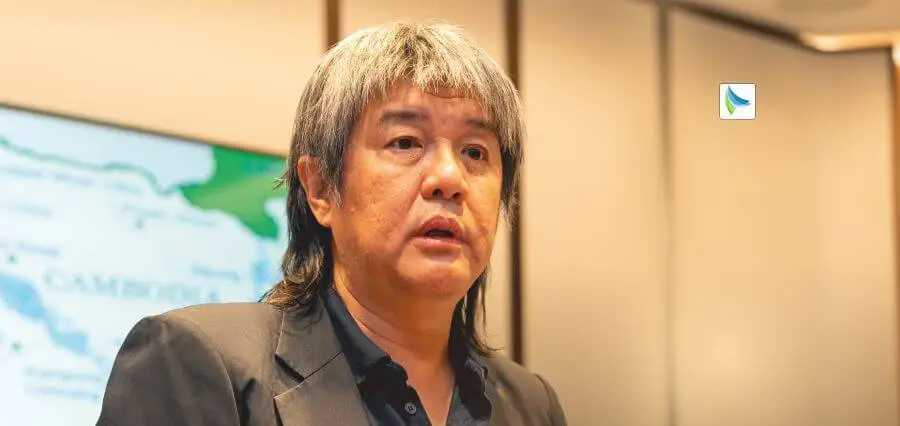





The fastest processor, the fastest deployment, or the most innovative concept are all celebrated by the tech industry. Staying power, however, is something it hardly ever honours. It is a distinct kind of accomplishment to be able to endure decades of change and yet be truly valuable. It calls for more than just technical expertise. It necessitates understanding how people operate, how transactions are completed, and how to maintain your composure in the face of intense buzz. In the IT industry, very few professionals acquire all of these traits. Among them is Chris Clarkson.
Chris Clarkson serves as Principal Consultant at double c consultants. He has spent over 35 years in the IT industry, and the phrase he uses to describe himself, “a technologist turned deal maker,” tells you almost everything about how he works. He began his career deep inside the machines. He ended up at the table where the big decisions are taken. And unlike most people who make that journey, Chris Clarkson never left either world behind. He carries both with him into every room he enters.
From the Engine Room to the Boardroom
Chris Clarkson did not build his career on theory. He started where the pressure is real- in high-performance computing, a discipline where the margin for error is thin and the consequences of a wrong call are immediate. Understanding thermals, latency, and power economics was not an intellectual exercise for Chris. It was the daily reality of his work. That grounding shaped the way he thinks about every technology decision he encounters today.
As his career progressed, so did the scope of his responsibilities. Chris Clarkson moved from hands-on engineering into managing hardware, software, and professional services business units. He developed and led business plans, shaped sales and marketing strategies, and sat across the table from some of the most demanding negotiators in the industry. Each chapter added something new to Chris’ toolkit- not just skills, but judgment. The kind of judgment that only comes from having made real decisions with real consequences.
By the time he established himself as Principal Consultant at double c consultants, he had accumulated the kind of experience that cannot be taught in a workshop or picked up from a business book. It had to be lived. And it shows in everything he does.
Leading with Technical Empathy
If you ask Chris Clarkson what shapes his work, he will bring up a concept he calls ‘Technical Empathy’. It is a leadership framework he has spent decades developing, and it starts with one clear rule: commercial ambition must never get ahead of engineering reality. He has watched too many deals fall apart; not because of bad intent, but because someone moved too fast and skipped the hard questions. Chris Clarkson does not make that mistake.
The framework has three parts. The first is ‘Engineering Integrity’. Before a pricing conversation even begins, Chris Clarkson makes sure the architecture can actually hold up under the workload. If it cannot, nothing else in the deal matters. The second is ‘Bidirectional Translation’- his ability to speak both languages fluently. He takes engineering constraints into commercial meetings and business realities into technical ones. Both sides end up working from the same honest picture, which makes the whole process smoother and safer. The third is ‘Failure-Mode Forecasting’. He maps out what happens downstream when shortcuts get taken- the outages, the cost overruns, and the reputational damage. When clients see that picture clearly, doing things properly stops being a burden and starts being common sense.
This is not a framework that lives on a slide deck. It is the way Chris actually works, every day, with every client.
Rewriting the Story of the Data Centre
There is a conversation happening in the data centre industry right now, and Chris Clarkson is one of the people driving it. The old way of describing these facilities- floor space, power capacity, and cooling density, is no longer good enough. It undervalues what data centres actually do, and it limits how organisations think about their own infrastructure. Chris Clarkson is working to change that.
He positions the modern data centre not as real estate with servers in it, but as the central nervous system of the global economy. Chris helps clients to stop thinking in square metres and to start thinking in terms of sovereignty, resilience, and economic impact. Compute becomes national infrastructure. AI factories become productivity engines. GPU clusters become strategic assets. This shift in language is not just cosmetic; it opens doors to better customers, stronger government relationships, and a seat at the table alongside energy, transport, and water as critical national infrastructure.
The organisations that are making this shift are realizing that it changes everything- from who they attract as clients to how seriously policymakers take them. Chris Clarkson is not just advising on this. He is leading it.
Knowing the Difference Between a Wave and a Ripple
Every few months, something new arrives in the technology industry that everyone says will change everything. Most of it does not. Sorting the genuine shifts from the expensive distractions is one of the most important and one of the hardest things a consultant can do. Chris has built a way of doing it that draws directly on his engineering background.
He puts every emerging technology through three filters. The first is Physics. If something contradicts the basic rules of thermodynamics, latency, or power economics, it is a fad- no matter how convincing the pitch. The second filter is Procurement Cycles. If CIOs cannot build a realistic five-to-ten-year budget around something, it is not ready for serious investment. The third is Ecosystem Commitment. When hyperscalers, chipmakers, and regulators all start moving in the same direction at the same time, that is a structural shift worth paying attention to.
This approach has a proven record. Chris Clarkson saw the rise of GPU-accelerated high-performance computing before most of the industry did. He called the end of monolithic storage at a time when people were still doubling down on it. Chris helped clients move toward AI-native data centres ahead of the curve. He does not predict the future; he reads the evidence carefully enough that he rarely gets it wrong.
Putting a Number on the Invisible
One of the most common conversations Chris Clarkson has with clients involves professional services, and specifically, why they cost what they do. Hardware has a price tag. Software has a licence. But expertise, design thinking, and strategic guidance sit in a harder-to-justify category. Clients often treat them as optional. Chris Clarkson makes a compelling case that they are not.
He uses three types of evidence. Risk Avoidance Metrics show what it actually costs when expert input is missing- bad design decisions, costly downtime, and infrastructure that is too big or too small and expensive to fix. Acceleration Metrics demonstrate how expert-led projects move faster than those that do not have that input. And Capability Transfer shows how good consulting builds lasting internal skills, not just short-term fixes. The investment compounds, while the value grows.
Through this lens, professional services stop being a line item and start being a multiplier. Chris Clarkson makes the case that they deserve the same weight in a project budget as the generators, the cooling systems, and the GPUs because they have just as much impact on whether the project succeeds.
Getting Everyone to Pull in the Same Direction
Major data centre projects do not have one decision-maker. They have many- utilities, regulators, ESG teams, hyperscalers, and AI tenants- each with valid priorities that often pull against each other. This is where projects stall, budgets blow out, and timelines collapse. It is also where Chris does some of his best work.
He starts by finding the shared outcome- the single thing that every party at the table actually wants, which usually comes down to reliability and economic benefit. From there, Chris Clarkson surfaces the non-negotiables early, before they become surprises. He models the trade-offs live, so that every stakeholder can see in real time what their decisions actually cost and what they stand to gain. The result is not just a smoother meeting; it is a project that keeps moving. Decisions get made, while work gets done.
Thinking Ahead to 2030
As organisations wrestle with where to put their compute- in massive centralised facilities or distributed edge sites, Chris Clarkson brings a calm, structured perspective to what often becomes a heated debate. He uses a three-axis model built around Latency Sensitivity, Economies of Scale, and Grid Availability.
Applications that cannot afford delay- AI inference, robotics, and real-time processing push naturally toward the edge. Training workloads and high-performance computing demand the concentration and power of hyperscale. And increasingly, the availability of power is deciding the question before anything else even gets considered. Chris Clarkson rarely gives a binary answer. He designs hybrid architectures- hyperscale as the brain, edge as the reflex system that match the actual demands of the organisation rather than a fixed idea of how the infrastructure should look.
Still Curious After Thirty-Five Years
Chris Clarkson shares that he has stayed relevant in an industry that reinvents itself every few years by staying curious. He has watched cloud computing arrive, GPU acceleration take hold, AI reshape the data centre, and edge deployments change the topology of the entire industry. He has not resisted any of it. Chris has leaned into all of it- studying, asking questions, and treating each new development as a chance to learn rather than a threat to manage.
At the same time, he holds onto the things that do not change. The physics of computing has not changed. The economics of good decision-making have remained the same. The way people behave under pressure in a negotiation has not changed. Chris Clarkson describes his approach as being innovation-hungry but hype-resistant, and that balance, more than anything else, is what has made his career last.
Chris Clarkson is a rare kind of consultant. He is one of those who has done the work he now advises on, who has carried the responsibility he now helps others navigate, and who brings genuine honesty to every conversation rather than just the answer the client wants to hear. As Principal Consultant at double c consultants, he continues to help organisations make better, braver, and more grounded decisions in a world that is moving faster than ever. That is not a small thing. For the clients who work with him, it makes all the difference.