


The most impactful technology of our age hardly tends to make a big splash. It is not coming with a bang or a press conference. It comes silently at the time when a voice assistant can finally speak like it knows you, or when an application is so user-friendly that you can no longer remember the learning curve. Someone, somewhere, had a choice to design it so. In a profession filled with the engineers who always strive to go fast and big, very few who pause and ask the more difficult question: does this feel human?
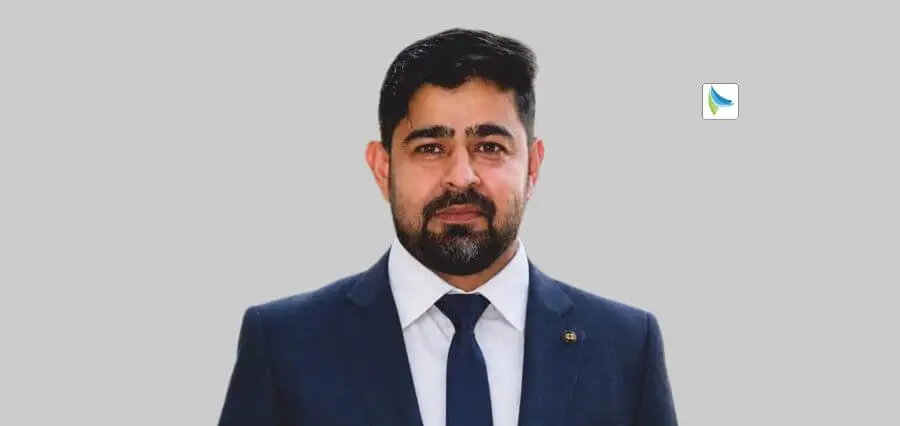
Carlos Lastres has been asking that question about his entire career and building the answers.
Winner of an Apple Design Award, MBA, Senior Product Designer, a software engineer, and twice a TEDx speaker, Lastres is working at one of the most challenging intersections of modern technology: the intersect between design and engineering, and the intersect between both and artificial intelligence. With his home in Tokyo, Japan, he applies a viewpoint living three countries, twenty years of cross-cultural experience, and a childhood fascination with how things work inside and out.
From San José to Tokyo: A Career Built Across Cultures
Carlos Lastres grew up in Costa Rica in what he describes as a mostly analogue childhood, with just enough digital exposure to spark obsession. He was the kid who spent hours drawing, manipulating images in early tools like Paint and Photoshop, and trying to understand what was happening inside the computer. That combination of artistic curiosity and technical hunger became the engine that has driven every chapter of his professional life since.
He studied business before pursuing an MBA, a deliberate choice. He did not simply want to build things. He wanted to understand why products succeed, how people decide, and how design creates value across an entire product lifecycle. It was an early signal of the systems-level thinking that would later define his reputation.
What followed was seven years in China, an experience he credits with permanently changing his working rhythm. China taught him speed, execution, and the discipline of shipping. It stripped away any romanticism about the creative process and replaced it with something more useful: the understanding that ideas only matter once they are out in the world being tested by real people.
Then came Japan. Moving to Tokyo was, by his own account, a second turning point entirely. Starting over in a culture with different rules, different expectations, and a fundamentally different communication style forced him to become sharper, more patient, and more intentional. Japan did not just change where he lived. It changed how he thought. “Starting over in a culture with different rules pushed me to become sharper, more patient, and more intentional,” he reflects.
Today, Lastres builds products that sit at the intersection of design, engineering, and AI, with a specific focus on experiences that feel culturally aware and emotionally intelligent. He was also invited to speak at the United Nations Office in Vienna on how AI and gamification can support emotional education and inclusion in developing countries. It is the kind of stage that reflects just how far his thinking has travelled from those early hours in front of a screen in Costa Rica.
The Idea: Design Is Not Decoration
Lastres began his professional life in software development, moving naturally into design as the discipline of UI/UX was still finding its shape. From the beginning, he was drawn to what he calls the moment where logic meets emotion.
“Code makes something work, but design makes sense,” he says.
That distinction sounds simple. In practice, it represents a philosophy that most technology companies still struggle to operationalize. Early in his career, Lastres worked on digital platforms and websites, helping companies improve how they communicate and how users move from curiosity to trust to action. Out of that work came a core belief he carries to this day: design is not decoration. Design is a decision-making system. It removes friction, clarifies value, and earns confidence.
That philosophy pulled him into AI, voice technology, and digital identity, fields where the gap between powerful and usable remains enormous. He has worked on AI-driven creative and voice products that help people produce content faster without sacrificing quality or personality. The through line in everything he builds is the same: technology should feel natural. Most tools are powerful but unnecessarily complicated. His job, as he sees it, is to reduce that complexity until the interaction feels inevitable.
Right now, he is channeling that philosophy into AnimaNext, an AI smart card and wearable including a ring designed specifically for the Japanese market. The product aims to modernize how people connect while respecting the deep cultural significance of meishi, the Japanese business card exchange ritual. AnimaNext has already received international press coverage around its launch, a meaningful early signal in a market where trust is everything, and cultural missteps are unforgiving.
Apple, Tedx, and the UN: Building on Global Stages
In 2025, Lastres won an Apple Design Award in the Inclusivity category for work connected to Speechify, a product that makes information more accessible by turning text into a natural, expressive voice. Winning an Apple Design Award places a designer in a very short list of practitioners whose work Apple considers exemplary. Winning it in the Inclusivity category says something additional: that the work did not just perform well; it genuinely served people who are often left behind by mainstream technology.
He delivered TEDx talks in Hangzhou in 2019 and on Awaji Island in 2025, carrying a message he clearly believes in deeply: creativity is not a talent reserved for a gifted few. It is a skill that grows through repetition, curiosity, and a willingness to learn from failure. He is scheduled to return to the TEDx stage in Tokyo in 2026.
His invitation to speak at the United Nations Office in Vienna in 2025 added another dimension to his public profile. It connects his technical work to a broader humanitarian argument. The presentation explored how AI and gamification can support emotional education and social inclusion in developing countries. It is a topic that sits at the precise intersection of everything. Lastres cares about technology, empathy, and the responsibility designers carry when they build systems that touch real lives.
He has also received HP’s Customer Hero Award and additional project-based recognitions. He values these accolades because they reflect real impact rather than just visibility.
The Appetite: Innovation Happens When Imagination Meets Execution
Ask Lastres about his appetite for business and he answers the way engineers answer good design problems, by going straight to the underlying principle.
He highlights, “Business is a discovery process; you start with a hypothesis, you build, you ship, you learn, and you refine. It’s creative, but it’s also brutally honest. The market always tells you the truth.”
He is particularly drawn to emerging technology because of how it opens new human behaviors. AI, voice, and digital identity tools are reshaping how people interact with information, content, and each other. For Lastres, being part of that shift is exciting not because of the features involved, but because of what lies beneath them, the redefinition of habits and the rewiring of daily rituals.
He also loves that business forces multidisciplinary thinking. Design, engineering, psychology, distribution, storytelling, and strategy all come together when building a real product. It is, he says, a constant workout for the mind. And while revenue matters, what motivates him more is impact. When a product helps someone work faster, feel understood, or connect with others more naturally, that is when the work becomes real.
His entrepreneurial philosophy comes down to a single belief he returns to consistently: “Innovation happens when imagination meets execution. Ideas don’t change anything until you ship.”
Navigating The Pandemic: A Forcing Function, Not A Crisis
COVID-19 pushed the world online faster than anyone expected, and for Lastres it functioned less as a disruption and more as a clarifying moment. Companies that had treated digital presence as optional suddenly discovered it was existential. That shift created immediate, urgent demand for exactly the kind of work he does.
Rather than treating the pandemic as a crisis to survive, he treated it as a signal. It made obvious what mattered and what did not happen. He focused on digital products that could operate independently of physical location, including sharper online experiences, stronger conversion, and tools that supported distributed teams across time zones and cultures.
The deeper lesson, though, was about resilience. It was not just personal resilience but architectural resilience in the products he builds. Build systems that can handle disruption. Build products that do not rely on a single context. Keep learning fast. Those principles did not originate in a boardroom strategy session. They came from watching markets change overnight and understanding that adaptability is not a personality trait. It is a design decision.
Strengths, Weaknesses, And the Discipline of Focus
Lastres names curiosity as his biggest professional strength and backs it with evidence. His career spans software development, product design, AI, voice technology, wearables, and public speaking. That range is not restless. It is the natural output of a mind that genuinely wants to understand how everything connects.
Resilience sits alongside it. Building products means dealing with failure routinely, and Lastres has developed a specific relationship with setbacks. He treats them as data, not identity. Every mistake teaches him what to fix, what to simplify, or what to stop doing entirely. His multicultural experience adds a third layer. Living and working across Costa Rica, China, and Japan has permanently altered how he observes and designs. He stopped assuming one correct user behavior a long time ago.
On weaknesses, he is disarmingly direct. He pursues too many ideas at once. When you see opportunity everywhere, focus becomes a discipline you must actively enforce rather than a natural state. He has learned to prioritize aggressively and commit to fewer things with higher intensity. The second challenge is slowing down. Entrepreneurs often reward themselves by working more, which can lead to burnout. He continues to learn to step back earlier before the cost becomes unavoidable.
He shares these not as confessions but as information. As he puts it, success is not perfect. It is continuous improvement, self-awareness, and willingness to evolve.
On Balance: Rhythm Over Ratio
Lastres does not claim to have solved the work-life balance equation, and he is skeptical of anyone who does. His view is more honest and practical. Balance is not a 50/50 split. It is a rhythm.
He works in focused blocks, protecting deep work time from meetings and administrative noise. He has learned that creativity needs space, because depleted thinking produces diminishing returns regardless of how many hours to go in. Tokyo, he says, genuinely helps him reset. The city’s unique energy, its layering of tradition and modernity, and the cultural texture of daily life there give his mind what he calls a different kind of oxygen.
Relationships, he emphasizes, are the anchor. Work gives him a purpose. Relationships give that purpose of meaning. The people close to him keep him grounded and remind him what success is meant to support.
“The goal is not to work less; the goal is to work in a way that still leaves room for a life that feels alive,” he asserts.
A Final Word: Build Things That Help People Understand Each Other
Lastres ends with a thought that has clearly been on his mind for some time. Creativity grows when resources are limited. Constraint forces improvisation, and improvisation, when approached honestly, becomes innovation.
We now live in an era where AI gives individuals the power to build things that once required entire teams. His hope is that people use that power to humanize technology rather than simply accelerate it. The future, as he sees it, is not about machines replacing humans. It is about whether designers and engineers can build technology that helps people understand each other better, create more freely, and live with more intention.
For Carlos Lastres, that is not an aspiration. It is already work.