



All great engineers recall the very time when technology ceased being a discipline and became a vocation. It is not something that occurs very often in a classroom. It occurs in solitude, under the light of a screen, when a program is executed effectively, and something in the mind tells me: this is my purpose.
To some, that initial sense never dies. It turns into the driving force of each action, each night, each awkward jump.
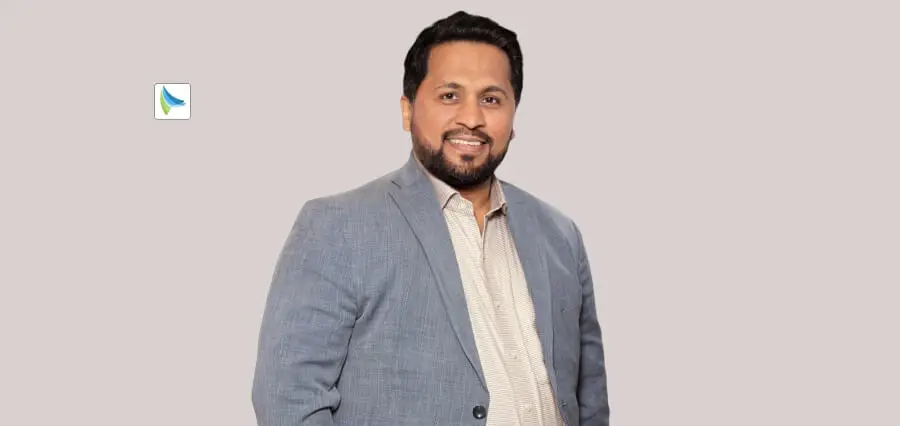
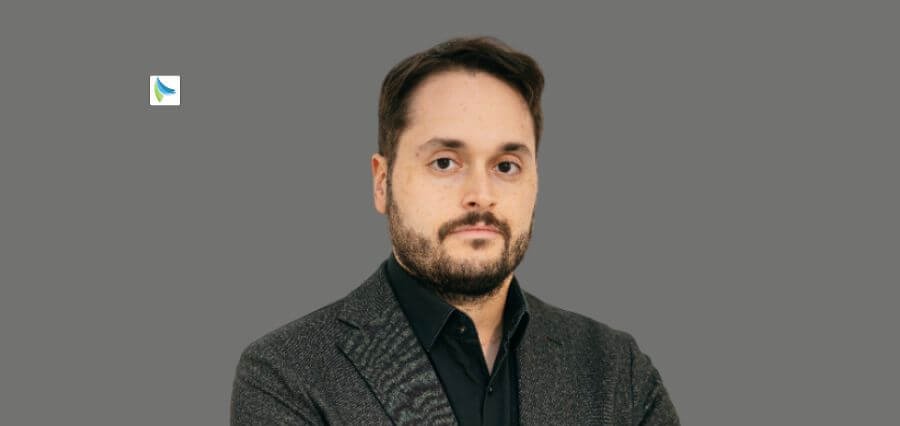
Ivan Battimiello was twelve years old when he felt it. He was the child whom the neighbors of Naples, Italy, called when the computer went wrong, and he enjoyed every moment of that life. He was never free of curiosity. It simply scaled. He is now Senior Software Engineer at Amaris Consulting, a 2025 Global Recognition Award nominee, and one of the more silently powerful engineering leaders of his generation. It turns out that the best careers are not designed, but they happen.
The Making of an Engineer: Persistence and a Terminal Window
The university tested that early confidence was hard. Battimiello enrolled at the University of Naples Federico II pursuing a Bachelor’s degree in Computer Science, where the pressure was relentless, academically and socially. “I struggled to balance life and study, facing social pressure while trying to excel academically,” he says. “During this period, I focused almost entirely on my studies, sometimes at the expense of everything else.” He came through it not through isolation but through the opposite: the right friendships, a supportive family, and study teammates who stood by him through the most grueling stretches. That support system shaped him into the resilient, independent professional he is today, someone who meets difficulty with the right attitude and never quits.
But before settling fully on engineering, Battimiello faced a fork in the road that reveals something important about the man behind the résumé. He was genuinely torn between two passions: technology and food. “I was torn between becoming a developer or pursuing a career as a chef,” he admits. “Cooking and creating something delicious was also a dream of mine.” He chose programming, but he never abandoned the kitchen. To this day, he prepares meals for the people around him, keeping that creative, nurturing instinct alive in a different medium. It is a small detail that speaks to something larger. This is a person who brings care and crafts to everything he touches.
He graduated in 2017 with a thesis on simulating virtual reality input devices, a project that foreshadowed the forward looking instincts that would define his career. His first professional role took him to Digital Comoedia as a Software Developer intern on VR projects, five formative years at Netcom Group, where he grew from Full Stack Engineer to Team Lead. The growth was not comfortable. “My first real project with direct customer contact, managing everything from requirements to deployment, was incredibly hard,” he reflects. “With limited experience, it taught me invaluable lessons about every aspect of software development and made me significantly stronger.” In an industry that often rewards projected confidence, that willingness to acknowledge early struggle speaks to the self-awareness that ultimately separates good engineers from effective leaders.
Spain, FinTech, and a Shift in Mindset
In 2021, Battimiello relocated from Italy to Spain and joined Lasting Dynamics, a decisive move that expanded his responsibilities dramatically. Promoted from Team Lead to Technical Leader, he began managing cross functional teams and architecting secure FinTech solutions, picking up an entirely new vocabulary: budgets, constraints, customer negotiations, strategic roadmaps.
“My mind shifted from a pure working mindset to a businessman mindset,” he explains. He stopped seeing software as isolated technical components and started seeing it as a living solution to real business problems. He learned to understand budgets, evaluate constraints, and make strategic technology decisions that shaped products’ futures. As a leader, he discovered what managing a team truly means, understanding costs, investing in strong teammates, and building collaborative environments where innovation thrives.
His philosophy around integrity sharpened alongside that shift. “Real business isn’t only about money; it’s about creating meaningful connections and bringing ideas to life together,” he says. “Being honest and transparent with customers about everything, pricing, timelines, limitations, is non negotiable.” That clarity of principle, applied consistently in high stakes FinTech environments, built his reputation as someone stakeholders could genuinely trust, an asset no certification can confer.
At Amaris Consulting today, he leads enterprise migration strategies, modernizes legacy systems, and transitions applications to modern Kubernetes clusters. One of his most concrete business contributions is integrating multiple payment providers that double revenue through optimized payment and subscription systems. He has also driven measurable system performance improvements through query optimization and algorithm refinement, the kind of work that translates engineering precision directly into organizational impact.
Leading Without Losing the Code
In an era where moving into leadership often means stepping away from hands on technical work, Battimiello refuses to trade off entirely. “I still write code, review architecture, and dive into technical challenges,” he states plainly. “Engineers will follow you when you truly understand their problems and fight for quality even under business pressure. Stay hands on. It matters more than you think.”
His leadership philosophy centers on psychological safety, built not from management theory but from lived experience. He advocates shifting away from blame and toward systemic accountability, from “Who broke it?” to “What allowed this to happen?” When people feel safe admitting errors and learning from them, both creativity and retention follow naturally. He pairs that conviction with an equally firm belief in autonomy. Give talented people ownership over their decisions and they innovate. Task them with the following orders, and they merely comply. The difference in software development is the distance between systems that function and systems that genuinely excel.
Having worked alongside colleagues from Spain, the United States, Ukraine, Italy, Arab countries, Albania, and beyond, his cultural fluency is genuine and hard earned. He approaches people from different backgrounds with deliberate respect, building cohesive teams, and maintaining strong professional relationships across nationalities. “Many of my closest friends are former coworkers,” he notes, a detail that reveals more about his leadership than any formal credential could.
Communication as Earned Skill
Perhaps the most counterintuitive thread in Battimiello’s story is his frank admission that communication was once his greatest weakness. “I was naturally introverted, someone who preferred computers over people,” he says without an apology. “Speaking in meetings, presenting to stakeholders, or casual conversations felt uncomfortable and draining, creating real career obstacles.”
The path out was deliberate and unglamorous. He forced himself into precisely the situations that drained him, leading meetings, engaging customers, presenting to CEOs, until discomfort became fluency. Today he leads cross functional teams and addresses senior stakeholders with confidence. “It’s proof that even your greatest weaknesses can become strengths with dedication,” he states. The transformation arrived not through a seminar, but through repetition and the refusal to let a natural tendency become a permanent ceiling.
He applied the same logic to time management and to a subtle habit, the reluctance to ask for help. Early in his career, he struggled to handle multiple simultaneous demands and missed learning opportunities by trying to solve everything alone. Guided by experienced project managers, he built frameworks for prioritizing effectively and learned that seeking guidance is not a weakness. It is strategic growth. These admissions do not function as caveats. They function as evidence that the skills he demonstrates most fluently today were built deliberately, not inherited.
The Pandemic as Accelerant
COVID 19 tested engineers with leadership responsibilities in particular ways. For Battimiello, the shift to full remote work was difficult, not technically, but humanly. “Going from spending entire days in the office surrounded by colleagues, sharing emotions, offering support, exchanging funny jokes, to being isolated at home was quite difficult at the beginning,” he recalls.
His response was characteristically looking forward to it. He used the reclaimed time to deepen technical knowledge, explore emerging technologies, and invest in personal projects he had long deferred. He maintained friendships through regular calls and online gaming sessions, finding creative ways to preserve human connections across distance. He built remote leadership skills through disciplined digital communication, capabilities that remain a permanent asset in an industry where distributed teams are now the default. The lesson he carried forward was simple. With the right mindset, even the most challenging circumstances become opportunities for growth.
Recognition, Mentorship, and a Vision Still in Formation
The industry has taken notice. CyberSecurity News featured Battimiello in November 2025 for his contributions to secure systems and technology leadership. OpsMatters followed in December with a profile on his DevOps philosophy. Business Insider recognized him in January 2026 for high impact engineering. The 2024 Global 100 Reputation Award and the 2025 Global Recognition Award for Secure Systems Leadership complete a record built not on self-promotion, but on the habit of doing excellent work and letting it speak.
Yet he treats these accolades as confirmation rather than destination. He is actively building toward a personal product, something that combines his technical depth with the business acumen he has developed over years, shifting from someone who executes ideas to someone who creates and owns them. Mentoring sits at the center of that forward vision. “When I see someone succeed because of my guidance, it reminds me that my impact extends far beyond code,” he says. In an industry that prizes individual brilliance, that investment in others’ growth as a form of professional purpose marks Battimiello as a different kind of authority.
The Mantra and the Man
Battimiello carries a motto from his earliest school days: “Self-confidence is the memory of success.” Confidence, in his reading, is not a fixed trait; it is an accumulation. A record of hard things done, recalled in moments of present difficulty. You build it by doing it. You sustain it by remembering.
He balances that self-belief with equal conviction about others: “Never stop giving and trusting the people around you, because we can’t shape our world alone.” It captures how he has navigated every transition his career has demanded; individual determination held alongside genuine openness to collaboration.
The engineers who will matter most in the decade ahead are not simply those who master distributed systems or cloud architecture. They are the ones who understand people, build trust across cultural distance, and invest in the growth of those around them as deliberately as their own. From a terminal screen in Naples to the leading edge of cloud native enterprise engineering in 2026, Battimiello has made that argument with his career. The rest of the industry would do well to pay attention.