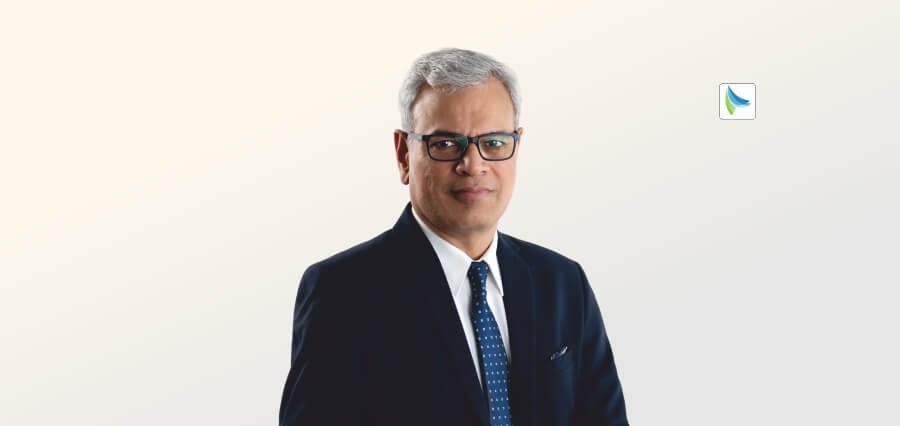





A series of moments, some planned, others purely accidental, have shaped Ghada Fayek’s path into one of the UAE’s most respected litigation leaders. One such moment led her to Mohammed Nakhira Al Dhaheri Advocates & Legal Consultants, where she joined as a Legal Consultant within the office management team, under the supervision of Dr. Abdul Wahab Abdool, Managing Partner and former President of the UAE Federal Supreme Court. What began as an initial role supporting Dr. Abdool quickly became the foundation of a defining professional journey. Immersed in a highly disciplined and demanding environment characterized by rigorous standards and institutional structure, she earned her place not through titles but through the quiet consistency of sound judgment, meticulous preparation, and an unwavering commitment to the work. The transition demanded adjustment, yet within a relatively short period, the firm’s leadership recognized her capacity to manage complex matters, lead litigation workflows, and contribute strategically to case management. That confidence evolved into genuine institutional trust, culminating in her appointment as Partner with responsibility for developing and leading the General Litigation Practice.
Her journey exemplifies not only professional development but also a strong belief in learning, resilience, and self-directed progress. In a rapidly changing legal landscape, she stands out as a practitioner who blends innovation with principle, building her practice through expertise, integrity, and a strong commitment to administering justice with precision and purpose.
A Platform for Excellence
At the heart of Fayek’s journey lies the United Arab Emirates, a profound source of inspiration and empowerment. The country has created an ecosystem where talent is nurtured, merit is rewarded, and excellence is the standard by which success is measured. It is a nation that opens wider horizons, challenges individuals to push their limits, and offers genuine space for professionals particularly women, to shape their visions and assume meaningful leadership roles.
“The UAE is not merely a place of work, but a supportive and forward-looking platform for opportunity and a fertile environment for innovation and excellence. It is a country that believes in its people and invests in their growth, creating pathways for those willing to challenge themselves and expand their knowledge,” she reflects.
This environment has been instrumental in shaping her professional identity. The UAE’s institutional framework, legislative maturity, and commitment to gender equality have created conditions where professionals are evaluated purely on performance, competence, and contribution principles that resonate deeply with their own values and aspirations.
Preserving Legacy, Embracing Innovation
“Bin Nakhira & Partners has long occupied a well-established and influential position within the UAE’s legal landscape. My role was not to define that presence anew, but to preserve and strengthen this legacy while aligning it with a forward-looking litigation strategy—one that responds effectively to legislative developments, evolving judicial practice, and the changing needs of clients,” she notes.
Her responsibilities increased steadily, as did the faith in her. The firm’s leadership quickly recognized her ability to manage complicated conflicts and traverse high-stakes legal contexts with clarity and strategic depth. That recognition culminated in her selection as Partner, where she emphasizes disciplined strategy and developing jurisprudence.
Navigating Digital Transformation
The UAE’s litigation landscape undergoes rapid transformation. Digital courts, advanced legal-tech adoption, and new procedural frameworks reshape how lawyers approach their work. Fayek views this shift not merely as technical change, but as a substantive opportunity to redefine legal practice towards greater efficiency and rigor.
“Engaging with this transformation requires analytical awareness and deliberate adaptation, rather than reactive approaches or uncritical reliance on technology. While I actively embrace the benefits of digital courts and advanced legal technologies, I remain firmly aware that technology cannot replace legal judgment or professional intuition developed through years of hands-on experience,” she emphasizes.
Bin Nakhira & Partners has integrated advanced legal-tech tools into its litigation practice in measured, structured ways. These tools support case development, factual analysis, and tracking of judicial precedents while preserving the independence of legal judgment and decision-making integrity. The approach delivers strong client outcomes by balancing efficiency with disciplined legal innovation anchored in established principles, tailoring litigation strategies to each case’s specific nature and governing judicial environment.
Merit Over Gender
When asked about navigating challenges as a woman in a traditionally male-dominated legal domain, Fayek reframes the conversation entirely. She does not approach her experience through that lens, as the assumption fails to reflect the UAE’s institutional or legislative reality.
“From its foundation, the UAE has adopted merit and competence as the governing criteria for responsibility and leadership, without distinction based on gender. This principle reflects clearly across the judiciary, the legal profession, boardrooms, and senior leadership positions,” she states.
State policies aimed at empowering women do not correct structural imbalance but ensure equitable empowerment grounded in confidence, capability, and institutional trust. Women receive appointments to leadership roles not through representation quotas but as active, integral partners in decision-making.
“My professional journey here has not been defined by confronting systemic barriers, but by natural integration into a mature legal ecosystem that evaluates performance, rewards commitment, and creates space for those who demonstrate professional merit,” she explains.
This reality reflects the UAE’s broader vision, a country that has made gender equality not just policy but practice, creating an environment where women are not merely included but essential to national progress and institutional excellence.
The Art of High-Stakes Decision-Making
In litigation where margins for error remain minimal, Fayek approaches decision-making as a calculated, disciplined process with no room for haste or improvisation. Legal precision forms the foundation, always accompanied by careful assessment of how each step may affect the case’s course and outcome.
She begins with thorough case file analysis, evaluating the legal position’s strength, anticipating opposing arguments, and identifying procedural risks before acting. This core element of sound legal dispute management precedes the strategic dimensions—selecting appropriate timing, identifying effective courses of action, and avoiding procedurally sound but practically unnecessary steps.
“My objective is to ensure that every decision aligns with the client’s interests, the particular circumstances of the case, and the governing judicial environment. Where the margin for error is limited, I prioritize clarity of vision and consistency of approach,” she notes.
Building Trust Through Candor
Client trust in litigation ranks among the most difficult elements to establish and the easiest to lose. Clients approach legal proceedings with anxiety, high expectations, and justified caution. This places responsibility on lawyers to understand not only legal aspects but also clients’ concerns, mindsets, and confidence limits.
Her approach begins with professional candor. From the outset, she presents realistic case assessments without exaggeration or unfounded reassurance, clearly explaining available legal options and associated risks. This enables clients to participate meaningfully in decision-making on an informed basis.
“The second element is consistent and responsible communication. Clients need to feel present during their case and informed of its progress, even during periods where no visible procedural steps are taking place,” she adds.
Long-term professional relationships emerge naturally from these principles. When clients sense their lawyer treats matters with equal seriousness, offers independent and honest advice, and consistently prioritizes their interests, relationships evolve beyond legal representation into sustainable partnerships built on mutual respect and enduring trust.
Leadership Through Learning
Leadership, Fayek believes, does not form overnight nor arrive through title or position. It develops through long stages of experience, with successes and shortfalls. The difference lies not in failure’s absence but in the ability to learn and continue forward with steadiness and confidence in growth capacity.
“What has helped me sustain excellence, resilience, and continuous growth is a genuine belief in myself, coupled with the conviction that development is not a privilege, but a responsibility,” she reflects.
Currently, she undertakes one of her professional life’s most challenging stages, preparing to pursue doctoral programs in two different countries in fields reflecting major legal and intellectual transformations. In parallel, she works on publishing three legal books in collaboration with Dr. Abdul Wahab Abduloul, viewing these projects as professional responsibility toward advancing legal scholarship and enriching the Arabic legal library.
Her combined roles as litigation leader, researcher, accredited mediator with the Abu Dhabi Judicial Department, mother, and working woman inevitably carry significant pressures. Yet these responsibilities have strengthened her ability to manage time effectively, prioritize with clarity, and make decisions with confidence.
“Fatigue is present, but to me it is an indicator that I am progressing along a path of real value, not an obstacle to continuation,” she states.
The UAE’s supportive ecosystem has been crucial to managing these multifaceted responsibilities. The country’s infrastructure, institutional support systems, and cultural commitment to professional development create conditions where ambitious goals become achievable realities.
Shaping Tomorrow’s Litigation
Looking ahead, Fayek views litigation practice development as a sustainable, continuously evolving process driven by legal and economic transformation. Expanding dispute-resolution tools represents a core strategic priority, particularly through strengthening mediation and arbitration pathways as effective, time-sensitive mechanisms rather than exceptional alternatives to traditional litigation.
Legal technology has become indispensable to contemporary litigation practice. Integrating technological solutions into case management, precedent analysis, risk assessment, and decision-support processes improves efficiency and streamlines procedures while maintaining human legal judgment’s central role.
Within this framework, the multi-disciplinary team model stands out as a key pillar of sustainable development. Lawyers work alongside arbitration specialists, legal-tech professionals, and technical experts according to each dispute’s nature, transforming litigation from traditional practice into a comprehensive dispute-management system.
“Success is not a state of arrival, but a continuous pursuit and a constant willingness to challenge oneself and expand one’s knowledge. The UAE provides the platform, the support, and the vision necessary to transform ambition into achievement. It is a country that believes excellence is cultivated through opportunity, and that true leadership emerges when talent meets environment,” she concludes.