




By Shagun
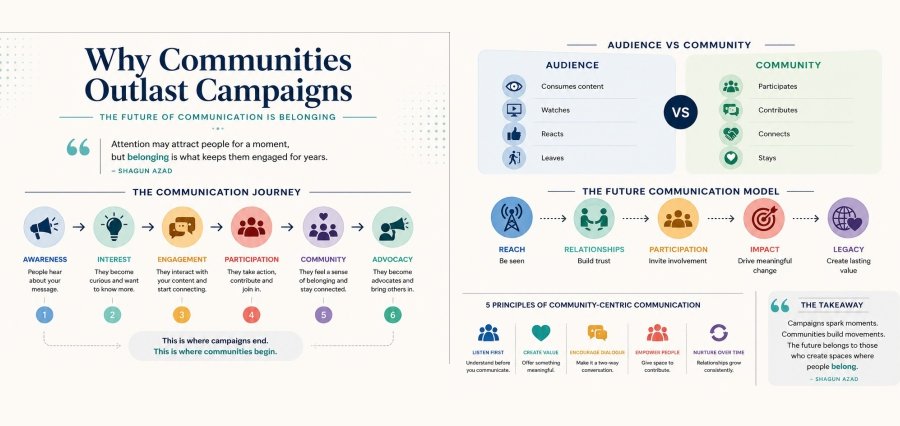
“Attention may attract people for a moment, but belonging keeps them engaged for years.”
For decades, organizations have been building communication strategies around one goal: capturing attention. They invested heavily in campaigns that expanded reach, increased visibility, and generated awareness among target audiences. Marketing and communication teams measured success through impressions, clicks, media mentions, and engagement rates.
Although these metrics still matter, communicators now face a very different landscape. Every day, people encounter thousands of messages across digital platforms, making attention increasingly fragmented and temporary. Organizations may spark interest through a campaign, but they often struggle to maintain engagement after the campaign ends.
As communication is upgrading, organizations have started asking a more important question: What creates lasting influence? Increasingly, leaders have discovered that communities, not campaigns, drive long-term impact.
The Attention Economy Reaches Its Limits
People consume content constantly. They scroll through social media feeds, read newsletters, listen to podcasts, browse websites, and encounter advertisements throughout the day. As competition intensifies, organizations work harder to create messages that stand out.
Yet visibility alone rarely builds lasting relationships. A campaign may generate awareness, but awareness does not automatically create loyalty, participation, or advocacy. After a campaign concludes, audiences often shift their focus to the next trend, announcement, or conversation.
As a result, many organizations find themselves trapped in a cycle of continuously chasing attention instead of cultivating meaningful relationships.
Communities Create What Campaigns Cannot
Communities provide something that campaigns cannot: belonging.
People naturally seek connection, purpose, and opportunities to contribute. They want others to hear their voices, value their perspectives, and include them in meaningful experiences.
When organizations create these opportunities, audiences gradually become communities.
The difference becomes clear:
- Audiences consume content; communities contribute ideas.
- Audiences observe activities; communities participate in them.
- Audiences react to messages; communities shape conversations.
- Audiences remember campaigns; communities sustain missions.
This shift transforms the relationship between organizations and the people they serve. Instead of simply delivering messages, organizations build relationships that encourage ongoing engagement and mutual value.
Organizations Must Replace Broadcasting with Participation
For many years, organizations relied on one-way communication. They developed content, selected channels, and distributed messages to audiences.
Today’s audiences expect much more. People want to join conversations, share opinions, and participate in experiences. They no longer accept a passive role in the communication process.
Organizations that encourage participation create stronger connections. They bring people together around shared interests, goals, and values. These interactions strengthen trust, deepen engagement, and support long-term relationships. Consequently, communication becomes an ongoing journey rather than a short-term campaign.
Build Ecosystems, Not Just Campaigns
Digital platforms have made community-building easier than ever. People from different backgrounds, industries, and locations can connect around common interests, professional goals, social causes, and shared values.
Organizations can use this opportunity to build ecosystems rather than isolated campaigns. Strong ecosystems encourage continuous engagement. They support collaboration, dialogue, learning, and collective ownership. Rather than focusing solely on reach and impressions, organizations can prioritize participation, trust, and relationships.
Campaigns still serve an important purpose. They introduce ideas, create awareness, and attract new participants. However, organizations should view campaigns as the beginning of a relationship rather than its destination.
The key question remains: What happens after the campaign ends? Do people disengage once they receive the message? Or do they stay connected because they feel that they belong?
Organizations with an answer to this question often achieve stronger loyalty, sustainable growth, and lasting influence.
The Future of Communication Belongs to Communities
Organizations that create belonging will shape the future of communication.
Communication leaders must stop focusing exclusively on how many people they can reach and start focusing on how deeply they can engage them. The organizations that build thriving communities around their purpose, values, and vision will create the greatest long-term impact.
Organizations run campaigns to get attention and create awareness, while communities encourage participation and develop advocates. Although campaigns are meant for a particular purpose and have a set period of execution, communities encourage a relationship that lasts long and continues to grow. Campaigns can be run by organizations to meet their goals in the short run, but communities are built for long-term involvement and legacy.
Conclusion
Modern organizations operate in an environment saturated with information. In this environment, attention remains valuable, but belonging delivers greater long-term returns.
Attention fades. Campaigns end. Communities endure.
Organizations that invest in relationships, encourage participation, and foster genuine connections will build stronger brands, deeper trust, and more sustainable influence. In the future of communication, belonging will not simply support success, it will define it.
Author: Shagun
Contact: 9773564675
Email: azadshagun8@gmail.com