


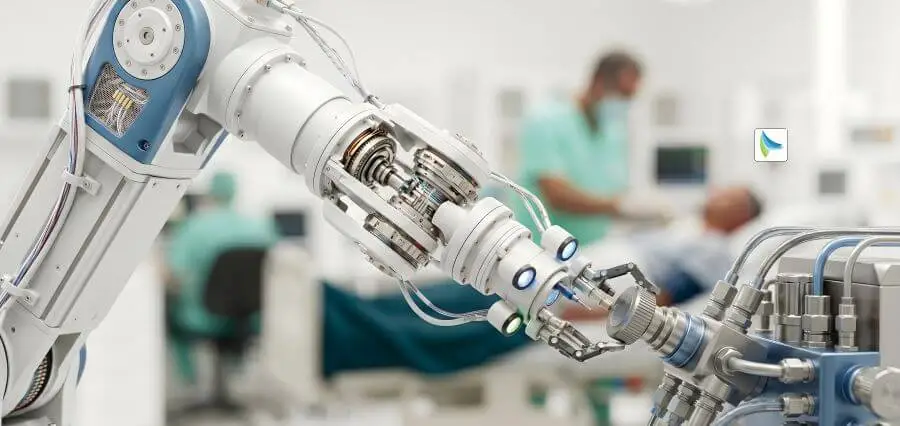

Enabling Smarter Healthcare
Populations are living longer than they once did, and many individuals manage conditions that require attention over several decades. Hospitals and clinics experience this pressure daily. Demand continues to rise while staffing and budgets remain constrained. Under these circumstances, healthcare innovation has become a practical concern for anyone responsible for administering a health service. Leaders must determine how care can be delivered differently without placing patients at risk.
Defining Innovation in Health Settings
The term is often associated with new equipment, and equipment is indeed part of the picture. However, an improved scheduling method may accomplish as much as an expensive device, as may a clearer process for passing information between shifts. What these changes share is purpose. Each is worth adopting only if patients benefit. Healthcare innovation that cannot demonstrate such benefit is a distraction, regardless of how impressive it appears.
Detecting Illness Earlier
Most illnesses respond better to treatment when they are identified early. Screening and testing methods have improved, and clinicians can now detect problems with greater accuracy than before. Treatments have also become more targeted, which frequently means milder side effects and faster recovery. These gains require trained staff and sound evidence. Careful follow-up is equally necessary. Nevertheless, earlier action generally means less suffering for the patient and lower cost for the system.
Widening Access to Care
Distance has long kept some people from the care they need, and cost has done the same. Remote consultations and shared digital records have begun to reduce both barriers. A resident of a distant community can consult a specialist without a lengthy journey, and routine monitoring of ongoing conditions can often be carried out at home. These options have limits, however. Some conditions require a physical examination, and certain patients prefer to be seen in person. Sound healthcare innovation offers patients a choice rather than imposing a single method upon all of them.
Using Information With Care
Health systems hold large quantities of data about patients and treatments. When studied carefully, this information shows which methods succeed and where services are under strain. Yet records may be incomplete, and a pattern in the figures does not always reveal its cause. Clinicians must still assess each patient as an individual. Privacy also demands constant attention, since health details are among the most personal information a person possesses.
Reducing the Burden on Staff
Doctors, nurses, and technicians carry heavy workloads. Tools that reduce paperwork return time to patients, which benefits the quality of care as well as staff morale. An exhausted clinician is more likely to make an error. New systems can also have the opposite effect. If they are poorly designed, or introduced without consulting those who will use them, they add to the burden. Staff should therefore have a genuine voice in what is selected. Healthcare innovation that disregards the working lives of clinicians seldom endures.
The Responsibility of Leadership
Change in a health setting is slow, and for good reason. Safety takes precedence, routines are firmly established, and errors can be serious. Leaders must balance caution with a willingness to try new approaches. A sensible course is to test a method on a small scale and to expand it only if the results justify doing so. They must also explain their reasoning to staff and patients in clear terms. Without such effort, even a sound idea may stall before it reaches those it was meant to serve.
Fairness and Access
New methods can widen existing gaps when they reach only those who are already well served. Older adults and people in remote or low-income communities may be left behind. Some patients lack access to digital tools or confidence in using them, so alternatives and support must remain available. A system that raises average results while overlooking its least fortunate patients has not truly improved health. Fairness must be weighed alongside every other result of healthcare innovation.
Measuring Results Honestly
Counting the number of new tools introduced is easy. Determining whether patients are healthier as a result is harder and far more useful. Honest measurement considers recovery and safety, along with the patient’s own view of the experience. The findings should lead to action. A method that does not help patients ought to be changed or discontinued, even if considerable effort went into it.
Looking Ahead
Health needs will continue to shift as populations age and new conditions emerge. Progress will come mostly through steady work, with few sudden breakthroughs. Healthcare innovation matters because it keeps attention fixed on a single aim, which is to help people live healthier lives. Health systems that pursue it carefully, and that watch for fairness as they proceed, will be better prepared for the demands ahead.