




Wafer Fabrication Companies
Semiconductors are key components in the modern digital economy, supporting communication systems, cloud computing, automotive electronics, healthcare devices, and artificial intelligence platforms. One of the key components in this revolution will be wafer makers, who produce silicon wafers for the creation of sophisticated ICs. Such companies are the ones that help power smartphones, electric vehicles, industrial automation and next-generation computing systems. The global semiconductor industry is growing quickly and is changing the technology landscape around the world, as demand for quicker and more efficient chips increases. AI and memory solutions, along with cloud infrastructure are emerging as large contributors of semiconductor demand growth, according to recent market studies.
Rising Demand for Advanced Chips
As industries embrace connected technologies and intelligent systems, the semiconductor ecosystem has grown more complex. These days, data centers need to run powerful processors that can process huge amounts of data while automakers rely on high tech chips for their driver assistance and battery management systems. In addition, consumer electronics manufacturers are rolling out products with more computing power, which are driving the demand for more advanced manufacturing processes.
The amount of investment in the global semiconductor industry has increased in this wave of innovation. Governments and private industry are expected to continue investing in domestic manufacturing capabilities and research initiatives, which should drive continued growth, according to analysts. This is especially true of the AI applications that are creating high demand for high-bandwidth memory, logic chips, and advanced packaging. While semiconductor CEOs worry about energy supply, trade limitations and geopolitical uncertainty, industry surveys indicate they still have a positive outlook.
The Importance of Manufacturing Precision
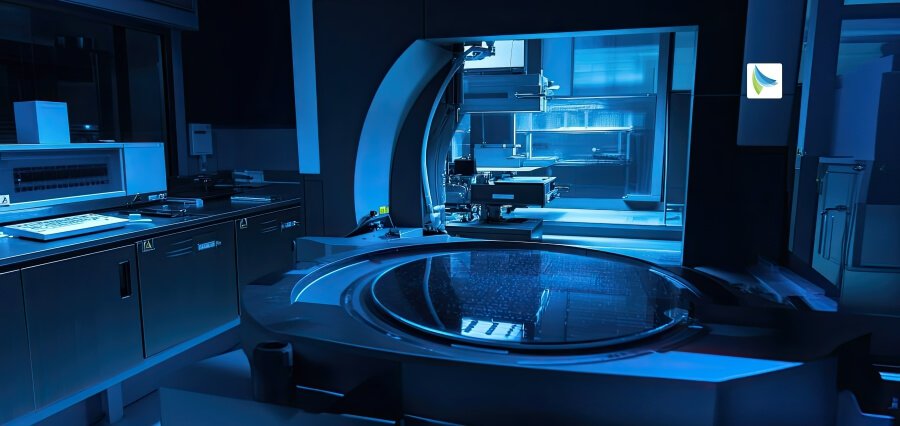
It is a very precise production process that involves a huge capital investment, which is required to make a chip in today’s days and years. To realize reliable semiconductors at scale, the various components of the cleanroom, UV lithography system, chemical processing equipment and testing infrastructure must function as a perfect chain. Advanced chips have billions of transistors and tiny defects can impact performance and yield.
Therefore, wafer makers make huge efforts to automate, optimize and control their production lines. To enhance efficiency and transistor density, many manufacturers are also moving towards larger wafers and smaller process nodes. Materials like silicon carbide and advanced materials are becoming more popular because they provide better energy efficiency for electric vehicles and industrial power systems. According to market research, 2026 marks a pivotal year for the growth of manufacturing and cost reduction in next-generation fabrication technologies.
Supply Chain Resilience and Regional Expansion
The semiconductor crisis has exposed vulnerabilities in global supply chains, thereby emphasizing the importance of semiconductor manufacture themselves. The chip shortage in recent years revealed the vulnerabilities in the global supply chain as well as the strategic importance of semiconductor manufacturing. To cut its reliance on few manufacturing centres, governments in Asia, Europe and North America have started policies to promote domestic semiconductor manufacturing. This movement has spurred big investments in new fabrication plants, workforce training, and research collaborations.
This is contributing to a geographically diversified semiconductor industry worldwide. Countries are shifting to localization of wafers, specialty materials, and packaging technologies to improve supply security. Southeast Asian countries, for instance, are trying to develop their capacities in wafer fabrication and to secure foreign partnerships, while China has pushed for more homegrown wafer supplies. These advances are opening the door for wafer makers to cater to regional markets and remain globally competitive.
Artificial Intelligence and Future Innovation
AI will continue to be one of the biggest drivers for semiconductor growth during the coming decade years. AI servers need processor design and ultra-fast memory systems which require high processing capabilities. The demand is making semiconductor companies develop better manufacturing methods and advanced packaging designs which will boost performance while decreasing power consumption.
The global semiconductor industry will experience unprecedented revenue growth because of increasing AI usage in multiple sectors including healthcare and transportation and robotics and financial services. Wafer manufacturers are responding to the situation by expanding their production capabilities and upgrading their factories and collaborating with equipment suppliers to increase their operational efficiency. Advanced lithography systems, chiplet architectures and photonics integration are also predicted to change the way semiconductors are designed and produced in the future.
Conclusion
The semiconductor industry is one of the most strategic in the global economy. Whether it’s artificial intelligence, cloud computing, electric vehicles or smart infrastructure, almost every tech relies on a solid chip production process. The semiconductor industry is an ever-changing one, and innovation in manufacturing methods will continue to be vital to the advancement of technology and the economy. Concurrently, wafer makers will be instrumental in virtually defining the future of digital transformation, powering industries around the globe to provide even faster, smarter and more efficient technologies for the next generation.