

Ceramic tile has been the default for bathrooms and kitchens in Amman for as long as most people can remember. It’s hard, cold, and grout lines stain, but nobody worries about it getting wet. So when homeowners and facility managers start looking at vinyl flooring for the same rooms, the hesitation makes sense.
The honest answer is that vinyl handles moisture very well in most cases, but the type you pick and the room you put it in make all the difference.
Not All Vinyl Behaves the Same
The word “vinyl” covers several quite different products.
Sheet vinyl comes in wide rolls, so you can often cover a small bathroom or laundry room with no joints at all. Glue-down planks and tiles are bonded to the subfloor, which seals most of the underside. Click-lock luxury vinyl planks float over the subfloor and lock together at the edges. Rigid core options, usually called SPC, add a dense stone-plastic layer that stays stable when temperatures and humidity shift.
Every one of these resists water on the surface. They differ in how they handle water that seeps around the edges.
Room by Room
- Kitchens are an easy win. Spills, splashes, and daily mopping won’t trouble any decent vinyl, and it’s kinder underfoot than stone.
- Laundry rooms are a good fit too, with one caveat. A leaking washing machine can release a lot of water over a few hours, so sheet vinyl or glue-down tiles are safer than floating planks here.
- Bathrooms work well for most households, especially guest bathrooms and family bathrooms with a bathtub or enclosed shower. Open walk-in showers and wet rooms, where the floor itself gets soaked every day, are better left to tile or specialist wet-room systems.
- Ground-floor rooms and basements are where people get caught out. Here the risk isn’t spills but damp coming up through the slab. A moisture test and a proper barrier underneath matter more than the vinyl itself.
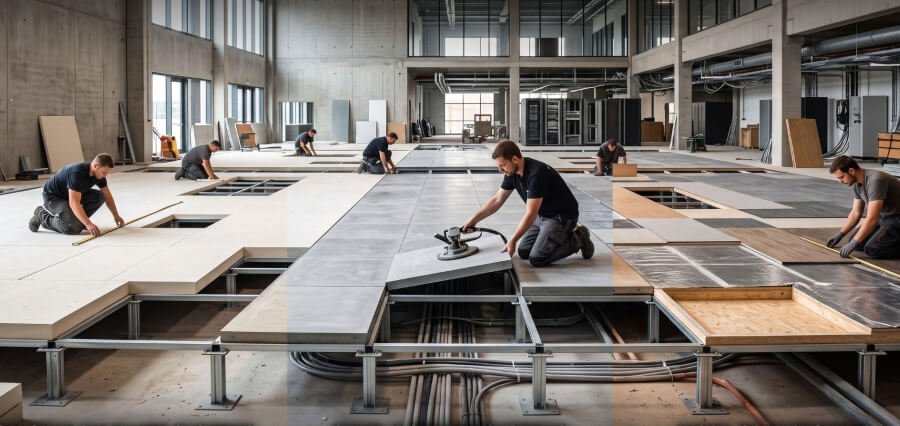
For commercial projects, the picture shifts slightly. Many flooring solutions Jordan facility managers use for clinics, school washrooms, and hotel back-of-house areas use sheet vinyl with welded seams and coved edges, because it creates a continuous surface that’s easy to sanitize.
Don’t Forget Slip Resistance
A wet floor that won’t swell can still be dangerous. Some vinyl finishes become slippery when wet, particularly glossy residential ranges. For bathrooms and commercial kitchens, look for products with a stated slip-resistance rating, often shown as an R rating or a wet pendulum value, and choose a textured surface where people walk barefoot or carry trays.
Keeping It in Good Shape
Vinyl needs very little in damp rooms. Wipe up standing water rather than letting it sit along the edges, use a damp mop instead of flooding the floor, and skip harsh solvents that can dull the wear layer. Check the silicone around tubs and toilets yearly, because a failed seal lets water creep under the edge unnoticed.
For kitchens, laundry rooms and most bathrooms, vinyl is a practical, comfortable and affordable choice that won’t warp or rot. Match the format to how much water the room really sees, and it should stay sound for years.