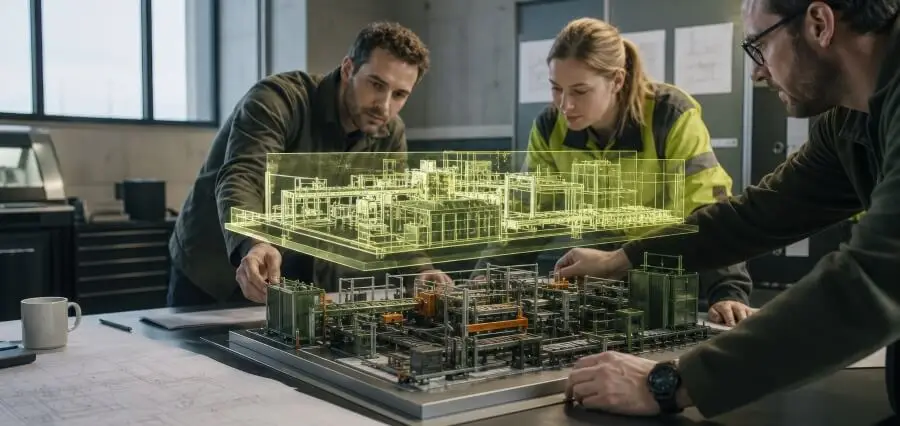




Most technology investments get approved with a line for the equipment and very little thought for the room it will live in. The result is familiar to anyone who has run a build-out. The devices arrive, and then someone discovers that the power is in the wrong place, the network cannot reach the back corner, or there is nowhere to store the equipment between uses. The money was spent correctly. The plan around it was not.
Smart facility planning closes that gap by treating the space and the technology as a single investment from day one. It is less about spending more and more about deciding in the right order.
The Cost of Disconnected Facility and Technology Planning
In many organizations, facilities and technology are planned by different people on different calendars. Facilities teams handle space, power, climate control, and furniture. IT or operations teams choose and buy the equipment. Each group does its job well, and the mismatch only appears after delivery.
That is when the costs show up. There is rework, such as adding electrical capacity, running new cable, or moving walls. There are delays, because go-live gets pushed back while the room is fixed. There is idle equipment, purchased and delivered but unused because the storage, charging, or layout does not work. And there is lost confidence, because staff who struggle with a new tool early tend to stop trusting it. None of these show up in the original cost estimate, which is why they feel like surprises.
The pattern is easy to picture in almost any setting. A clinic adds tablets to exam rooms without planning where they charge. A warehouse rolls out handheld scanners before surveying wireless coverage. An office installs video conferencing in rooms with no data port where the display needs to go. In each case the purchase was sensible. The most expensive place to find a mismatch is after installation, when every fix means pulling finished work apart.
Technology-Heavy Spaces Make the Gap Easy to See
School districts offer a clear case study. A 2020 GAO report based on a national survey of districts found that 87% listed expanding student access to technology among their top facility priorities, just behind security at 92%. The same survey estimated that about 54% of districts needed to update or replace multiple building systems, such as heating and cooling. Demand for technology is arriving in buildings that were never designed for it.
Picture a district that buys robotics kits, a few 3D printers, and a set of VR headsets for a new makerspace. The orders arrive on schedule. Then the questions start. Where do the printers go so noise and fumes do not take over the room? Is there enough power at the benches? Where do twenty headsets charge and live between classes? Does the furniture let a team of four build, test, and move around?
Implementing comprehensive STEM classroom solutions functions as a turnkey service that bridges the gap between hardware procurement and facility readiness. Rather than dropping off standalone products, a full-service provider combines space design, network infrastructure, and curriculum-aligned technology into a single, managed deployment.
That end-to-end approach ensures physical environments, digital tools, and ongoing support work together seamlessly.
Four Questions to Answer Before Anything Is Ordered
A short walk through the space with a tape measure and a checklist prevents most surprises. Four questions do most of the work:
- What does each item need to run? List the power, network ports, wireless coverage, ventilation, and clear floor space for every device, using the manufacturer’s own requirements. Then count the outlets and ports in the room before the purchase order goes out.
- Where does everything live between uses? Charging, storage, and transport decide how often equipment comes out. When setup takes a long time, it tends to come out less often.
- Who can reach it, and who cannot? Valuable equipment needs locks, controlled access, and sightlines for supervision. Security belongs in the room plan from the start.
- Can the room change? Movable furniture and flexible layouts let one space handle a training session on Monday and a design review on Friday. Fixed rows cannot.
Phase the Investment Instead of Buying It All at Once
The most reliable way to expose planning gaps is to build one room first. A pilot room shows where the wireless signal drops, where the outlets run out, and where the storage is too far from the work. Fixing those problems in one room costs far less than discovering them in twenty.
Phasing also protects the unglamorous line items. Cabling, mounting, storage, charging, and furniture are easy to underfund because they are not the exciting part of a proposal, yet they decide how well everything else performs.
Lifecycle questions belong in this phase as well. When comparing STEM classroom solutions, ask what happens when a unit breaks, how quickly a replacement arrives, and who supports the people using it. Bluum’s STEM page, for instance, points to prompt replacements and repairs, implementation support, and professional development for teachers. Those answers affect the real cost of an investment more than the sticker price does. Plan for a small pool of spare units and a replacement schedule, too, so one failed robot or headset does not take a whole class set offline in the middle of a unit.
What Good Planning Looks Like Six Months Later
The results are quiet but easy to recognize. Rooms are in use on the schedule they were built for. Staff trust that the equipment will work when the day starts, so they plan their work around it. Small problems get fixed from a standard parts and support list instead of through one-off emergencies.
A tested room layout also becomes a template. The second and third rooms go faster because the first one answered the hard questions, and leaders can see how the space is actually used before they approve the next phase. Spending decisions start from evidence instead of assumptions.