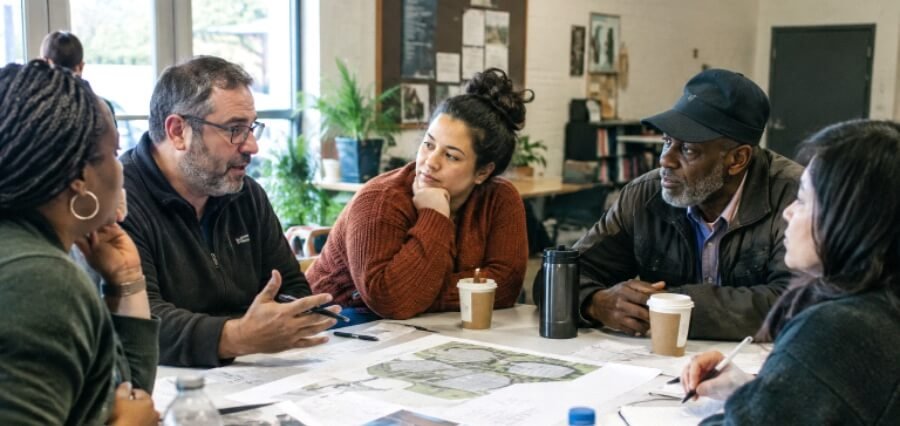




Investment can shape much more than a balance sheet. When capital is directed toward projects that respond to local priorities, it can help create jobs, expand housing choices, strengthen small businesses, and improve access to everyday services. Development models, including some EB-5 projects, are most valuable to a community when planning considers the people who will live, work, and operate businesses nearby.
Community-centered investment does not mean every project must solve every local challenge. It means investors, developers, public agencies, and residents define practical goals together, consider possible tradeoffs early, and remain accountable after construction is complete. Strong projects connect financial feasibility with durable local benefits.
Why Community-Centered Investment Matters
Private investment boosts growth and development but impacts go beyond the project. Construction creates local jobs; new homes support retailers; and facilities aid residents’ work, education, and family needs. However, profitability doesn’t guarantee neighborhood benefit. Community planning asks: what long-term value remains for residents after opening? This guides decisions on hiring, services, affordability, accessibility, and local business participation before commitments.
What Community-Centered Investment Means
Community-centered investment is an approach that puts local needs and shared outcomes alongside financial returns. Rather than treating residents as an audience to inform after decisions are made, it involves them in identifying priorities and assessing results. The approach is especially useful when a project may influence housing costs, employment patterns, transportation, or access to services.
Core Features Of A Community-Focused Project
- Clear evidence of a local need, such as housing, health services, or commercial space.
- Early communication with residents, employers, community groups, and public agencies.
- Opportunities for local workers, contractors, and small businesses to participate.
- Workforce training that connects residents with available roles.
- Public goals, regular progress updates, and a method for responding to concerns.
One recent example comes from Harlan County, Kentucky, where a partnership described its approach as pairing catalytic capital with local engagement, workforce-readiness planning, and inclusive economic participation. Its locally rooted investment strategy also includes support for small businesses, entrepreneurship, and community development priorities identified with local partners.
How These Projects Create Jobs
Job creation should be viewed as a sequence rather than a single number. During planning, architects, engineers, surveyors, attorneys, and other specialists may be hired. Construction creates demand for skilled trades, equipment operators, material suppliers, and site services. Once a project opens, it may require property managers, maintenance teams, teachers, health care workers, hospitality staff, or retail employees.
Indirect effects can matter too. Workers and visitors may spend at nearby restaurants, stores, and service providers. Still, the quality of employment is as important as the total count. A useful assessment considers wages, benefits, scheduling, training, career advancement, and whether nearby residents can realistically access the jobs being created.
How Local Services Can Improve
Development has the greatest practical value when it addresses gaps residents experience in daily life. Depending on the place, that could mean affordable homes, senior housing, child care, schools, clinics, grocery options, public gathering spaces, transit connections, utilities, or reliable digital infrastructure.
Mixed-use and service-oriented projects can make those benefits more connected. In Phoenix, the planned Horizon on Villa development combines multifamily housing with a Head Start program, community dental clinic, exercise space, city offices, and a central park. That combination shows how housing can be designed as part of a broader community hub rather than as a stand-alone building.
The Role Of Local Planning
Good planning begins well before construction. Project teams should review local information on housing availability, household income, job access, transportation, and existing services. They should also speak directly with residents, business owners, schools, workforce organizations, and neighborhood groups that understand conditions on the ground.
Effective planning turns those conversations into measurable commitments. For example, a project may establish local hiring targets, set goals for small-business contracting, reserve space for needed services, or create a process for addressing traffic and construction concerns. Regular public updates help keep expectations realistic and make it easier to identify problems while there is still time to respond.
Ways To Measure Community Results
Community benefits should be tracked over time, not assumed from a groundbreaking announcement. Useful measures can include:
- The number and type of jobs created during construction and operations.
- The share of jobs and contracts awarded to local workers and businesses.
- Wages, benefits, training completion, and worker retention.
- Homes, service spaces, or public amenities added or preserved.
- Access to health care, education, transit, recreation, or essential retail.
- Resident feedback before opening and after the project is operating.
Short-term construction employment may be meaningful, but it does not by itself establish lasting impact. Longer-term reporting can reveal whether a project supports stable work, viable local businesses, and services that residents actually use.
Common Risks And How To Reduce Them
Development offers benefits but also pressures, such as rising rents that challenge residents and small businesses, and disruptions from traffic, noise, and construction. Projects can fail if promised services don’t meet demand. To reduce risks, transparency and early actions are crucial. Teams should monitor housing costs, establish affordability protections, publish timelines and goals, and partner with local workforce groups. They must also plan for ongoing maintenance and operating costs for long-term success.
A Practical Review Checklist
- What specific local problem does the project address?
- Who helped define the goals and priorities?
- Which jobs will be created, and how long are they expected to last?
- Will local workers, vendors, and small businesses have meaningful access?
- What new services, homes, or public spaces will residents gain?
- Could the project increase costs or displace current residents?
- Which results will be measured after construction ends?
- Who is responsible for sharing progress and responding to concerns?
Final Thoughts
Community-centered investment works best when financial goals and local needs reinforce one another. Jobs, housing, education, health care, and public spaces can create durable value when they are planned with residents rather than simply placed near them. In 2026, the strongest projects will be judged not only by what they build, but also by who benefits, how results are measured, and whether those benefits continue over time.