




Sustainable Mobility Solutions
Business transportation for persons and goods is undergoing rapid changes. High fuel costs, strict emissions regulations, and higher customer and investor demands are forcing companies to reconsider their logistics and fleet management strategies. High fuel costs, strict emissions regulations, and increased demands from customers and investors are making businesses adopt new logistics and fleet management approaches. Businesses that move first will have a competitive advantage in the market where sustainability is the only option.
Eco-Friendly Transportation has evolved from a small issue to a business priority. Mobility as a business strategy is under review for its impact on corporate profitability and environmental footprint by companies throughout manufacturing, logistics, retail and public services. Sustainable Mobility Solutions offer a viable solution for enterprises to cut costs, comply with regulations and maintain a positive reputation with key stakeholders and customers.
Reshaping Fleet Operations with Electrical Power
It’s safe to say that the time for electric vehicles (EVs) for industrial and commercial fleets has come. Nowadays, battery technology is much more advanced than ever before, EV infrastructure is developing rapidly, and the price of electric fleet vehicles is getting increasingly close to the price of conventional vehicles. Early adopters who begin implementing the change from the beginning will not be rushing into anything and will be gaining practical experience at work, which will eventually bring about higher efficiencies.
Electrification of fleets may be considered one of the easiest ways in which companies can invest in their Eco-Friendly Transportation. Apart from reducing emissions, such a switch will lead to saving money on the expenses related to both fuel and maintenance in the future. Moreover, making such an investment strategically allows leadership to benefit financially as well.
Data Driving Smarter Mobility
At an operational level, technology is a key component to achieving Sustainable Mobility Solutions. Businesses can decrease wasteful driving, eliminate any idle times, and increase their delivery efficiency by applying route optimization technologies, telematics, and real-time tracking for fleets. Through this application, management will receive the data that they require for making more accurate decisions at a faster pace without requiring any further employment.
Data can also aid in long-term planning. Ongoing data collection on fuel usage, emissions and vehicle performance helps companies create a more complete picture of where they have inefficiencies and where investments will get the most return. Eco-Friendly Transportation is not simply about the use of cleaner vehicles; it is also about running operations more intelligently, at all points of the mobility chain.
Infrastructure Supporting Sustainable Growth
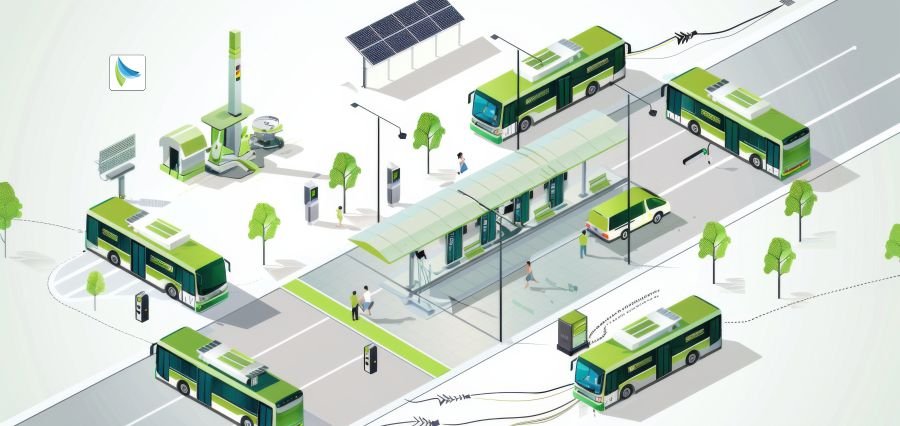
Sustainable Mobility Solutions is more than just vehicles and software. They rely on physical infrastructure for cleaner operations at every touch. The charging station, hydrogen refueling station, intermodal hubs and smart logistics centers are becoming key elements of a new mobility strategy. Those firms that make the investment in this infrastructure establish a long-term competitive edge, one that is not easily replicable by other firms.
The progress of public and private investment in clean mobility infrastructure is gathering momentum worldwide. Governments are providing incentives, grants and regulations to early movers. Businesses that actively participate in these programs gain access to financing to ease the cost of moving to Eco Friendly Transportation. This is because the business case is stronger and the return on investment is quicker.
Partnerships Accelerating the Transition
Sustainable Mobility Solutions is a process that doesn’t happen in isolation. Cleaner mobility is made possible, with technology providers, energy suppliers, logistics partners and public agencies, at scale. By establishing partnerships with other entities in this ecosystem, companies can leverage and benefit from superior technology, shared infrastructure and the shared expertise, which will help them accelerate their transformation without having to shoulder all the costs and risks themselves.
Working together also means shared responsibility. If all supply chain partners are on the same page about sustainability, then the supply chain is more efficient and more resilient. Eco-Friendly Transportation is an integrated approach, not a one-off campaign. Businesses that are driving the discussion in their supplier and client relationships become trusted partners and preferred vendors in a more sustainability-focused business landscape.
Conclusion: Mobility Built to Last
Clean, smart transportation is the trend, not the last one. It represents a basic shift in how goods and people are being transported between businesses, government and consumers. Companies acting now to create a mobility strategy that is sustainable today are establishing a foundation for operation that will last for decades to come.
Sustainable Mobility Solutions and Eco-Friendly Transportation aren’t just about the environment, they’re about efficiency, risk reduction, and fostering better relationships throughout the value chain. Those companies that move with purpose and invest with clarity will be the ones leading the next generation of industrial and commercial mobility.