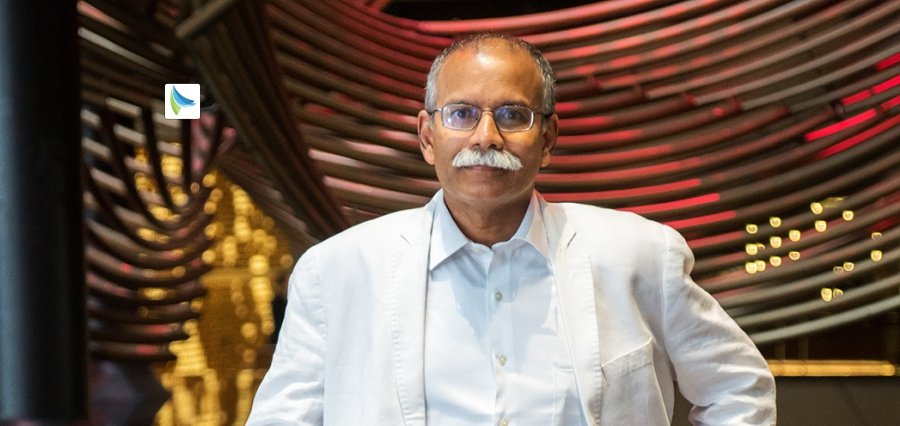





A successful global vision is always grounded in pragmatism, planning, and operational dynamism. So, a leader like Syed Saqeeb Ahmed holds the advantage of seeing their global vision realized in the form of Accel Information Technology in his two decades of information technology leadership, driving digital transformation and optimizing business operations. Today, as the Director of Accel, Syed’s focus is on modernizing IT infrastructures and aligning strategies with business evolution, ensuring innovation and enhanced digital experiences for their customers who come from Government to Banking, Educational institutions to Health care, small startups to Large enterprises.
Syed Saqeeb Ahmed says, “As a Solution Architect, my expertise in enterprise IT infrastructure, software, and security solutions is pivotal in delivering responsive customer service and translating business requirements into effective software. Our team’s dedication to quality has been instrumental in fostering robust IT environments that safeguard and empower businesses.”
True Digital Transformation
At its core, for the past 15 years, Accel’s philosophy has been that true digital transformation is not about technology for technology’s sake, but about building Future-Proof Systems, says Syed Saqeeb Ahmed. “We move businesses from being reactive to becoming proactive, data-driven entities. This means we don’t just automate old processes; we reimagine them entirely,” he adds. The approach is built on three pillars: Human-Centric Design, Business-First Integration, and Iterative Agility.
In this context, Syed Saqeeb Ahmed says they define ‘Reliability’ on three critical levels:
- Technical Resilience:This is the foundation. It means your systems have near-zero unplanned downtime. “We achieve this through robust, scalable architecture, redundant components, and proactive monitoring that predicts failures before they occur.”
- Process Integrity:A system is only as reliable as the data it provides and the processes it governs. “We ensure that data is accurate, consistent, and secure across all integrated platforms.” This creates a “single source of truth” that the entire company can trust for critical decisions.
- Strategic Consistency:The highest form of reliability is the consistent delivery of business value. “Our systems are built to not only perform a task today but to reliably support your strategic goals for years to come, adapting to new market demands without requiring a complete overhaul.”
A Balanced Roadmap
To help clients develop a clear digital transformation roadmap that balances technological innovation with business goals and operational continuity, Syed Saqeeb Ahmed says that they bridge the gap by translating business goals into a phased, actionable plan. “Our approach focuses on three key areas: Discovery & Alignment, Roadmap Creation, and Governance & Execution. This method ensures innovation is purposeful, directly supports business objectives, and is integrated without compromising daily operations.
To explain his point, Syed Saqeeb Ahmed cites a…
Case Study: Transforming Public Sector Workforce Management for a UAE Government Entity
A leading UAE Government Entity faced significant challenges with manual, siloed, and non-integrated processes for workforce management, attendance, and access control. By designing and implementing a purpose-built, fully automated workforce management system integrated with their physical access control and backend Oracle Fusion HCM, we delivered a unified, data-driven platform. This resulted in **a 40% reduction in administrative overhead, a 15% decrease in unauthorized absenteeism, and the creation of a new, strategic capability for organizational planning.
The Challenge:
The client operated with a fragmented ecosystem:
Manual Processes: Employee shift scheduling, overtime requests, and leave applications were handled through paper forms or disjointed emails, leading to delays and errors.
Data Silos: The physical access control system (badge in/out data) was completely separate from the digital HR records in Oracle Fusion. There was no single source of truth for employee presence.
Limited Visibility: Management had no real-time insight into workforce distribution, productivity, or attendance patterns. Decision-making was reactive, based on outdated or incomplete reports.
Compliance Risks: Inability to accurately track and report on working hours, especially for shift workers, posed compliance risks with UAE labor regulations.
The Solution:
Syed Saqeeb Ahmed shares, “We architected and deployed a bespoke, centralized Workforce Management System that served as the intelligent layer connecting all facets of the employee lifecycle.”
- Purpose-Built Application:“We developed a custom web and mobile application with tailored workflows for every level of the organization.”
Employees: For shift swapping, leave requests, and viewing schedules.
Team Leads/Supervisors: For approving requests, managing team schedules, and generating team-level attendance reports.
Managers: For overseeing department-level workforce, approving budgets for overtime, and analyzing productivity trends.
Top Management: For organization-wide dashboards showing real-time headcount, presence vs. planned ratios, and strategic workforce analytics.
- Seamless Integration:
Access Control System: The system was bi-directionally integrated with the physical access control system. Employee badge “in” and “out” events automatically updated their attendance status in the new system, eliminating manual timekeeping.
Oracle Fusion HCM: The solution acted as the operational front-end, pushing finalized attendance, leave, and overtime data directly into Oracle Fusion for payroll processing, ensuring 100% data accuracy between operations and finance.
- Unprecedented Data & Insights:The integration created a unified dataset that had never existed before, correlating physical presence (access data) with logical work (schedules, projects) and HR data.
Measurable Positive Business Outcomes:
- Dramatically Improved Operational Efficiency:
40% Reduction in Administrative Overhead: The automation of scheduling, time tracking, and leave management freed up hundreds of person-hours previously spent on manual data entry, reconciliation, and resolving discrepancies.
Faster Decision-Making: Approval workflows that previously took 3-5 days were reduced to under 2 hours, accelerating operational tempo.
- Direct Cost Savings & Compliance Assurance:
15% Decrease in Unauthorized Absenteeism: Real-time visibility and automated exception reporting allowed managers to address attendance issues immediately. The clear audit trail from access control to the HR system drastically reduced “buddy punching” and unauthorized early departures.
Optimized Overtime Expenditure: By having a clear view of actual hours worked versus scheduled hours, management could make data-informed decisions on overtime, leading to a 12% reduction in unplanned overtime costs in the first year.
- Creation of a New, Strategic Revenue-Protection Capability:
While not a new revenue stream in the commercial sense, for a government entity, efficiency is revenue protection. The system identified and plugged financial leaks from inaccurate payroll and unproductive hours. This created a new “strategic insight” capability that directly contributed to the entity’s fiscal responsibility and accountability mandates.
- Data-Driven Strategic Planning (The “New Insights”):
The most significant outcome was the ability to answer previously unanswerable questions, such as:
- “What is the correlation between team presence in specific buildings and project completion rates?”
- “How can we optimally staff our facilities during national holidays or major events?”
- “What are the long-term trends in workforce utilization, and how should that inform our future hiring and facility planning?”
This empowered top management to move from reactive oversight to proactive, strategic workforce optimization, aligning human capital directly with the entity’s long-term strategic goals.
Finally, Syed Saqeeb Ahmed says that by moving from a fragmented, manual set of processes to an intelligent, integrated, and automated platform, the government entity did not just solve an operational problem—it unlocked a strategic asset. The new workforce management system provided the transparency, control, and deep analytical insights necessary to drive significant efficiency gains, ensure compliance, and make smarter, data-driven decisions for the future.
For more information, please call 0556309232, email syed@accelinfotec.com, or check out the website: https://accelinfotec.com.