



Business today moves fast, and companies are constantly under pressure to grow quickly, enter new markets and deliver bigger numbers every quarter. But in this constant rush, one important question often gets pushed aside: whether the growth being built today is actually strong enough to last.
This is a question more and more companies are being forced to face. Markets keep changing, technology keeps shifting and employees now expect far more from the places they choose to work. Customers, too, want more than just good products or services; they want to know that a company stands for something real and lasting. In an environment like this, leadership has become much harder to define clearly. Success is no longer just about the results a leader delivers, but about how those results are created and whether they can hold up over time.
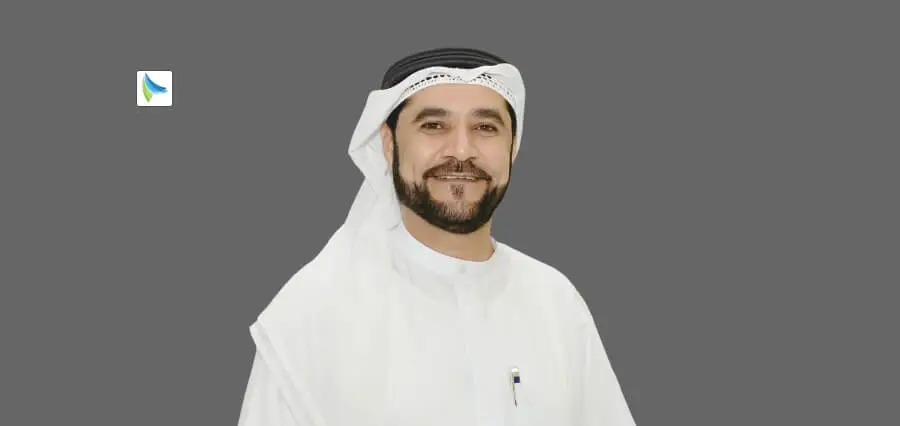
Few individuals reflect this shift as clearly as Dr. Rashid Alleem, Founder and Executive Chairman of Alleem Group. His career has taken him through very different worlds, including business, government work, education, and community development and each of these experiences has taught him something valuable about how people think, work, and grow together.
What stands out most about his approach is that he never treats business growth and long-term impact as two separate goals; to him, they belong together and shape each other. This belief is part of why his views on leadership continue to attract attention both inside and outside the corporate world.
Let’s explore how Dr. Rashid’s experiences have shaped his approach to leadership, growth, and long-term impact!
From Experience to Strategic Leadership
Dr. Rashid’s journey has been shaped by experiences across business, government, education, and community development. Each responsibility taught him that leadership is not simply about achieving results; it is about understanding people, anticipating change, and creating systems that continue to deliver value.
One of the most formative experiences was being entrusted with organizations that faced significant challenges and transformation requirements. Such situations taught him that a leader must be willing to confront reality, make difficult decisions, and remain focused on the bigger picture. Rather than becoming consumed by immediate problems, his approach has been to look at what those challenges reveal about the future of an organization.
This perspective gradually developed into a philosophy built around continuous learning, innovation, discipline, and people. For him, “Excellence is not a destination. It is a daily commitment to becoming better than we were yesterday.”
That philosophy continues to shape how he approaches leadership, organizational growth, and strategic decision-making.
Leadership Shaped by Multiple Perspectives
Holding leadership responsibilities across business, government, academic, and cultural initiatives has given Dr. Rashid a multifaceted understanding of what leadership requires. Each environment has contributed a different dimension to his thinking.
In government, he learned about responsibility, public service, systems, and the importance of decisions that affect entire communities. Business brought lessons in competitiveness, execution, innovation, and accountability. Academia reinforced the value of knowledge, research, questioning, and continuous intellectual growth. His cultural and community initiatives, meanwhile, reminded him of the human dimension of leadership.
Together, these experiences shaped his belief that leadership should serve a purpose greater than the individual.
At the same time, they reinforced another important lesson: there is no single leadership style that works everywhere. Context may change, but certain principles remain constant: integrity, respect, vision, courage, learning, and the ability to bring people together around a meaningful purpose.
This understanding has allowed him to approach leadership not as a fixed formula, but as a responsibility that must respond to circumstances while remaining grounded in enduring principles.
Building Meaningful and Sustainable Growth
As Chairman of Alleem Group, Dr. Rashid views business success and responsible development as complementary rather than competing objectives. A successful organization, in his view, must create value for its customers, employees, shareholders, communities, and the planet.
This belief shapes the organization’s strategic direction, which is guided by a long-term perspective and a focus on innovation, operational excellence, sustainability, human capital, and responsible growth.
He encourages teams to look beyond conventional measures of performance and consider the nature and longevity of the value they create. As he puts it, the question is not only, “How much value can we create?” but also, “What kind of value are we creating, and how long will it last?”
His approach is centered on establishing a clear purpose, creating alignment around that purpose, encouraging agile execution, and holding the organization accountable for its impact. Growth remains important, but meaningful and sustainable growth is far more important.
This philosophy also connects directly with his understanding of sustainability and human capital
Preparing for the Future Through Better Questions
For leaders attempting to remain competitive in an environment of constant change, identifying emerging opportunities is increasingly important. Dr. Rashid believes the future rarely arrives suddenly. There are usually signals technological, economic, social, environmental, or behavioral that indicate where the world is heading.
The challenge is recognizing those signals early.
His approach encourages strategic thinking based on curiosity and continuous observation. Leaders must look beyond their own industries and learn from developments in technology, science, sustainability, geopolitics, consumer behavior, and education.
Central to this thinking is the importance of asking better questions. His concept of CRItRAL Thinking, which combines critical and lateral thinking, encourages leaders to challenge assumptions while simultaneously looking for unconventional possibilities.
Strategic decisions, therefore, should balance data with experience, analysis with intuition, and today’s realities with tomorrow’s possibilities. The objective is not to predict the future perfectly. It is to prepare the organization to adapt when the future arrives.
That mindset reflects a broader principle running through his leadership philosophy: organizations must continuously learn if they are to continuously evolve.
People as the Foundation of Transformation
Technology can improve processes, but people create ideas, solve problems, build relationships, and drive transformation. This belief has placed human capital at the center of Dr. Rashid’s approach to organizational development.
He sees sustainability, leadership, and human capital as inseparable. Sustainability provides an organization with a long-term perspective. Leadership provides direction and purpose. Human capital provides the capability to turn that purpose into reality.
For this reason, he has consistently emphasized continuous learning, empowerment, collaboration, and innovation. “Organizations that invest in their people are investing in their future.”
The strongest organizations, he believes, are not simply those with the best technology or the largest resources. They are those capable of continuously learning, adapting, and reinventing themselves.
This emphasis on people also reflects his wider understanding of leadership.
Turning Challenges into Organizational Learning
The most difficult moments in leadership can often become the most valuable teachers. Dr. Rashid has faced situations where organizations required significant transformation, decisions had to be made under pressure, and the path forward was not always obvious.
Those experiences reinforced his belief that leadership becomes most important when circumstances are uncertain.
Rather than avoiding difficult realities, he believes a leader must acknowledge the problem honestly, understand its root causes, and then have the courage to act. At the same time, transformation requires patience. Some changes do not happen overnight and demand persistence, communication, and the willingness to continue moving forward even when results are not immediately visible.
This has influenced the way he approaches difficult decisions today. He tries to separate emotion from evidence, short-term pressure from long-term consequences, and symptoms from root causes.
Every challenge, in his view, carries the potential to become a source of organizational learning. The experience of navigating uncertainty therefore becomes part of the organization’s ability to become stronger and more resilient.
Learning Through Writing, Academia, and Leadership Development
For Dr. Rashid, leadership development has never been limited to executive responsibilities. Writing, academia, and interaction with people from different generations, industries, cultures, and professional backgrounds have become important parts of his own continuous evolution.
“Writing has probably been one of my greatest teachers,” he notes.
The process of writing requires thoughts to be organized, assumptions to be challenged, and complex ideas to be explained clearly. A book does not simply communicate what a person knows; the process of writing can also reveal what remains to be learned.
Academia has had a similar influence by encouraging curiosity and disciplined thinking. Leadership development creates another dimension by allowing ideas to be tested through interaction and experience.
Together, these experiences create what he describes as a continuous feedback loop: experience generates ideas, research challenges those ideas, writing organizes them, and interaction with people tests them.
This process has helped him remain a student throughout his leadership journey. His belief is clear: “I believe that the moment a leader stops learning is the moment the leader begins to decline.”
The Alleem 365+2: Turning Time into Purpose
This philosophy of continuous learning and disciplined action also inspired the creation of the Alleem 365+2 Planner. The idea came from a simple observation: people often have ambitious goals and good intentions, but what truly transforms their lives is what they do consistently every day.
Rather than creating a conventional diary or productivity planner, Dr. Rashid wanted the Alleem 365+2 to function as an inner compass, a practical tool that connects daily actions with larger purpose, goals, values, and personal growth.
The additional days carry a particular meaning. The 365 days represent the year, while the +2 create space for reflection, renewal, and legacy. The concept is a reminder that life is not only about managing time; it is about giving meaning to the time available.
The planner brings together goal-setting, priorities, decision-making, reflection, habits, gratitude, learning, and daily wins. More importantly, it encourages users to ask questions beyond productivity: What did I learn? Whom did I help? How did I grow? And did today’s actions move me closer to the person I want to become?
Ultimately, the objective is to turn 365 ordinary days into 365 opportunities for extraordinary progress and make the planner a companion for personal discipline, professional excellence, and a more purposeful life.
Balance Through Purpose and Priorities
With responsibilities spanning business, writing, academia, and public initiatives, Dr. Rashid approaches balance not as an equal distribution of time but as the ability to give the right attention to the right priorities at the right time.
He organizes his life around purpose and priorities rather than simply around a calendar. Strategic thinking, reading, writing, family, learning, and reflection all have their place. Delegation is equally important because, as he notes, a leader who tries to do everything personally will eventually limit both the organization and himself.
There are times when professional responsibilities require greater attention, while at other moments family, reflection, or personal interests must take priority.
For him, balance ultimately comes down to being fully present. When working, he tries to work with purpose. When with family, he tries to be present with them. And when alone, he uses that time to reflect, learn, and reconnect with what truly matters.
A Legacy Built Beyond Titles
Looking back, the accomplishments that give Dr. Rashid the greatest fulfillment are not necessarily those connected to titles, rankings, or awards. They are the moments when his work has positively influenced people, organizations, or communities.
Seeing an organization transformed, watching a young professional develop confidence, helping leaders discover their potential, contributing to sustainability, or sharing knowledge through books and academic work provides a deeper sense of achievement.
This understanding has shaped his view of legacy. “I have come to believe that a leader’s true legacy is not what he accumulates, but what he leaves behind.”
If the people an organization works with become stronger, the organizations it leads become more capable, and the communities it serves become better, then leadership has created something that can continue long after the leader’s own involvement has ended.
It is this idea of lasting value that connects his professional achievements with his broader leadership philosophy.
Leading for Tomorrow’s Possibilities
The next phase of Dr. Rashid’s journey is increasingly focused on knowledge, innovation, leadership development, sustainability, and legacy. Through writing, academic work, leadership initiatives, and business activities, he aims to continue developing ideas that can help organizations become more intelligent, agile, sustainable, and human-centered while sharing knowledge with the next generation of leaders.
His advice to those leaders is direct: “Do not lead only for today’s results. Lead for tomorrow’s possibilities.”
That means building organizations that can survive without the leader, developing people who can become better than the leader, innovating before being forced to, treating sustainability as a responsibility rather than a slogan, and never compromising integrity for short-term success.
At the heart of this philosophy is a simple understanding of leadership as impact. Positions, offices, and achievements may eventually fade, but the influence a leader has on people and possibilities can continue.
For Dr. Rashid Alleem, that is the measure that matters most.
“At the end of a career, people may forget your position, your office, or even your achievements. But they will remember how you made them feel, what you taught them, and what became possible because you chose to lead.”
And that, to him, is the real meaning of lasting leadership.