




The Middle East region is experiencing rapid developments within its healthcare sector than in the infrastructure intended for housing it. Its population is becoming increasingly diverse, with governments embarking on ambitious health programs while patients expect top-notch quality healthcare facilities nearby. With every hospital and clinic coming up, there emerges a silent question as to whether anyone understands not only the scientific aspects but also the human face of those people. The most influential designers in the region know the answer to this question by taking a listen first.
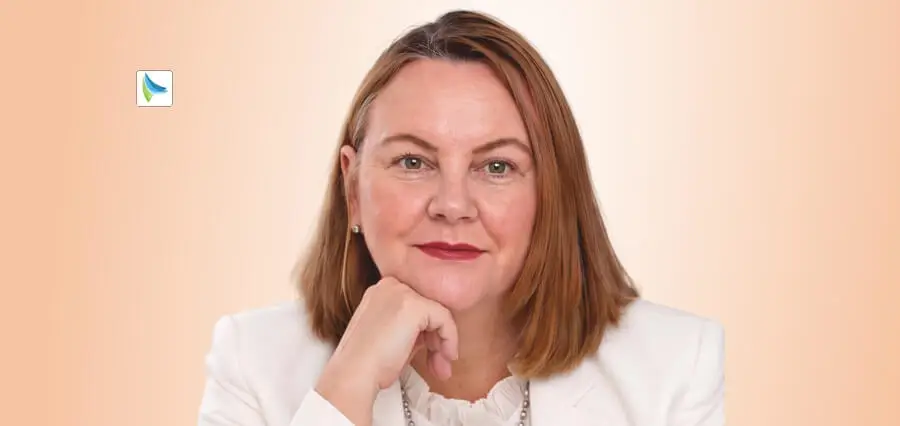
This is who Jeanine Mansour is. As a Director of Healthcare Projects at LEO A DALY’s Abu Dhabi branch, she leads projects of hospitals, clinics, and specialty clinics from initial design all the way to handover. Founded in 1915, LEO A DALY enjoys over one hundred years of design history in the region. Mansour enjoys an even more rare experience, which stems from engineering, medicine, and research.
A Destination Chosen at Eight
Mansour is not an architect, and she says so without hesitation. Her destination, however, took shape early. At eight years old, she wrote in her journal that she wanted to build healthcare facilities. Each stage of her education then added a tool. Engineering sharpened her critical thinking. Medical school taught her anatomy, physiology and the progression of disease. Research trained her to move from abstract questions to disciplined investigation.
Today she applies all three at the table with designers and creators. Her task is to conceptualize how a body should be housed in a space built for intervention and healing. That clinical grounding gives her conversations with architects and engineers a different texture. She reasons from the patient’s experience outward, and she lets the floor plan follow.
One Region, Many Rulebooks
Few leaders in the field manage as many competing frameworks as Mansour does. Her projects span the Middle East and North Africa, and each client arrives with a different ambition. Some operate as non-profits, while others pursue commercial returns. Some build on greenfield sites, and others renovate or repurpose existing structures. Mansour begins by establishing the model of care and the codes that will govern it.
Those codes rarely agree. One country designs to American FGI guidelines, while another follows Australian HFG. Engineers apply British HTM standards, even as fire and life-safety teams reference American NFPA. An Austrian provider may bring a European perspective on sustainable interiors that clashes with a Dubai client who wants marble rather than rubber flooring. Mansour treats this complexity as the defining condition of the work.
The people inside the buildings add another layer. A single surgical suite may host a Canadian surgeon working alongside a colleague trained in Lebanon. Nurses from the Philippines or Ireland assist them, and facility managers from Jordan or India maintain the equipment. Mansour presses the obvious question: which standard is the right one? She also asks who tracks post-surgical outcomes to prove it.
Her conclusion shapes her whole practice. The Gulf, she argues, is a melting pot of professionals writing a new prescription for healthcare policy, process and design. Designs that win awards elsewhere do not transfer intact. “World-class healthcare models cannot be copied and pasted 100%,” she says. Each model must learn the history, values and traditions of the people it serves, then adapt to them.
The Exam Room as Retention Strategy
Mansour’s most telling example comes from the humble exam room. Early in her regional career, a client told her that clinical effectiveness mattered less to him than staff retention. She was startled. Standard planning logic favors using a room at roughly 85 percent capacity to maximize patient throughput. Her client was pointing at a deeper problem.
Staff turnover runs extremely high across the Gulf. In the United Arab Emirates, about 90 percent of residents come from other countries, and patients speak Arabic, English, Hindi, Chinese, French, Russian, Farsi, Turkish, Urdu, Bengali, Spanish and more. Many want a physician who feels like the one back home, and some bring their medical records with them. Investors often favor doctors who speak several languages, because they reach a wider patient base.
Those realities change the room itself. A single consultation may involve a patient, a physician, a translator or transcriber, and a visitor. Physicians trained in Spain and Pakistan may also resist a single operational process, because each carries habits from a different home system. The exam room therefore stops being purely clinical and becomes the doctor’s personal clinic, complete with a diploma on the wall.
Mansour responds with space. A primary care exam room that might measure 10 square meters elsewhere grows to 14 to 16 square meters in the Gulf, with a clinical zone and an office breakout area. The added space keeps physicians autonomous and comfortable, which reduces turnover and preserves continuity of care for patients.
Planning for a Market That Rewrites Itself
Mansour describes the regional healthcare scene with a favorite phrase of her own. “This is wild west of healthcare,” she says, pointing to a market where laws can change overnight and reshape demand. No other health ecosystem in the world looks quite like it.
Her professional answer is flexibility. She advises clients to build in stages, to use shell-and-core approaches, and to future-proof space with MEP fit-out. She also recommends larger universal rooms that adapt after occupancy. Change is certain, even when its direction is not.
Maternity care shows how fast the ground shifts. Fifteen years ago, expatriate families often returned home to deliver, for reasons of passports, family support and insurance. Then the golden visa program and new residential investment opportunities in free zones encouraged families to stay. Soon, expectant mothers compared VIP maternity suites in the Emirates with the shared rooms back home, and the premium package was born. Mansour calls it an organic reaction to an ecosystem building itself from within. No forecast could have predicted it.
Stories Written Into Walls
Mansour believes every building needs a story, even when it stands only a quarter century old. She finds the region’s healthcare origin story in the work of two physicians who arrived with duty and faith. They came to a land with high infant and maternal mortality, bringing international standards. Dr. Kennedy, one of the pair, once improvised a catheter from a tube taken from a car hood to help a woman in difficult labor. Sheikh Zayed, in Mansour’s telling, needed no slide deck or return-on-investment forecast to trust them. He recognized a genuine connection and handed them a mud clinic. The doctors earned that trust because, as Mansour puts it, “they were here to serve, not extract.”
That history informs her view of sustainability. Glass towers in the desert ignored the land, she says, and the industry is now learning that lesson as architects return to forms that echo local materials and climate. International policy and operational process must speak the language of the people and the land. When they do, patients become advocates, and care delivery succeeds.
The Hard Parts
Mansour does not romanticize the work. She has watched contractors without healthcare experience skip coordination between engineering disciplines. She has seen clients skip meaningful feasibility studies and defer to the loudest senior doctors, while nurses, janitors and facility managers never reach the design table. One developer told her he did not care which medical services occupied the building, as long as it looked iconic enough for board approval.
She also laments what speed has cost the built environment. Older buildings carry carved moldings, grand staircases and bold colors, while modern projects often trade those details for cost and schedule. Everyone wants buildings fast and cheap, she observes, and few designers still have the patience to plan for a century.
Her method for resolving these clashes stays simple. “Always prioritize the patient,” she says, and the full-time staff who work the spaces every day. Once stakeholders ground their decisions in people, mutual understanding usually follows.
Living the Patient Journey
Mansour takes the discipline personally. During a series of gastrointestinal investigations, she discovered that her own physician was also her firm’s client, redesigning his department. She joked with the nurses before anesthesia that this was how committed her team is: they become the patient.
She encourages colleagues to visit the doctor often, and she volunteers as their emergency contact. She has accompanied coworkers through abscess removals and even colonoscopies. She cares about their well-being, and she wants to experience the patient journey of those facilities firsthand. For Mansour, personal health and professional practice run together.
Where Healing Meets Community
Her proudest achievement is cultural rather than architectural. Clinicians and patients increasingly choose to seek care and build careers in the region rather than return home. She points to a nurse who enjoys a better work-life balance here than she did in London, and to medical students who now graduate from local universities and join local hospitals. She expects clinical trials and academic-hospital research to mature next.
Her advice to young planners draws on a sight familiar to anyone who has spent a Friday night in a Gulf hospital. The waiting room becomes a majlis, with visitors sitting barefoot on the floor, sipping Arabic coffee and passing around homemade sweets. When a relative has knee surgery, a small procession of well-wishers arrives. That warmth, she says, is deeply rooted in healing.
Mansour believes the profession is entering what she calls a biological renaissance. “You will never heal fully without reconnecting your body to nature and relationships,” she tells emerging planners. Sunlight, gardens, water features and natural interiors, she argues, belong in every facility, alongside spaces purpose-built for social connection. She also expects many medical services to move into residential and community settings, which will demand government initiative, out-of-the-box thinking and a thorough overhaul of insurance payment models.
The Next Chapter
As for the future, Mansour outlines an agenda. It will be necessary for the region to change its healthcare protocols and guidelines, and it will be imperative to fill the gap before another technological breakthrough is made, which will happen sooner rather than later. She will continue to drive the process from Abu Dhabi; one project centered on patients at a time.
What her career illustrates is something all healthcare leaders on this year’s list believe in – that great hospitals start with people, and the greatest planners spend their days talking to them.