


Global business has never been short of capital, technology, or ambition. What it often lacks is the connection between them. Investors look for opportunities they cannot easily reach, companies search for markets they do not fully understand, and good ideas can stall for want of the right introduction.
That gap has become harder to ignore as economies grow more interconnected and, in many ways, more complex. Success in unfamiliar markets now depends as much on trust, local context, and timing as it does on funding or product strength.
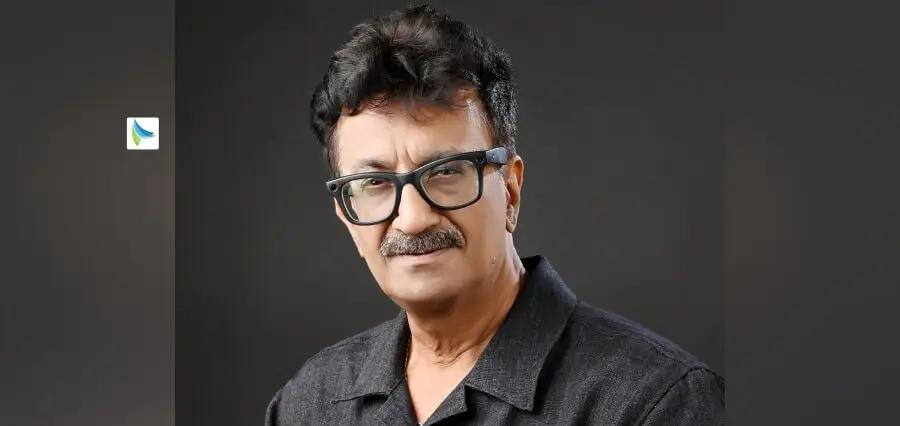
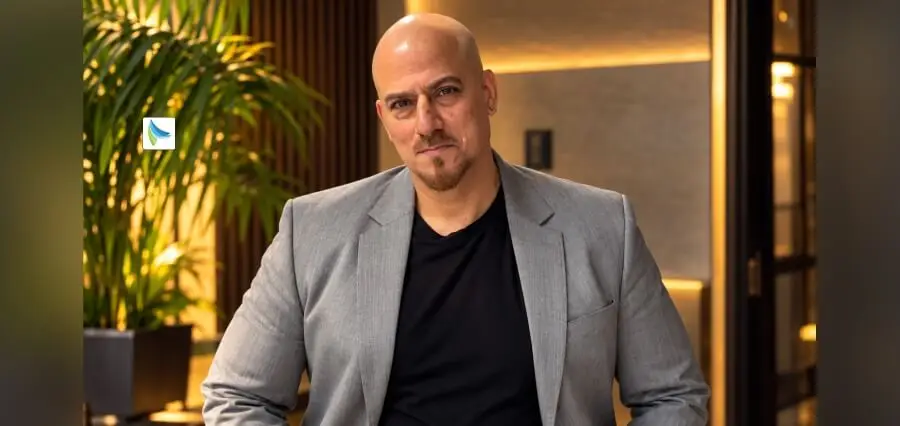
Suneil Mirchandani has spent more than two decades working within this space. As Global Business & Capital Connector at Tres Mundo Group, he helps bridge businesses, markets, and opportunities across borders. Alongside his business work, he writes about longevity and wellness and is the author of a book on the subject.
His career across continents and sectors reflects his ability to understand both people and markets. Few business professionals move as naturally between boardroom strategy and conversations about wellbeing, bringing together commercial insight with a broader understanding of what drives people and organizations.
Let’s explore how Suneil’s global experience and people-focused approach shape the way he connects businesses, markets, and opportunities!
A Journey Built Around Connections
Suneil’s career has never followed a single industry or conventional career path. Instead, it has been shaped by understanding people, markets, opportunities, and, most importantly, the connections between them.
Over more than two decades, he has worked across multiple geographies and business environments, including India, the Middle East, Europe, the Caribbean, the Americas, and other international markets. His professional journey has taken him through business development, strategic partnerships, ICT infrastructure, digital transformation, FinTech, WealthTech, investment, hospitality, logistics, and market expansion. While these sectors may appear diverse, they have been connected by a common thread: looking beyond the immediate transaction and understanding what could be created when the right people, capital, capabilities, and markets came together.
That perspective eventually shaped the philosophy behind Tres Mundo Group and his own role as a Global Business & Capital Connector.
For him, leadership is less about hierarchy and more about responsibility, relationships, and creating possibilities. There are many interpretations of what it means to be a good leader, whether it is leading by example, leading from the front, or leading from the centre. His own belief is different: “A leader is not necessarily the person who walks ahead of everyone else; a leader can be the channel that shows and directs the path for others to follow and build upon.”
He also believes that every individual is a leader in their own capacity. Sometimes, people simply need the right push, direction, and environment to discover it. The first experience of leadership often begins with parents, who lay the foundation during formative years, before teachers, mentors, colleagues, and experiences continue to shape an individual’s understanding of leadership.
This belief in people and relationships remains central to his approach. As he puts it, “Relationships are capital, reputation is an asset, and the ability to connect people and ideas across boundaries can create value far beyond a single transaction.”
Building Tres Mundo Around Opportunity
Having shifted his base back to India, Suneil noticed something that continues to influence his thinking: the world is connected, but opportunities often remain disconnected.
Tres Mundo was born from this simple observation.
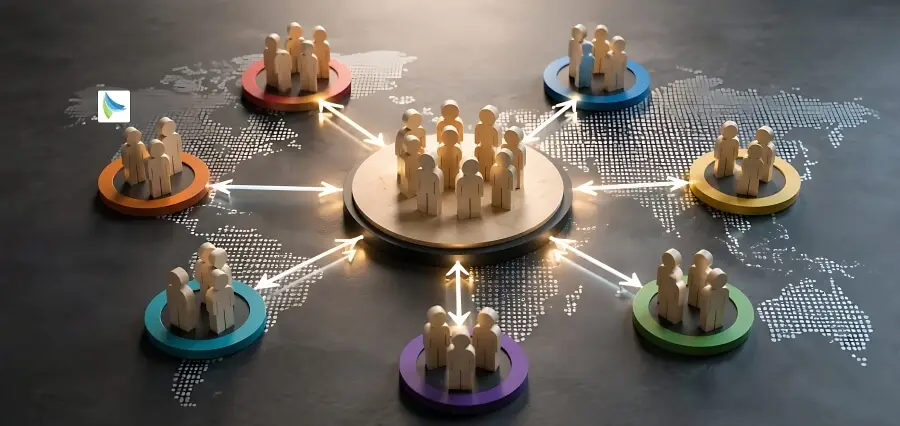
Businesses have capital but need the right market. Investors have capital but need the right opportunity. Companies have technology but need the right ecosystem. Governments and institutions have large requirements but need credible partners capable of navigating different markets.
He wanted Tres Mundo to operate at that intersection, not as a traditional liaisoning business, but as a B2B platform focused on creating meaningful connections and opportunities.
Over time, that vision has expanded. Tres Mundo has evolved from being primarily about business connectivity into a broader global platform and ecosystem connecting capital, commerce, people, ideas, and human potential.
The group’s experience spans more than 20 years, including nine years of building and connecting opportunities across sectors and geographies locally. Its work has been associated with projects and opportunities representing ₹1,000+ crore and more than 2 lakh sq. ft., across diverse sectors and markets.
But for him, the numbers tell only one part of the story.
Having established this foundation, he began thinking more deeply about another major disconnect: health and overall well-being. He believes people are increasingly living inside a bubble of health information that has been blown out of proportion. The health and wellness industry has grown tremendously over the last decade, but people are also increasingly following trends that may not necessarily be suited to their bodies or circumstances simply because an influencer has shared information online.
“The problem is not information itself. The problem is half-information being mistaken for complete knowledge,” he notes.
That concern introduced another dimension to his journey. With around 35 years of experience in fitness, training and health, he continues to learn about new approaches to the human condition, both physical and, perhaps more importantly, mental.
This journey eventually led to his book, Your Health Unchained – MMA: Mind, Matter & Attitude.
The deeper meaning behind MMA reflects his understanding of the relationship between the mind, body, and attitude. A person may have the mind of a young individual, but the physical body does not always remain young. That can create a disconnect between how someone thinks and what their body is capable of doing. In that transition between mind and matter, attitude becomes critical.
For Suneil, this is also connected to the reality that we are all mortal and should live with that awareness rather than fear of it.
Looking Beyond Markets
The evolution of Tres Mundo has also been shaped by Suneil’s longstanding interest in fashion. Having been passionate about the industry for more than two decades, he sees a significant gap between the talent that exists and the platforms available to showcase it.
There is an enormous amount of untapped talent that simply needs the right platform, and this is another area where he sees Tres Mundo playing a role.
These different interests may appear separate, but he sees them as interconnected. Business connectivity, health, longevity, fashion, human potential, and influence all relate to the broader question of how resources and people can be connected to create opportunities.
He therefore sees Tres Mundo as an ecosystem built around three interconnected dimensions: Capital. Human Potential. Influence.
Capital creates opportunity. Human potential creates the ability to realise it. Influence creates the reach to take it further.
That evolution also reflects his own journey, from connecting businesses and capital to increasingly connecting business success with health, longevity, purpose, and human potential.
Entering Markets with Context
Entering a new market requires more than identifying an attractive opportunity. For Suneil, the first thing he looks for is context.
Anything new brings with it a set of uncharted challenges, and that is precisely what excites him. Before looking at a market opportunity, he wants to understand how the market actually works, who makes decisions, how relationships are built, what the regulatory environment looks like, who the credible local players are, and whether there is a genuine need for what is being brought to the table.
He then looks at three things: people, opportunity, and execution. He believes that people means identifying credible local partners rather than assuming an international model can simply be transplanted into a new geography. Opportunity means understanding whether there is a real commercial or strategic gap. Execution means asking whether he genuinely has the capabilities, relationships, and resources to deliver.
Culture is equally important. A market may look attractive on paper but behave completely differently in practice.
His philosophy is therefore simple: “Don’t enter a market because it looks attractive; enter because you understand where you can create value.”
This approach also means knowing when not to pursue an opportunity. There are times when he advises clients against entering a market or pursuing an opportunity, even when it appears lucrative at a particular point in time. If he does not see a positive or sustainable outcome, he is comfortable walking away, even if it means losing business or revenue.
For him, credibility matters more than short-term gain.
Partnerships Built on Trust
Years of working with global technology companies, governments, and enterprise organisations have shaped Suneil’s approach to partnerships and business development.
He believes partnerships are not created simply by putting two logos next to each other. They are created when two organisations have a genuine reason to succeed together.
“It is almost like a marriage, not simply between two people, but between two families,” he emphasizes.
Working across technology companies, governments, and enterprise organisations has exposed him to different decision-making cycles, priorities, and expectations. A technology company may focus on innovation and scalability. An enterprise may be focused on ROI, integration, and business continuity. A government may be looking at infrastructure, policy, citizen impact, and long-term national objectives.
The connector has to understand all three perspectives.
This is where he sees his role evolving. He does not see himself simply as someone who introduces one party to another. He tries to understand the objectives of both sides, identify the intersection, and help create the architecture for a meaningful relationship.
The introduction may take five minutes. Creating the trust required to turn that introduction into a business relationship can take years.
For him, this is the difference between networking and building a strategic network. Relationships must be maintained, credibility must be protected, and the value created through the connection must continue beyond the initial introduction.
Adapting Without Losing Identity
Having worked across India, the Middle East, Europe, the Caribbean, and other international markets, Suneil has developed a clear understanding of how business cultures differ.
He does not believe in carrying one country’s business culture into another country and expecting it to work.
Simply put, “when in Rome, be a Roman.”
Every market has its own rhythm. In some markets, relationships are established quickly and the discussion becomes highly commercial. In others, considerable time is invested in building trust before the business conversation really begins. Some environments are highly structured and process-driven, while others depend much more heavily on relationships and personal credibility.
His approach is to listen before interpreting.
He tries to understand how decisions are made, who influences them, what motivates stakeholders, and what constitutes credibility in that particular environment.
The fundamentals of business may be universal: trust, value, execution, and accountability. But the route to those fundamentals is not universal.
For him, adaptability is not about changing who you are. It is about understanding the environment well enough to communicate your value in a way that makes sense locally.
One Capability Across Many Industries
ICT infrastructure, digital transformation, FinTech, WealthTech, logistics, hospitality, and investment may appear to have little in common. Yet Suneil sees a clear thread running through all of them.
“The common thread is human connection.”
He strongly believes in the importance of communication. Instead of sending a message or an email, he believes it is often better to pick up the phone and talk, and better still, meet in person. While intercontinental business can make this more difficult, he still believes a real conversation can make a tremendous difference.
Underneath different sectors are the same fundamental questions: Where is the opportunity? Who has the capability? Where is the capital? What problem are we solving? And who needs to be connected to make it happen?
Technology enables connection. Capital enables scale. Infrastructure enables growth. People enable execution.
This is why he does not necessarily see his career as a collection of unrelated industries. He sees it as a series of different expressions of the same capability: connecting resources, people, markets, and opportunities to create value.
He also sees increasing cross-pollination between industries as an opportunity for innovation. Bringing a fresh perspective into an established sector can rejuvenate an old model with a new thought process. Meaningful innovation does not necessarily have to come from creating something completely new. Sometimes, it begins by looking at something familiar differently.
This is also why the evolution of Tres Mundo matters to him. The platform is not defined by one sector. It is defined by the ability to connect across sectors.
Bringing Different People Together
Leading teams across different geographies and cultures has taught Suneil that talent is not simply about credentials. It is about attitude, adaptability, and ownership.
He looks for people who are willing to learn, take responsibility, and operate beyond the boundaries of a job description.
When working across countries and cultures, diversity can either become a strength or a source of friction. The leader’s role, in his view, is to create clarity around the objective while allowing people to bring their own strengths and perspectives to the table.
He does not believe everyone needs to think alike. In fact, he believes that can be dangerous.
What people need to share is the destination, the values, and the accountability for getting there. His role as a leader is therefore to create clarity, build trust, and give people enough ownership to make the journey their own.
This approach reflects his broader understanding of leadership. People bring different experiences, perspectives, and capabilities, but a common purpose can bring those differences together.
Creating Value Beyond the Transaction
For Suneil, a transaction is successful only when the relationship survives the transaction.
Revenue and deals may create immediate business results, but sustainable value depends on whether the client creates value, whether the partner sees value, and whether the relationship has the potential to grow.
This is particularly important in large infrastructure and technology projects, where decisions can have consequences for years.
One question therefore remains central to his thinking: “Will this still make sense three years from now?”
Sometimes, this means walking away from an immediate opportunity because the fundamentals are not right.
Long-term value comes from understanding the client’s real problem, choosing the right partners, executing properly, and remaining accountable after the deal is done. Reputation is also a form of capital. It takes years to build and can be damaged by one transaction pursued purely for short-term gain.
This philosophy reinforces a wider principle running through his career: sustainable business is built not simply through opportunities, but through the trust that allows those opportunities to develop into lasting relationships.
Leadership Beyond Business
Suneil’s understanding of leadership extends beyond traditional definitions of business success.
Business does not exist in isolation from society. Decisions businesses make influence people, communities, employment, technology, education, and ultimately the environment in which future generations will operate.
For this reason, he believes leadership has to extend beyond profitability. Education is about creating capability. Sharing knowledge is the source of two-way growth. Governance is about creating trust and accountability. Business is about creating sustainable value. Society is the environment in which all of these ultimately interact.
His own thinking has continued to evolve through writing and sharing ideas, particularly through Your Health Unchained – MMA: Mind, Matter & Attitude. His belief is that human potential is not limited to professional achievement. The mind, body, and attitude with which people approach life influence everything else they do.
His 35 years of experience in the health and fitness space is something he believes should be shared. A simple phrase learned as a child, “sharing is caring,” has remained with him throughout his life.
In an environment where online learning and digital media provide access to more information than ever before, he believes the distinction between information and knowledge has become increasingly important. People cannot simply copy and paste someone else’s approach into their own lives.
Understand. Learn. Adapt.
Not every person or situation is the same. People have to adapt according to their own circumstances.
He often thinks of the analogy of fingers. They are not all the same, yet they are all fingers and each contributes to the same hand. Similarly, every individual is different, but each has a role to play.
A meaningful life, in his view, cannot be built by optimising only one dimension. Stronger businesses matter, but so do healthier people, responsible leadership, and a society that encourages individuals to develop their potential.
Connecting the Next Chapter
As Suneil looks toward the next phase of his journey, he sees an opportunity to bring everything he has learned together.
He wants to continue building bridges between capital, businesses, markets, and health, particularly across international boundaries. At the same time, he wants to move beyond traditional business connectivity by developing his work around longevity and human potential.
After 35 years of training and studying the relationship between the mind, body, and performance, he increasingly believes that the greatest asset any individual or organisation possesses is human potential.
This thinking is behind the next phase of his work around longevity, health, performance, and holistic wellbeing, including the development of a dedicated centre in Mumbai. Alongside this, he continues to build on his work in global business development, strategic partnerships, capital, and market expansion.
The vision is broad but grounded in the same philosophy that has shaped his journey from the beginning: connect what is currently disconnected, understand the context, create genuine value, and build relationships that endure.
Ultimately, he wants his work to contribute to a world where capital moves intelligently, businesses connect meaningfully, people realise more of their potential, and borders become less of a barrier to collaboration.
At the heart of this vision is Tres Mundo’s three-dimensional ecosystem: Capital, Human Potential, and Influence. Capital creates opportunity. Human potential creates the ability to realise it. Influence creates the reach to take it further.
For Suneil Mirchandani, the ambition is therefore larger than building another business. It is about creating an ecosystem in which different forms of value can meet and move forward together.
His own measure of success is equally personal. “I don’t want to be remembered simply for the businesses I helped build. I want to be remembered for the bridges I helped create, between people, markets, capital, ideas and human potential.”
That philosophy brings his diverse journey into focus. From international business development and strategic partnerships to health, longevity, writing, and human potential, the common thread has always been connection. His work continues to explore what becomes possible when people, ideas, capital, markets, and capabilities are brought together with purpose.
And as the next chapter unfolds, that same belief continues to guide the journey: that the most meaningful opportunities are often found not in what exists separately, but in what can be created when the right worlds finally connect.