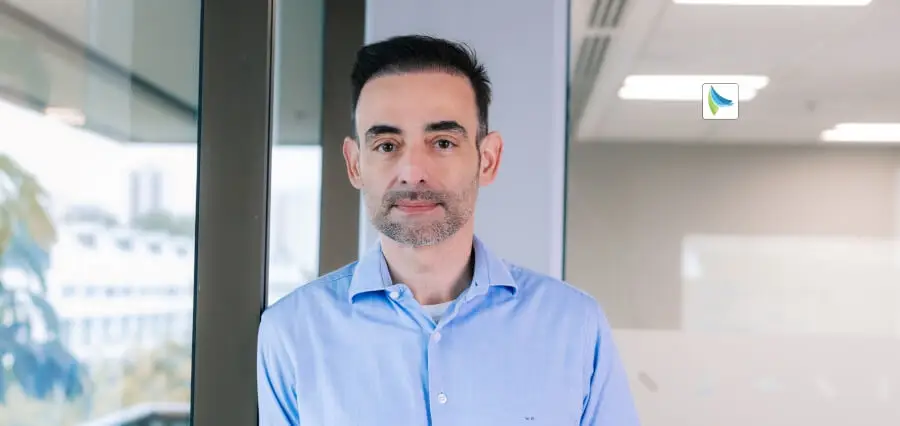





Cybersecurity leadership is often described in the language of defense: firewalls, detection, response, and recovery. Far less often is it described the way one commercial leader insists it should be understood, as a discipline of trust, built moment by moment in exactly the situations where trust is hardest to earn. That distinction, subtle as it sounds, shapes almost everything about how he leads, from how he structures a commercial organization to how he defines success at the end of a quarter, and it is the thread that runs consistently through more than two decades spent building and scaling technology businesses across continents.
Most recently, Rajiv Sagar served as Vice President, Global Commercial – Clients, Growth & Partnerships at CPX, a role spanning sales, strategic accounts, partnerships and alliances, presales, bid management, and commercial operations across a business built to help organizations defend themselves in an increasingly borderless threat environment. His path there was shaped by geography as much as by title, having lived and worked across Southern Africa, Europe, North America, Asia, and the Middle East before roles at Accenture, Capgemini, Microsoft and Avanade sharpened his understanding of how strategy actually survives contact with delivery.
A Commercial Execution Model Built to Scale
Sagar sums up his commercial execution strategy in three phrases. He explains, “Go deep in understanding clients and delivering measurable outcomes; go wide by bringing together teams, technologies and partnerships; and go far by building capabilities that scale across markets.” Growing up across cultures, and later working across the Middle East, Asia, Europe, Africa, and the Americas, taught him to navigate ambiguity with curiosity and respect for local context, a skill that proved essential once he began leading global teams spanning very different regulatory environments and client expectations. At Avanade, he led the global cybersecurity business through a period that took it from roughly US$250 million to US$500 million in about eighteen months, building a five-year path toward US$1 billion and enabling more than a thousand Microsoft Security-certified professionals along the way. He notes, “Leaders create clarity, governance, and a culture where people can move quickly without compromising trust.”
At CPX, that experience shaped a commercial engine built around clearer roles, disciplined operating rhythms, and accountability from pipeline creation through to delivery alignment, a structure he saw as essential in a domain where clients need confidence, speed, and measurable outcomes in equal measure. He was candid that none of this happens automatically; it requires leaders who are willing to make roles and decision rights explicit rather than leaving them to be worked out informally as teams scale.
Growth and Trust as Mutually Reinforcing
Sagar rejects the idea that aggressive expansion and longterm client trust pull in different directions. He states, “Expansion that is not grounded in client value and delivery credibility is fragile; trust that does not produce measurable outcomes becomes sentiment rather than loyalty.” His teams anchored client outcomes, risk reduction, resilience, compliance, and continuity, defining success from day one, then scaled through sector-specific propositions and proven services rather than reinventing delivery for every client. He was especially attentive to what he called trust moments: how a team responds during an incident, protects confidentiality, and communicates uncertainty when things do not go according to plan.
He adds, “In cybersecurity, trust is earned in the hard moments.” Sustainable growth, in his experience, follows naturally once those fundamentals are handled exceptionally well, rather than being pursued as a separate objective in its own right, a sequencing he says most organizations get backwards when they chase expansion before earning the credibility to sustain it.
A Strategy for Borderless Threats
Expanding cyber and AI solutions across global markets, Sagar argues, requires an anchored strategy built on four considerations: local reality paired with global consistency, since threat actors move globally even as regulation, critical infrastructure, and risk appetite vary by market; sovereign and trusted ecosystems, respecting data residency and critical infrastructure requirements while still enabling innovation; partnership as a multiplier, working with leading technology providers and the G42 ecosystem to accelerate time-to-value and expand reach; and execution capability, since over-promising in cybersecurity destroys trust quickly and expansion must be backed by strong presales, repeatable services, and skilled engineering. He affirms, “We scale where we can deliver, then accelerate as delivery maturity is proven.”
From AI Theory to Operational Defense, Deployed Safely
At CPX, Sagar described the work of moving AI from theory into operational cyber defense, combining AI-driven detection, threat intelligence, exposure management, and response automation to help analysts identify what matters and act faster, including a collaboration with Microsoft that paired its unified security operations capabilities with CPX’s experience running cyber defense at national and enterprise scale. He observes, “AI can correlate signals across endpoints, identities, cloud environments and networks, reducing noise and prioritizing material threats,” while automation triages alerts, enriches incidents, and executes approved response actions, and also supports continuous control validation and proactive exposure management.
He is careful to draw a boundary around what that automation should replace. He says, “AI does not replace judgement; it augments it.”
Human oversight, clear escalation paths, and continuous learning remain essential, so automation becomes safer and more effective over time. That same discipline defines what he calls safe AI: secure by design, governed with clarity, and used with accountability, built on identity and access controls, secure configuration, and data lifecycle governance, with human approval required for high-impact actions and continuous testing through red teaming, abuse simulations, and drift monitoring. Ethics and security, he insists, should be built into innovation from the start rather than added later, because failures in this domain can carry operational, reputational, and even national consequences.
The Risk Patterns Ahead
Looking two years out, Sagar expects four risk patterns to intensify: AI-enabled attacks and poorly governed AI agents, as adversaries scale phishing, deepfake impersonation, and malware development while enterprises simultaneously introduce non-human identities that create a significant new attack surface when left unmanaged; identity and cloud control-plane attacks, as identities, APIs, and cloud configurations become the new perimeter, with misconfiguration, token theft, and privilege escalation remaining common paths to major breaches; operational technology risk, as IT-OT convergence connects previously isolated critical infrastructure and demands new operating models and specialized skills; and supply-chain exposure, as organizations increasingly defend ecosystems rather than themselves alone, facing risk through software compromise, vendor access, and managed-service dependencies.
He states, “The common requirement is resilience: assume compromise is possible, limit the blast radius and recover quickly.” None of these four patterns, in his view, are hypothetical; each is already visible in the threat landscape and client priorities his teams engage with today, and the organizations best positioned over the next two years will be the ones treating them as current priorities rather than future concerns.
Making Innovation Land
Sagar measures innovation by whether it lands, insisting it be measurable, repeatable, and tied to a business outcome rather than pursued for its own sake. His teams begin with sector context, since success looks different across government, financial services, energy, healthcare, and industrial environments, then translate that context into scalable service offers and reference architectures, tailoring around the edges rather than rebuilding from scratch for every engagement. Pilots need to define success measures, executive sponsorship, and security built in from day one, with impact then tracked through lower alert fatigue, faster response, stronger compliance, and improved recovery readiness. He notes, “If the measures improve, innovation earns trust. If they do not, we learn, refine and move on.”
Leading Fast-Moving Teams and Closing the Talent Gap
In volatile environments, Sagar relies on five principles: clarity beats intensity, since confusion costs time and time is risk; trust and accountability go together, with leaders empowering others while expecting ownership and a bias for action; teams operate in consistent cadence across pipeline, delivery, incidents, partners, and talent; leaders stay close to clients and the front line, where the best insights actually come from; and strong teams matter more than individual heroes. He affirms, “Cybersecurity is a team sport; sustainable performance comes from collaboration, continuous learning and calm execution under pressure.”
On the industry’s persistent talent shortage, he points to widening entry routes beyond traditional hiring, through apprenticeships, career-switcher programs, and partnerships with universities and academies that can uncover potential that conventional recruitment misses. Retention, in his view, comes down to growth, purpose, and environment, supported by clear career paths, certifications, hands-on labs, and mentorship. He is equally attentive to sustainability, arguing that modern tooling should reduce repetitive work, and that sensible oncall models matter as much as technical training.
Building Resilience and Measuring What Matters
Cyber resilience, in Sagar’s framing, is organizational behavior that technology supports but leadership drives, beginning with executives treating security as a business enabler and shared responsibility rather than an IT problem, integrated into procurement, product development, and third-party onboarding so secure by-design becomes the default. That posture is reinforced through tabletop exercises, incident simulations, crisis communications drills, and role-based, scenario-led training that replaces annual compliance box-ticking, using phishing simulations and simple reporting routes that reward good behavior rather than punish honest mistakes. He says, “What gets measured gets prioritized.”
Accordingly, he tracks outcomes rather than activity: time to detect and respond, reduction in critical exposures, identity-security posture, and recovery readiness on the security side, alongside quality pipeline, win rates, retention, and delivery health on the commercial side, since growth without delivery excellence is unsustainable, and delivery excellence without growth is potential left unused.
CPX’s Role in Shaping the Future
Sagar saw CPX playing three roles in AI-enabled cybersecurity: a trusted cyber-transformation partner helping organizations modernize securely, adopt AI responsibly, and move from fragmented controls to integrated resilience; a builder of scalable managed security capabilities where AI and automation improve speed, consistency, and coverage; and an ecosystem orchestrator bringing together cloud platforms, security vendors, data and AI innovators, and regional alliances, including the broader G42 environment, to deliver solutions that are locally grounded and globally competitive. He affirmed, “The ambition is to deliver measurable security outcomes, accelerate responsible AI adoption, and help build safer digital economies.”
Advice for Emerging Leaders
Sagar’s advice to those hoping to lead in AI and cybersecurity begins with fundamentals: security principles, risk management, how organizations actually operate, and fluency in AI’s implications for governance, ethics, and operational risk, not just the technology itself, since technical skill alone rarely translates into the kind of influence senior leaders eventually need to exercise. He urges building credibility by staying close to real problems, spending time with customers, engineers, and operational teams rather than only executives, arguing that strong leaders understand both the boardroom and the front line and can translate technical realities into business trade-offs.
He is equally direct about the value of relationships, since influence in this field is built through collaboration rather than hierarchy, and reputation tends to travel faster than a résumé. He closes with a reminder that the pace of the industry rewards composure as much as knowledge, and that the leaders who last are rarely the loudest in the room. He affirms, “Leaders who stay steady, decide clearly and keep learning create teams that thrive.”
Sagar holds an MBA from Warwick Business School, an MSc in Systems Engineering, and completed the Oxford Executive Leadership Programme. During his tenure as Avanade’s Global Security Lead, the firm was named a Leader in the IDC MarketScape: Worldwide Cybersecurity Consulting Services 2024. Avanade also received two Microsoft Zero Trust Champion Awards. Across a career built on the belief that trust and growth reinforce rather than compete with one another, Rajiv Sagar continues to argue that the future of cybersecurity will not be defined by whoever reacts fastest, but by whoever builds the clearest, most accountable foundation before the crisis ever arrives. It is a philosophy shaped by the markets he has worked across and the technology businesses he has helped build, one he applied throughout his time at CPX as the company advanced AI-enabled cybersecurity and built greater resilience across governments, enterprises, and critical infrastructure.