




Strong organisations are built on more than good ideas and capable people. They are built on financial discipline that gives leadership the clarity to act confidently, the governance to protect what has been built, and the strategic perspective to grow without losing sight of what matters long term. When finance functions at this level, it stops being a back-office responsibility and becomes one of the most important contributors to how an organisation thinks, decides, and sustains itself over time.
In diversified groups operating across multiple industries, this contribution carries even greater weight. Bringing coherent financial discipline across that complexity, while respecting the distinct nature of each operation, requires a quality of leadership that goes well beyond technical proficiency.
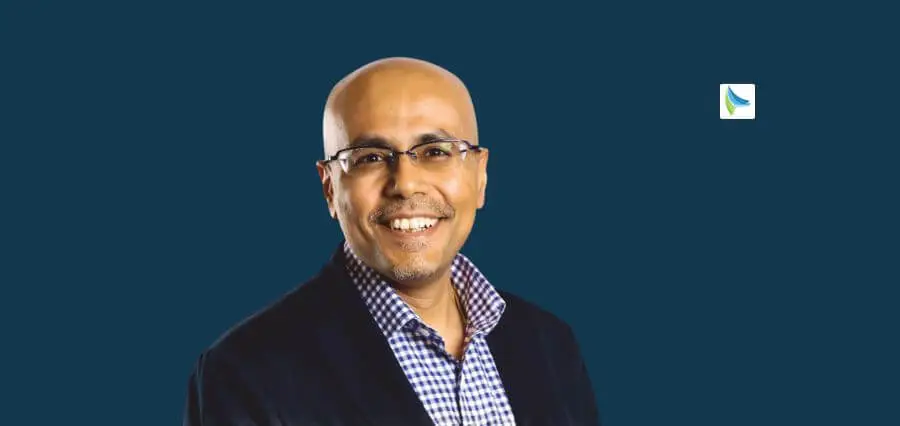
Mujadil Mir, Group CFO of Four Winds Saudi Arabia Ltd., Constantine KSA, Alakhshaban Real Estate, and Go Around Events and Expo, brings exactly that quality to his role. His career across entrepreneurial and family-owned businesses has shaped a finance leadership approach grounded in clarity and stewardship. He firmly believes that durable value is created when growth is profitable, well governed, and built on foundations the organisation genuinely understands.
A Journey from Financial Discipline to Strategic Impact
Mujadil was drawn to finance because it sits at the point where ambition meets reality. A business may have an inspiring vision, strong people, and an attractive market, but finance gives that ambition structure by clarifying what is possible, what must be prioritised, and how progress can be sustained. Early in his career, he realised that his interest went beyond recording what had happened. He wanted to understand why it happened and what management could do next. That curiosity gradually shaped his journey from financial management into strategic leadership.
The experiences that shaped him most were those in which the answer could not be found in a spreadsheet alone. Working through periods of uncertainty, balancing liquidity with growth, improving reporting discipline, and translating operational issues into financial decisions taught him that strong finance leadership requires staying close to the business. Listening to operations, customers, and people before drawing conclusions became an important part of his approach.
His exposure to family-owned and entrepreneurial businesses further broadened this perspective. In such environments, trust, speed, and long-term stewardship matter alongside technical accuracy. He learned to respect the founder’s instinct while adding the evidence, governance, and scenario analysis needed for sound decisions. Over time, finance became more than a profession. It became the way he helps organisations make clearer choices and turn potential into durable value.
Creating Sustainable Value Across Diverse Operations
Several experiences have shaped Mujadil’s approach to finance. As Group Chief Financial Officer of Four Winds Saudi Arabia Limited while also managing interests across Constantine KSA, Alakhshaban Real Estate, and Go Around Events & Expo, he works across businesses with very different commercial environments.
His approach begins with a simple principle: “Every entity must have a clear economic purpose, but the group should benefit from a common financial discipline.” Logistics and relocation depend on capacity utilisation, service quality, and working-capital discipline. Fine art logistics adds specialised handling, project governance, and reputation risk. Real estate requires patient capital and long-horizon thinking, while events and exhibitions demand precise project costing, milestone control, and rapid execution.
Rather than applying one financial formula to every business, he creates a shared decision framework while respecting these differences. Reliable data, transparent accountability, disciplined cash management, risk-adjusted returns, and clear capital-allocation criteria form the foundation.
Strategy is translated into measurable drivers including revenue quality, gross margin, cash conversion, asset productivity, customer concentration, and return on invested capital. Budgets, rolling forecasts, and scenario models are treated as live management tools rather than annual rituals.
He also looks for group-level advantages through shared capabilities, stronger procurement, better financing structures, and cross-business opportunities without forcing artificial synergies. For him, “Sustainable value is created when growth is profitable, cash-generative, and governed well.” The objective is not simply to make each business stronger in the short term, but to build resilience and preserve strategic choice for the owners over the long term.
Leadership Through Clarity and Stewardship
Three principles guide Mujadil’s leadership: clarity, stewardship, and constructive challenge.
Clarity means presenting the economic truth in language that decision-makers can use. Rather than hiding behind technical terminology or overwhelming decision-makers with data, he focuses on identifying the few drivers that matter, explaining trade-offs, and making the consequences of each option visible. Even when facts are uncomfortable, they need to be communicated early, respectfully, and without ambiguity.
Stewardship means treating capital, reputation, and stakeholder trust as resources placed in the organisation’s care. Strong controls and compliance are important, but judgement is equally necessary. Governance should create confidence, define authority, and allow an organisation to move faster with fewer surprises rather than becoming bureaucracy.
Constructive challenge means questioning assumptions while remaining committed to the team’s success. He does not see the CFO as someone who simply says no. Instead, finance can ask what would need to be true for a decision to work and how the downside can be protected. This allows finance to become a partner in execution.
Consistency supports these principles. The same standards should apply whether the decision concerns a major investment or an everyday operating commitment. Leadership also requires humility. He expects his team to challenge his thinking and makes space for operational knowledge that may not appear in the numbers. Good decisions emerge when evidence, experience, and accountability meet.
Perspective Shaped by Multiple Industries
Working across relocation and logistics, fine art logistics, real estate, and events and exhibitions has broadened Mujadil’s perspective as a financial leader.
In relocation and logistics, performance is shaped by route economics, warehouse utilisation, fleet productivity, service reliability, and the speed with which receivables become cash. In fine art logistics, the financial model must also recognise specialised expertise, security, insurance, project complexity, and the trust attached to handling culturally significant assets.
Real estate shifts the focus toward asset quality, financing structure, occupancy, yield, and long-term value. Events and exhibitions operate at a different tempo, where scope control, supplier commitments, billing milestones, and post-event settlement can determine the outcome of a project.
This diversity has made him less likely to accept headline revenue or accounting profit as a complete measure of success. He considers the quality of earnings beneath the number, how much capital is tied up, which risks are concentrated, and whether the operating model can scale.
The experience has also allowed lessons to move between sectors. Project-control discipline from events can improve complex logistics assignments. Asset-utilisation thinking from logistics can sharpen real estate decisions. The high standards of care required in fine art logistics can strengthen risk culture across the group.
Most importantly, these environments have reinforced that finance cannot operate from a distance. According to him, “A credible CFO must understand how value is created on the ground and connect that reality to strategy, governance, and capital.”
Disciplined Investment and Risk Management
Mujadil’s approach to real estate begins with the asset and its cash flows rather than market excitement. His assessment starts with fundamental questions around the demand driver, intended tenant or buyer, location, required capital expenditure, and the sensitivity of returns to occupancy, rent, financing cost, construction delays, and exit assumptions.
He assesses opportunities through scenario-based cash-flow modelling, including downside cases involving slower leasing, cost escalation, delayed completion, or a longer holding period. Returns are considered alongside liquidity and risk, as an attractive internal rate of return can still conceal weak cash timing or excessive leverage.
Risk management begins before acquisition. He considers legal and technical due diligence, title and regulatory review, realistic operating costs, funding headroom, appropriate insurance, and clear approval gates. For logistics-related property, he also examines operational suitability, including access, configuration, safety, usable capacity, and the extent to which the asset supports a genuine business need.
Diversification across property type, tenant exposure, and maturity profile can reduce concentration, but he believes it should never replace disciplined underwriting. His approach is to protect optionality so the organisation can withstand a reasonable downside without being forced into a poor decision. At the same time, he believes caution should not become inertia. When the strategic fit is strong, cash flows are resilient, and risks can be priced and governed, finance should help the organisation act with confidence. In his view, “Long-term growth is strongest when it is built on assets the organisation understands and capital structures it can sustain.”
Governance Strengthened Through Challenging Periods
Some of the most challenging moments in Mujadil’s professional journey have involved several pressures arriving together, including softer demand, rising costs, delayed collections, urgent operating commitments, and expectations to continue investing for the future.
These situations taught him the importance of a reliable cash view, rapid scenario planning, clear payment priorities, and direct communication with owners and operating leaders. They also exposed the limitations of backward-looking reporting. By the time a problem becomes fully visible in the income statement, management may already have lost valuable time.
This strengthened his focus on leading indicators such as pipeline quality, order intake, project margin, utilisation, collection behaviour, committed expenditure, and customer concentration. The experience also reinforced the importance of governance before pressure arrives. Clear authority limits, documented assumptions, reconciled data, and an agreed escalation process allow teams to respond quickly when circumstances change.
Challenging periods have made him calmer and more evidence led. He has learned to separate urgency from panic, distinguish reversible decisions from irreversible ones, and communicate what is known, what is not yet known, and what action is required. For him, “Resilience means building the visibility and discipline needed to face risk early.”
Technology, Regulation and Continuous Learning
Mujadil approaches emerging financial trends with disciplined curiosity. His focus includes regulatory and tax changes, financing conditions, technology, sector economics, customer behaviour, and geopolitical risk.
The important step is translating information into decisions. He considers how a development could affect demand, pricing, cost, cash flow, compliance, or capital allocation and whether it changes the base, upside, or downside scenario.
External perspectives from auditors, bankers, advisers, professional networks, and industry specialists also contribute to this process. However, recommendations are tested against the organisation’s own operating reality.
Technology is an important part of this agenda. Automation, integrated ERP systems, business intelligence, and responsible use of artificial intelligence can improve the speed and quality of finance. Routine processing can become more controlled and less manual, allowing finance professionals to spend more time on analysis, commercial partnership, and risk.
Digital transformation must also be governed through data ownership, access controls, cybersecurity, model validation, and human accountability. He encourages controlled experimentation and measures whether a tool improves accuracy, cycle time, or decision quality.
Recognition Built on Trust
The milestone that means the most to Mujadil is being entrusted with the Group CFO responsibility across a diversified portfolio of businesses. The title matters, but the trust behind it matters more. It represents confidence from partners and leadership in his ability to protect what has been built, bring clarity to complex decisions, and help shape the next stage of growth.
It also reflects the work of finance colleagues and operating teams whose discipline makes strategic leadership possible. No CFO achievement is genuinely individual because outcomes depend on people across the organisation.
Receiving the Excellence in Financial Strategy, Governance & Value Creation Award 2026 gives this journey a special external recognition. For him, the recognition is also a responsibility to continue raising the standard.
“Strategy, governance, and value creation are interconnected. Strategy without governance can create unmanaged risk. Governance without strategic purpose can become mechanical. Value creation without sustainability can be temporary.”
The recognition therefore represents a leadership philosophy based on rigorous analysis, practical execution, and stewardship.
Developing Strategic Finance Professionals
Mujadil’s advice to aspiring finance professionals begins with mastering the fundamentals. He believes, “Strategic influence is built on credibility, which starts with accurate reporting, sound accounting, cash-flow understanding, strong controls, and professional integrity.”
Finance professionals also need to understand how the business actually works. Spending time with operations, sales, procurement, and customers helps develop an understanding of what drives volume, price, cost, service, and risk.
Communication is equally important to his approach. Senior leaders rarely need more data. They need clearer decisions. By presenting alternatives, assumptions, sensitivities, and consequences, finance professionals can contribute beyond traditional financial management.
Technology and data skills are becoming increasingly important as automation changes traditional tasks. At the same time, judgement, commercial understanding, and ethical responsibility remain essential.
He also encourages professionals to protect their independence without becoming isolated, challenge respectfully, listen carefully, seek difficult assignments, learn from mistakes, and build teams that can outperform them in their areas of expertise.
Building a Lasting Financial Legacy
Looking ahead, Mujadil aims to build finance functions that are integrated, forward-looking, and capable of supporting growth across the group without losing control. Stronger planning and forecasting, faster and more insightful management reporting, disciplined working-capital management, clearer performance ownership, and technology-enabled processes form part of this vision.
He wants every business leader to have a timely view of the economic drivers within their control, while major investment decisions are supported by transparent assumptions, scenario analysis, and defined measures of success.
For Four Winds, the focus is on protecting a trusted legacy while improving productivity, customer value, and capital efficiency. For Constantine KSA, the objective is to support specialised growth with governance and financial capacity appropriate to high-value fine art logistics.
For Alakhshaban Real Estate, the focus is disciplined investment in assets with defensible long-term economics. For Go Around Events & Expo, it means scalable project governance and profitable execution in a fast-moving sector.
The lasting impact he hopes to create extends beyond financial results. He wants to leave behind better systems, stronger decision habits, and finance talent capable of carrying the organisation forward.
Finance as a Human Responsibility
For Mujadil, “Finance is a human responsibility as much as a technical one.” Behind every budget, restructuring decision, or investment case are people, customers, and long-term relationships. The discipline of finance should therefore remain firm without becoming detached.
His aim is to combine analytical rigour with context, empathy, and fairness. He remains grateful to the partners, leadership teams, and colleagues across the group for the trust and opportunity to contribute.
This perspective brings together the central themes of his leadership journey. Financial excellence is not limited to financial results. It involves creating confidence for owners to invest, management to act, employees to grow, and partners to commit.
When that confidence is supported by integrity, governance, strategic clarity, and sustainable value creation, finance becomes a foundation for long-term organisational strength.