



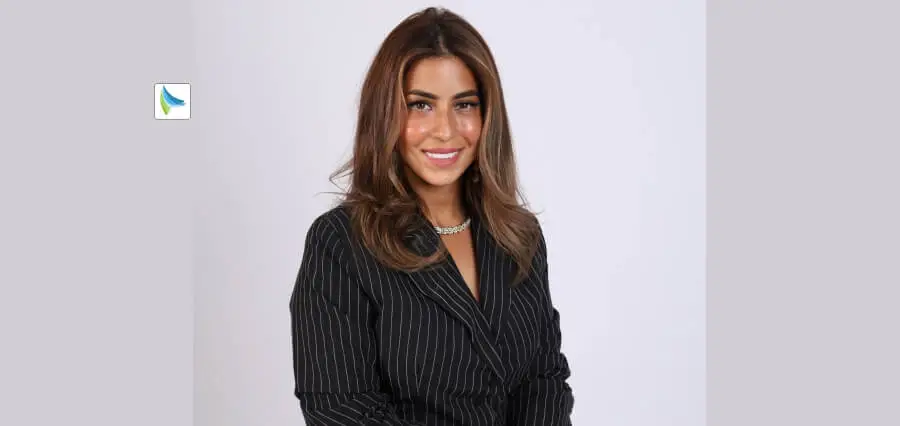
Leadership is rarely defined by a single achievement. People who grow because someone believed in them are often the clearest measure of meaningful leadership. The most successful leaders do more than achieve results. They create a lasting impact that others carry with them. Hala Mohamed measures her leadership by the impact she has on others. For her, the most meaningful results are seen in people who develop confidence, take ownership, and step forward as leaders themselves. As Director of Operations at ResModTec, her leadership journey is rooted in the values she learned from her father and shaped by experiences that followed, including building the company’s Egypt branch and creating new opportunities for talent across the Middle East.
Through her work in hiring, training, and advising, Hala has developed a leadership style that combines operational discipline with a strong emphasis on people. She aims to comprehend the individuals who make systems and results possible. Her experiences navigating uncertainty, developing future leaders, and entering new markets have strengthened her belief that connecting people, purpose, and opportunity is the key to long-term success.
Leading with Purpose and People
Hala traces her leadership philosophy to three principles: people, purpose, and growth. She rejects the idea that leadership is simply about managing teams. Instead, she believes leaders should create environments where people can grow, contribute, and succeed. Her experience across training, recruitment, and consulting has taught her that an organization can only perform as well as the people behind it. Whether she develops a colleague through training, connects the right candidate with the right opportunity, or helps a client address a critical challenge, her focus remains the same: creating lasting value.
Integrity is at the heart of her leadership. As an Arab leader, Hala draws inspiration from values rooted in her culture and Islamic principles, including honesty, trust, respect, humility, and excellence. She views leadership not as a position of authority or a path to recognition, but as a responsibility to serve others and make a positive difference in the people and communities she influences.
This philosophy also shapes her approach to accountability. Hala believes leaders set the tone for an organization. Accountability and collaboration become part of the culture when leaders demonstrate them consistently, not simply when they are included in policies. She holds herself accountable first and takes responsibility for her decisions before expecting the same from her team. At the same time, she creates an environment where people feel comfortable speaking up, suggesting better ways of working, and acknowledging when things have not gone as planned. She sees this openness as essential to continuous improvement.
Rather than simply giving instructions, Hala gives her people ownership. She believes that when employees understand why their work matters and feel trusted to make meaningful contributions, accountability becomes personal rather than imposed. Her goal is to build teams that think collaboratively, solve problems independently, and continuously look for ways to improve. She wants people to take initiative and move forward with confidence rather than wait to be told what to do next.
Resilience in Action
The COVID-19 pandemic put Hala’s leadership philosophy to the test. Traditional classroom training came to a halt, hiring slowed across several sectors, and uncertainty made it difficult to predict how businesses would operate. Hala and her team faced a choice. They could focus on what had stopped, or they could look for new ways to move forward. They chose to adapt.
The team reshaped its training approach and embraced digital learning wherever possible. They stayed closely connected with clients and continued looking for ways to support a workforce whose needs were changing rapidly. Hala encouraged her people to share ideas and propose solutions, even when those ideas were not yet perfect. She believed progress was more important than waiting for conditions to return to normal.
The experience strengthened her belief that resilience is not about pretending everything is fine. It is about staying calm, communicating clearly, and continuing to move forward. Today, she gives her teams the information, trust, and space they need to think proactively. She has seen that people are more willing to take initiative when they understand the bigger picture and know their ideas will be heard.
The Power of Mentorship
Hala reflects on the experiences that shaped her as a mentor, and one influence stands above the rest: her father. Watching him build and lead the company taught her lessons that no classroom could offer. She saw how he handled pressure, valued relationships, and remained committed to his word. He taught her to listen before making decisions, stay calm during difficult situations, and never ask someone to do something he would not do himself.
As her responsibilities grew, Hala began to understand these lessons more deeply. She realized that leadership is not about controlling every decision. Sometimes, the strongest leadership comes from giving people meaningful responsibility, allowing them to think independently, and being available when they need guidance.
This approach now shapes how she develops the people around her. She wants them to build the confidence to make decisions, learn from their mistakes, and grow into leaders themselves. For Hala, passing on the values her father taught her, including integrity, humility, resilience, and a genuine commitment to people, is one of the clearest measures of success.
Technology with Purpose
Hala applies the same people-first approach when evaluating new technology. She does not support innovation simply because something is new. Before adopting any technology, she asks a simple question: will it help the team work faster, perform better, or provide greater value to clients? If the answer is not clear, she believes the technology may not be necessary.
In her experience, technology has made training, recruitment, and operations more efficient. However, she does not want technology to replace the human side of the work. She believes the best technology should work quietly in the background. It should simplify processes, provide better information, and give people more time to focus on work that requires judgment, relationships, and experience.
Empathy in Leadership
Empathy is one of the qualities Hala values most. She believes every person has a story that others may not know. People bring different pressures, responsibilities, ambitions, and personal challenges into the workplace. She has found that taking the time to understand these realities can change how situations unfold.
For Hala, empathy does not mean lowering expectations or avoiding difficult conversations. She believes leaders can be understanding while still holding people accountable. She puts this into practice by listening before judging and treating people with respect, especially when something has gone wrong.
Some of her most important conversations as a leader have started with a simple question about how someone is doing. She has seen how trust grows when people know their leader genuinely cares about them and their development. She wants everyone who works with her to understand two things clearly: she expects their best, and she will support them as they work to become their best.
Championing Inclusion
A leadership development program at the University of Manchester had a lasting impact on Hala. The program brought together professionals from different countries and cultures, each with unique communication styles and life experiences. Some participants were less confident speaking English. Hala helped them express their ideas and feel more comfortable taking part in discussions. Once they gained confidence, the value of their contributions became clear. Their ideas had been there all along. They simply needed the right space and encouragement to share them.
The experience strengthened Hala’s belief that leadership is not always about having the strongest voice in the room. Sometimes, it means noticing the person who has not spoken and helping them find their voice. Since then, she has become more intentional about building teams where different personalities, cultures, and perspectives are genuinely valued and included.
The same approach shapes how Hala helps teams manage change while maintaining focus and operational excellence. She has learned that people are more willing to accept change when they understand why it is necessary. She communicates the purpose clearly, involves the people who will be affected, and gives them opportunities to ask questions and contribute to the process.
At the same time, Hala does not allow change to become a reason for lower standards. Processes may evolve, technology may change, and teams may grow, but her commitment to quality, integrity, and clients remains constant. She believes people adapt with greater confidence when they understand what can change and what must remain consistent.
Growing Beyond Borders
One of Hala’s proudest career achievements is launching and developing the company’s Egypt branch. For her, the project was about more than opening a new office. It was an opportunity to build a strong connection between the Egyptian and UAE markets and bring together the strengths of both.
Hala recognized the value of Egypt’s skilled talent pool and its strong potential in training and professional development. At the same time, the UAE offers a dynamic and internationally connected business environment. Connecting these two markets through training, recruitment, and consulting became one of the most rewarding projects of her career.
What makes the achievement especially meaningful to Hala is seeing an idea develop into a fully functioning operation with its own team, clients, and opportunities. The experience taught her how to adapt to a different market, make decisions from the ground up, and turn a vision into reality. It also strengthened her belief in the opportunities that stronger connections between businesses and talent can create across the Middle East.
Shaping the Future
Hala is most energized by the rapid changes in how people work, learn, and build their careers. She sees artificial intelligence and technology creating new possibilities, but believes the greatest opportunity comes from combining innovation with human potential. She is particularly focused on strengthening connections between talent, training, and opportunity across the Middle East.
When she considers the legacy she hopes to leave, Hala measures it through the people she has helped rather than titles or numbers. She wants to be remembered as someone who created opportunities, believed in others, and helped people grow into leaders themselves. She also hopes to contribute to a generation of Arab leaders who embrace progress and innovation while remaining grounded in their cultural and Islamic values.
For Hala, progress does not require leaving values behind. She believes organizations can compete globally while maintaining a strong sense of community responsibility and care for others. If she can help shape that future and leave behind something that continues to create opportunities for others, she will consider her work a success.