


The best-run parts of any system are usually the ones nobody notices. A claim gets approved before the patient has time to worry about it. A provider gets paid without a dispute. Nothing about it makes headlines, which is exactly the point. One healthcare technology leader has built his entire career around that unglamorous idea, convinced that the real transformation in Middle East healthcare will not come from the flashiest innovation, but from the parts of the system that finally work so well they disappear, freeing patients and providers alike to stop thinking about administration altogether.
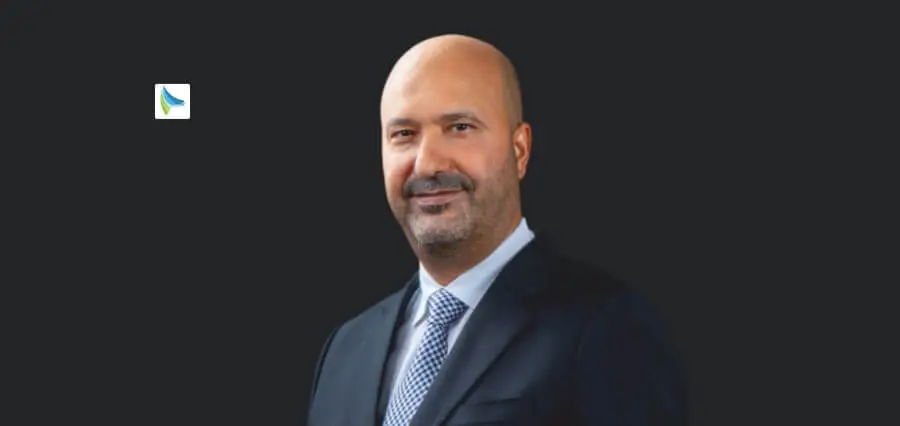
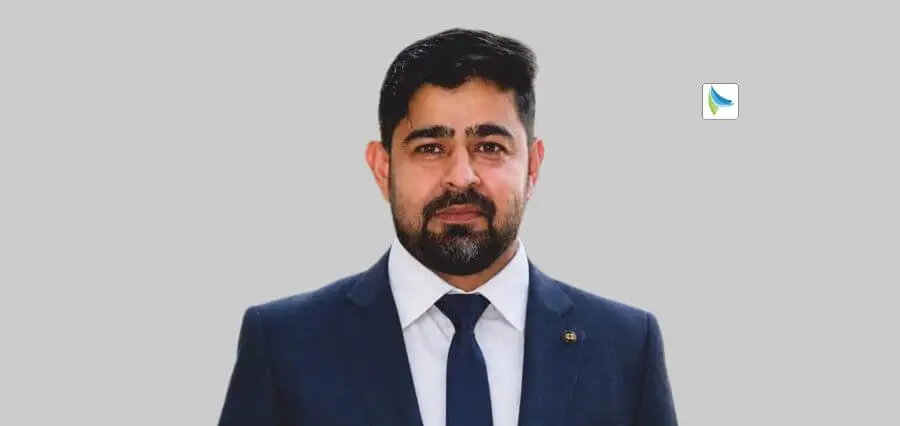
Atif A.R Alvi did not arrive at that conviction through a technology background. He came up through the insurance industry, spending years inside its machinery: finance, reinsurance, claims, and the daily grind of third-party administration. Today, he leads Whealth International LLC, where he is putting that hard-earned frustration to work rebuilding how healthcare administration functions across the region, one claim, one system, and one regulatory partnership at a time.
From Insurance Machinery to AI Conviction
What Alvi kept seeing throughout his early career was how much human effort was being poured into processes that had barely changed in decades. He reflects, “Claims moving slowly through manual hands. Capable people spend their days on repetitive checks instead of judgment. Members waiting, providers frustrated, and efficiency leaking out of the value chain.” That frustration is what eventually led him toward artificial intelligence, not as an add-on to existing systems but as something more fundamental. He became convinced that the industry would not be won by working harder inside processes that were already broken, but by rebuilding them from the ground up. He states, “I no longer see AI as an efficiency tool bolted onto old systems. I see it as the foundation for an entirely new kind of healthcare administration.” That shift in thinking, from patching old systems to designing new ones, has shaped every initiative he has led since.
Where AI Creates the Greatest Value
Alvi locates AI’s greatest potential precisely where care and cost intersect claims management. He explains, “This is where patients experience delay, where providers experience friction, and where systems bleed money to FWA, fraud, waste, and abuse.” For members, he sees near-instant approvals and cashless care; for providers, faster settlements with fewer disputes; and for the wider system, resources redirected toward genuine care rather than lost to inefficiency. He is equally focused on the region’s broader health challenge, pointing to early diagnostics and preventive care as areas where AI could meaningfully address a heavy regional burden of chronic disease. He notes, “If we can shift the system from treating illness to anticipating it, the impact on both human lives and national health economics will be significant.” That shift, in his view, is where the region’s healthcare systems stand to gain the most over the coming decade, well beyond the administrative efficiencies he has focused on first, and it reflects a broader ambition to move the entire industry from a reactive posture to a genuinely proactive one.
The FWA Engine: From Reactive to Real-Time
The achievement Alvi is most proud of is a technology-driven fraud, waste, and abuse engine paired with a fully automated claims workflow. He says, “For years, fraud detection in this industry has been reactive. You caught what you could, after the money had already gone. We flipped that.” The engine combines medical and administrative rule sets, machine learning, and coding intelligence to examine claims in real time before decisions are finalized, letting honest claims flow through instantly while surfacing questionable ones for scrutiny, all without slowing down legitimate care in the process. He affirms, “It moves us from chasing problems to staying ahead of them. Solving something the industry had lived with for decades, and watching it work in real operation, is the most rewarding thing I have built.” What makes it meaningful to him, he adds, is not simply the efficiency gain but the way it changes the underlying nature of the work itself.
Trust as the Foundation
Alvi treats trust as the precondition for everything else his systems attempt to do. He states, “If members and partners do not trust how a decision was made, the technology behind it is worth less, no matter how sophisticated.” Automation handles volume and speed, but clinical judgment and human oversight remain in the loop wherever a decision affects someone’s care, with every rule and outcome traceable and explainable by design rather than hidden inside a black box. He is direct about where the line sits between efficiency and patient wellbeing. He adds, “Efficiency can never come at the expense of the patient… when you hold to that, efficiency and trust stop competing and become each other’s strength.” Success, in his framing, is defined not by cost savings alone but by the fairness behind every decision the system makes.
The Real Barrier to AI Adoption
Asked what holds healthcare organizations back from digital transformation, Alvi points first to data. He notes, “AI is only as good as what it learns from, and in healthcare that data is fragmented, inconsistent, and sitting in silos across providers, insurers, and regulators.” The second barrier, in his view, is the legacy software much of the industry still runs on, built for a different era and never designed to move at modern speed or talk to newer tools. His prescription is not to force AI onto systems that cannot support it, but to lay the foundation first, simplifying data storage and adopting platforms built to work with AI from the outset. He affirms, “Get that foundation right, and everything you build on top of it finally starts to work as it should.”
Partnering With Regulators, Not Around Them
Alvi credits cross-functional collaboration, bringing together clinicians, engineers, and regulatory experts around a shared objective, as essential to making healthcare innovation actually work rather than stalling in silos, since innovation developed in isolation from any one of those perspectives tends to fail once it meets the real world. He points to direct collaboration with authorities including DOH, DHA, and Riayati on claims and compliance as proof of the approach. He says, “Our teams worked alongside regulators rather than around them. We brought in the authorities as partners in the development, so as to balance medical need with technological capability and legal safety.” That collaborative posture, he says, has consistently produced better outcomes than trying to build first and seek approval later.
The Quiet Revolution in Claims Intelligence
Of every area AI stands to transform over the next decade, Alvi believes operational efficiency and claims intelligence will change the most dramatically, precisely because it has been the most neglected. He explains, “The administrative backbone of healthcare that decides how quickly a patient is treated and whether a provider is paid has been running on outdated infrastructure for far too long.” As those systems modernize, he expects approvals to happen in moments, fraud to be stopped before money moves, and claims to flow through without the endless disputes that currently define the industry. Once those systems work seamlessly, he argues, patients should barely notice the administration at all. He notes, “When these systems work seamlessly and invisibly, doctors, insurers, and above all patients are freed to focus on care itself. That is the transformation I am most determined to see through.” Every other advance in diagnostics or personalized care, he suggests, will land better once this administrative layer stops getting in the way.
Solving Fragmentation
If Alvi could solve a single problem across healthcare, it would be the fragmentation of patient data. He says, “Today a member’s information, history, and coverage are scattered across providers, insurers, and administrators who barely have a common link. The patient pays the price for that disconnection in delays, repeated paperwork, and anxiety at the worst possible moments.” That fragmentation, in his assessment, sits underneath every other unsolved problem in the industry, since preventive care, accurate diagnostics, and instant decisions cannot be built on top of broken, disconnected data, which is why WHealth has invested heavily in a connected, integrated platform and tools that put information directly into members’ hands. Technology, he says, finally allows a patient’s healthcare journey to be treated as one continuous story rather than a series of disconnected transactions.
Leadership: Conviction Paired with Patience
Alvi is candid that technology is the easier half of what he does. He states, “Technology is the easy part, honestly. The hard part is people, and that is where leadership is tested.” The leadership quality he considers most important is conviction paired with patience: holding a clear, uncompromising vision while giving people time to adapt and believe in it, since change frightens people and a leader’s job is to make the future feel like an opportunity rather than a threat. He credits his background in finance with instilling a bias for execution over ideas, arguing that ambitious ideas are cheap while turning them into something that works day after day requires discipline and a willingness to get into the details. He closes with a note on humility. He affirms, “I do not need to be an expert in every room. I need to build the right rooms.”
A Vision for Invisible Healthcare
What continues to drive Alvi is a simple belief: healthcare administration should be invisible, working so well that no one thinks about it while the patient is cared for, and the provider is paid. He is candid that the industry remains far from that world, and that closing the gap is what keeps him going. He says, “Our name reflects a conviction that health is wealth, both for the individual and for the nations we serve.” His ambition for WHealth is not to be the loudest voice in the industry but the most trusted one, proving that a healthcare administrator can be genuinely modern, transparent, and people-first, and in doing so raising the standard for everyone else in the region. He affirms, “If our work helps build a healthcare ecosystem that is faster, fairer, and more human because of the technology behind it, then we will have done something that outlasts us. That is the legacy worth building toward. That is the Health WHealth Promise.”
From the frustrations of a career spent inside insurance’s slowest processes to a fraud-detection engine now reshaping how claims move through the system, Atif A.R Alvi has built WHealth around a conviction simple enough to state and demanding enough to define a career: that the best healthcare technology is the kind patients never have to think about at all. It is a philosophy that runs against the instinct to make innovation loud and visible, and one he has chosen to build toward regardless, one connected data platform and one regulatory partnership at a time.