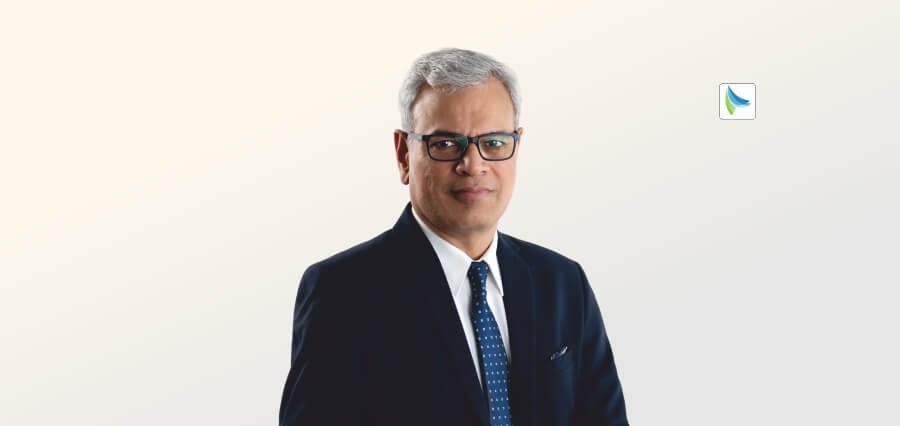



Most people who end up in construction arrive there through a predictable sequence: a degree, a graduate role, a series of progressively larger projects, and eventually a set of credentials that describe what they have built. Greg Fuller arrived through carpentry. As a young man, he was exceptionally good with his hands and wanted to pursue a trade apprenticeship. His parents had other plans. They insisted on university, and the closest available path to what he loved was a Bachelor of Building at the University of New South Wales. That degree did not redirect his instincts. It deepened them, introducing him to the technical dimensions of construction while planting the seed of something that would define the next four decades of his career: the idea that buildings could and should work with the environment rather than against it.
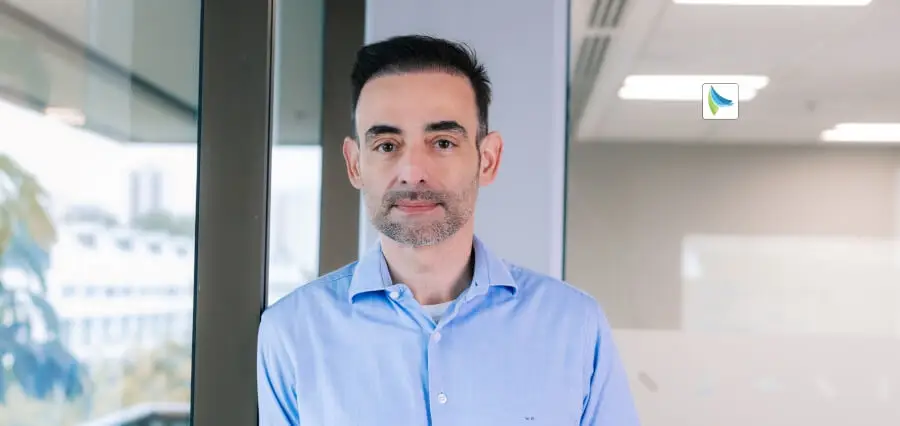
Today, Greg is the Founder of Sure Growth Management Services FZE, based in Dubai, where he has built a company around two parallel convictions that most of the industry has historically treated as separate concerns. The first is that rigorous, detailed cost management is the foundation of every successful construction project. The second is that environmental sustainability cannot be an afterthought bolted onto a development once the commercial decisions have been made. It must be woven into the financial architecture of a project from the beginning, tracked with the same precision as every other cost, and reported in real time so that the people making decisions can see the full picture of what they are choosing.
His answer to the gap between those two convictions is a patented and copyrighted system that manages carbon emissions live during construction, integrating environmental reporting directly into cost management so that developers, investors, and project teams can see not just where a project stands financially but where it stands in terms of its green commitments, at any point, with full accuracy.
Forty Years of Asking a Better Question
Greg’s career in construction spans more than four decades, and the thread that runs through all of it is not a sector or a specialism but a habit of mind: the constant search for a simpler, more accurate way of doing something that everyone else was doing with unnecessary complexity.
In the 1990s, working in the country of New South Wales, he began designing true solar passive houses at a time when sustainability in construction was not a mainstream conversation and was certainly not a commercial priority. The idea that a building’s relationship with the sun could replace or significantly reduce its energy consumption appealed to him not as an ideological position but as an engineering problem with an elegant solution. He pursued it with the same practical intelligence he had applied to carpentry years earlier: if there is a better way to achieve the same result, find it.
Parallel to that, he was developing what would eventually become his cost management system. The construction industry’s standard approach to cost monitoring was, in his assessment, fundamentally limited. The data was insufficient, the reporting was lagging, and the picture it gave project teams was always a version of where they had been rather than where they were. He wanted something that gave accurate, live positions at every stage of a build, based on enough underlying detail to actually mean something when decisions needed to be made.
He reflects, “I have always wanted to find easier ways of doing things to achieve the same goals and results, ways that are more accurate and reduce multiple inputs to determine the solutions. My whole career and experience in cost and project management have gone into my systems.”
Those two streams of thinking, environmental responsibility and precise cost management, spent decades developing in parallel before Greg found the way to bring them together into a single integrated system. That integration is now the commercial and philosophical core of Sure Growth Management Services.
The System That Counts 200,000 Data Points
The number that stops most people in their tracks when Greg describes his work is 200,000. That is approximately the number of data points his system manages in tracking the live cost and emissions position of a construction project. The industry standard cost management approach typically works with around 300-line items. The gap between those two figures is not inefficiency on the industry’s part. It is a deliberate design choice that Greg considers fundamentally inadequate for the level of precision that genuine sustainability reporting requires.
His system is built around an ERP platform developed specifically for construction management, paired with a project management application that captures data from site in real time, and a reporting layer that translates that data into live cost positions and green credit positions simultaneously. The result is that at any given moment during development, the project team can see exactly where they stand commercially and exactly where they stand environmentally, with enough precision to make genuinely informed decisions about both.
He notes, “This allows live reporting and accurate forecasting of projects at any stage for both cost and the environmental impact of the project, making simple following or bettering the legislated requirements, and therefore making the process more likely to be properly followed and not just given lip service.”
The word that matters there is precision. One of the persistent problems with sustainability compliance in construction is that the reporting is either too lagging to influence live decisions or too aggregated to reveal where the actual problems and opportunities lie. Greg’s system addresses both limitations by connecting the emissions data to the same granular cost structure that drives commercial decision-making. When a project team is considering a material substitution or a process change, they can see immediately what the cost impact is and what the emissions impact is, before they commit to a direction.
The system has been patented and copyrighted, and it represents the intellectual culmination of four decades of development work across both the quantity surveying and project management disciplines, a combination that is considerably rarer than the industry tends to acknowledge.
Why Sustainability Fails Without Economics
Greg’s critique of how sustainability is typically approached in construction is not that people do not care about the environment. It is that they are being asked to make environmental commitments without the commercial tools to understand what those commitments actually cost or save across the full life of a development.
His argument is structured around what he calls the three prongs of sustainability: social sustainability, economic sustainability, and environmental sustainability. All three must be managed together. Focusing on one at the expense of the others does not produce a more sustainable outcome. It produces a system that eventually collapses because one of its supporting elements has been neglected. A development that is environmentally excellent but economically unsustainable will not be replicated. A development that is commercially successful, but socially damaging will face regulatory and reputational consequences that undermine its long-term value.
The practical implication of that framework is that full life cycle costing is not optional. It must include not just the construction cost and the long-term operational cost but also the cost of not doing the right thing by the environment. That last element is rarely part of the commercial analysis that developers receive when they are being guided toward sustainable solutions. The marketing benefits of leading the market in sustainability, which Greg considers significant and undervalued, are equally rarely quantified in the upfront business case.
He states, “To be able to balance the economics and environmental issues, you need to have good, detailed cost management that entails managing the CO2 emissions at the same time, so that educated and reasoned business decisions can be made to balance the equation.”
This is where Greg’s background as a quantity surveyor becomes the differentiating factor. Unlike most sustainability consultants, who come from environmental science or engineering backgrounds, he approaches carbon management from the commercial side, with forty years of experience building the detailed cost frameworks that underpin every credible investment decision in construction. The environmental reporting is not a separate layer added to the financial model. It is part of the same financial model, built with the same rigour, and reported through the same system.
The Resilience That Came from Resistance
The greatest challenge Greg has faced across his career has not been technical. It has been cultural. For years, the management environments he worked within defaulted consistently to least-cost-now thinking, making decisions based on the upfront price of a material or a method without considering the real cost impact over the life of the project or the competitive and reputational benefits available through more sustainable choices.
That resistance was not malicious. It was the rational response of people operating within a system that measured success in short-term financial terms and had no tools to see the fuller picture. But it was also, in Greg’s assessment, a fundamental failure of vision that cost developers’ real money and cost the environment real damage, simultaneously and unnecessarily.
The decision to find Sure Growth Management Services was a direct response to that experience. Inside existing organizations, he could advocate for better approaches. As the founder of his own company, he could build the systems that made those better approaches possible and bring them directly to developers and investors who were willing to look at the full commercial picture rather than just the immediate one.
He affirms, “The greatest challenge was the fight with management to look at sustainable approaches as a real choice. This is why I started my own company, so that I can start to have a real impact in assisting investors to look sustainably in their developments.”
Dubai and the UAE have provided the environment he was looking for. The UAE’s 2050 net zero target creates both a regulatory framework and a commercial context in which the kind of integrated sustainability management that Greg has spent decades building finally has a clear and urgent purpose. He intends to be an active contributor to achieving that target, and his systems are positioned to be part of the management infrastructure through which it is delivered.
Education as the Foundation of Change
When Greg identifies the single change that would most significantly improve sustainability across the construction industry, he does not point to a technology or a regulation. He points out education.
The argument he makes is practical rather than philosophical. People who do not understand what is being asked of them and why will not commit to it genuinely. They will comply with the minimum required by legislation and give the rest of lip service, producing the appearance of sustainability without the substance. Only people who understand the reasoning behind sustainable practices, who can see the full cost and environmental picture rather than just the upfront price, will make the choices that actually move the needle.
He says, “Educate the people, and they will believe, and then they will willingly follow and strive for it. If people don’t understand what is needed and why, they won’t believe in it, and if they don’t believe in it, they will only give it a lip service.”
That conviction shapes how he approaches collaboration with clients, consultants, contractors, and project teams. Trust and alignment, in his experience, are built on credibility, and credibility requires both a relevant track record and a genuine ability to help others understand what they are being asked to consider. Listening comes first. Understanding the viewpoints of others and finding alternatives comes next. Experience provides the foundation on which all of it rests.
The Legacy Being Built
Greg’s vision for the years ahead is both precise and ambitious. He wants Sure Growth Management Services and the systems it has developed to become part of the management infrastructure through which the UAE achieves its 2050 targets, and ultimately, he wants those systems to be adopted globally as the standard for live cost and emissions management in construction.
The aspiration is not simply that more buildings become more sustainable. It is that the industry develops management tools to actually measure what is happening in real time, make informed decisions based on complete information, and report genuine outcomes rather than aspirational targets. His system, built on 200,000 data points where the industry typically uses 300, is designed to make that precision accessible rather than prohibitive.
He reflects, “I hope to simplify proper management of development with open and clear cost management systems available to all, and sustainable monitoring that is simple to achieve so that more refined and defined decisions are made towards the future of this planet and everything in it.”
The legacy he is building is threefold: economic sustainability, social sustainability, and environmental sustainability, managed together, measured with precision, and reported with the kind of honest transparency that allows the people making decisions to see the full picture of what their choices actually mean. In a construction industry that has historically measured success in short-term financial terms, that is a genuinely transformational ambition. And in the hands of someone who has spent four decades building the tools to make it possible, it is considerably more than an aspiration.