




There is a particular kind of leader who makes other people uncomfortable, not through arrogance or aggression, but through an unwavering drive to keep reinventing themselves at a pace most professionals find unsettling. They do not wait for disruption to arrive before responding to it. They walk toward it deliberately, study it carefully, and then figure out what to do with it before anyone around them has formed an opinion. The organizations those leaders work inside tend to look noticeably different a few years after they arrive, often without anyone being able to pinpoint exactly when the shift began.
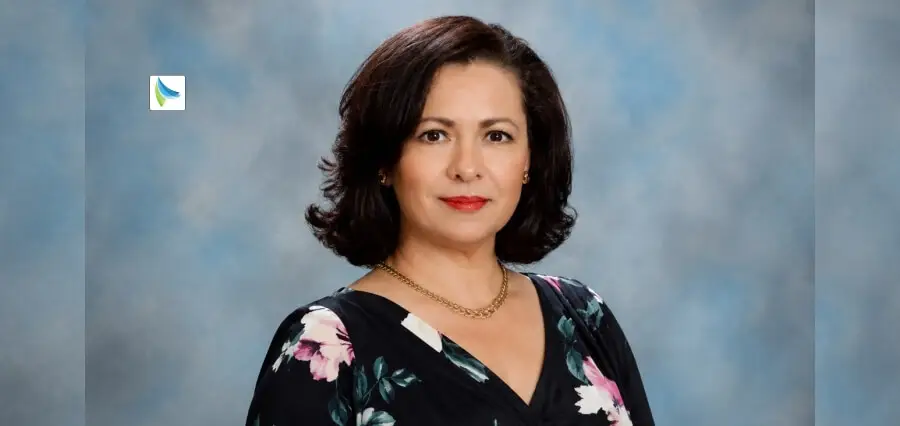
Larissa Murmann is one of those people. With more than sixteen years of experience across seven countries and three continents, spanning Human Resources, Digital Transformation, and Artificial Intelligence, she currently serves as Vice President, Global People Function for Commercial Operations at Werfen, a global medical diagnostics company, where she also holds the role of Global Change Lead Salesforce for one of the company’s most significant enterprise-wide transformations. She came to that position not by following a conventional HR career path but by deliberately expanding beyond it, driven by a single question that has guided most of her biggest professional decisions: How will this help me grow?
Three Moments That Shaped Her
When Larissa Murmann reflects on the experiences that shaped her leadership, she does not reach for a single defining crisis or breakthrough. She points to three cumulative shifts, each of which made her become a different version of herself before she was entirely ready.
The first was her international career itself. Living and working across 8 countries in Europe, North America, Latin America, and Asia taught her something about adaptability that cannot be learned in any other way. What becomes comfortable in one environment becomes uncomfortable again in the next, and the only productive response is to keep expanding your comfort zone. She says, “Every international move transformed me into a stronger and better leader.” That accumulation of discomfort, processed and absorbed across multiple countries and cultures, is what built up the adaptability and agility she carries today.
The second shift was a deliberate professional decision. Several years ago, when the intersection of HR and technology was still relatively uncharted in territory, Larissa Murmann chose to add Digital to her leadership role. It was not a trend-following move. It was a conviction that the future of people’s leadership would require fluency in both disciplines, not one or the other. She was following a genuinely held belief that the HR function would only remain relevant if the people leading it understood technology deeply enough to shape how it was deployed, not just react to what the technology teams delivered. That decision led her to pursue executive education with MIT and NUS as a Chief AI Officer, to deepen her involvement in enterprise-wide transformation programs, and eventually to arrive at the kind of hybrid leadership role that is now being described as the future of the function.
The third was finally moving herself to a truly hybrid HR and Technology role where her role in Human Resources is also leading the Change Management and Capability Building of the Salesforce roleout. This happened when she joined Werfen, a specialized diagnostics market leader. After 16 years at Unilever, where change was embedded in the culture, she is now operating in an organization with deep expertise, long employee tenure, and legacy systems, which required a fundamental rethink of how she leads transformation. She says, “There is no universal transformation methodology. Every organization has its own culture, history, pace, and relationships with change. You need to match it if you want to inspire transformation. My purpose is to be a frequency of transformation. Where I am present, people start transforming themselves, their teams, and their organization. That’s my superpower”
The Human Side of Transformation
As Larissa Murmann is leading the Salesforce transformation at Werfen, she realized; she had never led a transformation of this magnitude. The scale of the project forced her to go back to the drawing board and reinvent how she brings change. Technology Transformations rarely fail because of technology. They fail because of the human experience surrounding it. The implementation plan may be flawless. The system may perform exactly as specified. But if the people expected to use it do not understand why the change is happening, feel no ownership over the outcome, and experience the transition as something being done to them rather than with them, the project will underperform regardless of the technical quality of what was built.
To understand how people at Werfen experienced change, she connected with more than 200 people across the organization and used AI to analyze the conversations, identify behavioral patterns, and surface the concerns that would slow down an urgently needed change. One insight shaped the entire approach. She says, “Within Werfen, successful change is experienced more as an evolution than as a disruption. While the destination may be transformational, the journey needs to feel thoughtful, inclusive, and progressive.” That single finding changed how the transformation was communicated, sequenced, and supported from the inside.
She also used AI to build an internal change agent trained on the company’s own change methodology, giving leaders a practical tool for guiding their teams through uncertainty rather than leaving them to figure it out alone. For Larissa Murmann, that is what responsible AI integration looks like in practice: not replacing human judgment but giving people better instruments to exercise it.
When AI Becomes a Team Member
Larissa Murmann’s thinking of artificial intelligence is not around fear or hype. It is organized around a practical question she encourages every leader to sit with: “If AI could perform every task on my team tomorrow, who would I keep, and why?”
The question is not designed to make people anxious. It is designed to surface clarity about what human contribution means when repetitive analytical work gets absorbed by technology. Her answer is consistent: the people worth keeping are the ones who have cultivated a growth mindset, and the capacity to connect and build trust with others. Those capabilities are not diminishing in the age of AI. They are becoming the primary differentiator.
She says, “The future does not belong to humans or AI alone. It belongs to organizations that learn how to combine the strengths of both.” In practice, that means she no longer thinks of AI and digital technologies as tools. She thinks of them as team members, with onboarding requirements, defined responsibilities, and collaborative relationships with humans working alongside them. The shift in framing is small. The implications for how organizations are structured and led are substantial.
Building People Who Can Handle What Comes Next
Larissa Murmann’s approach to talent development starts with honest admission: nobody knows exactly what the future requires. Predicting which jobs will exist in ten years, or which technologies will reshape specific industries is not a reliable planning exercise. What can be developed is the mindset that prepares people for whatever comes, and that is where she focuses.
Carol Dweck’s research on growth mindset has shaped her thinking significantly, and she applies it practically. She looks for learning agility when building teams, and she tries to create environments where curiosity becomes contagious rather than something individuals pursue privately. She says, “The leaders of the future will not be defined by how much they know today, but by how quickly they can become a new version of themselves tomorrow.” She has colleagues who are teaching themselves to build AI agents and experiment with emerging technologies well before any formal organizational directive asks them to. That kind of intrinsic motivation, she argues, is what continuous innovation from the inside looks like.
She is equally direct about the implications for learning culture. In a world where AI is absorbing many of the routine activities that previous generations used to develop their early professional judgment, learning can no longer be an occasional event attached to a performance cycle. It has to become part of everyday work. Organizations that build that habit into how teams operate day to day will have a structural advantage over those that treat development as something that happens in a training room once a year.
What the Next Decade Demands
When Larissa Murmann looks ahead at what leadership will require over the next decade, she does not describe a fixed set of competencies so much as a disposition. Business cycles are accelerating, AI is evolving at a speed that makes most organizational planning feel provisional, and customer expectations continue to shift in ways that are difficult to predict with any precision. In that environment, the leaders who succeed will not necessarily be the ones with the deepest technical expertise. They will be the ones who can create environments where humans and technology continuously learn from one another and amplify each other’s strengths, and who can hold their organizations steady through stretches of genuine uncertainty without pretending clarity they do not have.
She says, “Leadership is no longer about having all the answers. It is about creating confidence for people to move forward when not every answer exists yet.” That framing matters because it repositions the leader’s role away from authority and toward something more useful in conditions of ongoing change: the ability to envision the future, inspire transformation within yourself and others and cultivate a growth mindset in your organization will be what will differentiate you.
Her advice to leaders preparing their organizations for what comes next is direct. Do not wait for the future to arrive before preparing your people for it. Invest in curiosity. Invest in learning. Invest in the courage to challenge systems that are working today but not tomorrow. Build cultures where experimentation and failing fast are encouraged and where technology is genuinely treated as a partner rather than a threat or a cost-saving exercise. And above all, remember that the fundamental responsibility of leadership has not changed. She says, “Leadership has always been about unlocking human potential. AI does not change that responsibility. It makes it even more important.”
“Machines learn, people grow. Who will you become next?” For Larissa Murmann, this is the question each leader needs to ask themselves every day. It is the organizing principle of an entire career, and the standard against which she measures every decision she makes about how she leads herself and others.