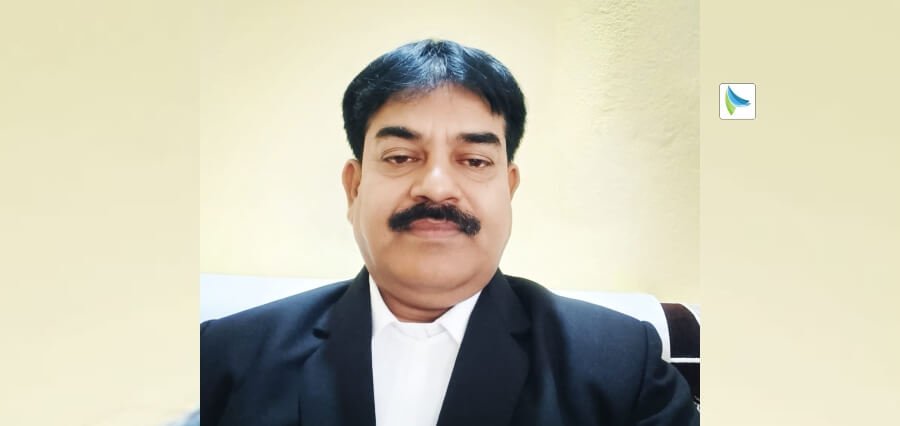
When we think of change in rural India, real, lasting, ground-level change, who comes to mind? Is it the policymaker seated in a distant office, or the grassroots leader who has walked the same soil, breathed the same air, and stood beside the very people he set out to serve? When we talk about the kind of leadership that does not seek the spotlight but quietly builds a better world anyway, we cannot overlook the remarkable journey of Baliram Laxmanrao Kendre, Secretary of Prayas Sevabhavi Sanstha, Latur, and a man whose 26-year career in the social sector has redefined what it means to serve with purpose.
From managing watershed development projects under one of India’s most celebrated rural movements to shaping the capacity of hundreds of NGOs across the country, Baliram Kendre has built a legacy not through recognition or reward, but through relentless, principled action. His story is one of a professional who chose the harder path, the rural road, and transformed every challenge along the way into an opportunity for growth, both for himself and for the communities he serves.
From a Young Professional to a Movement Builder
Baliram Kendre’s entry into the social sector was not accidental; it was earned. After completing his Master of Social Work (MSW), he was selected as a Young Professional under CAPART (Council for Advancement of Peoples Action and Rural Development), a body operating under India’s Ministry of Rural Development. The role placed him at the intersection of policy and grassroots action, requiring him to guide, assist, and support NGOs operating at the village level across the nation.
It was during this tenure that Baliram Kendre demonstrated a quality that would come to define his career: the ability to see opportunity where others see obstacles. In 2003, he became only the second Young Professional India to receive the YP Starter Package, a grant of five lakh rupees from CAPART to support his own NGO, Prayas. It was a recognition not just of his potential, but of the credibility he had already built within the sector.
That early foundation shaped everything that followed. Over the years, Baliram Kendre channelled his experience and networks to assist thousands of NGOs across India in capacity building and fund mobilisation, connecting them with diverse funding agencies and helping them grow. Meanwhile, Prayas, the organisation at the heart of his mission, went on to implement more than 100 projects focused on natural resource management and ecosystem restoration across Maharashtra, making it one of the most impactful NGOs in the region over its 26-year journey.
Among his defining experiences was an interaction that shaped the course of his career. During a Young Professionals Orientation programme at the IIPA campus in New Delhi, where participants were sharing their experiences, he asked Anna Hazare whether it would be possible to transform the villages of Gopinath Munde or Vilasrao Deshmukh into model villages. Anna Hazare replied that it would not be possible. That conversation marked the beginning of a meaningful professional relationship, eventually leading to Baliram’s deputation to work alongside Anna Hazare. He spent two years working closely with the renowned social reformer, an experience that reinforced his lifelong commitment to rural development. Reflecting on this journey, he believes that simply associating with influential personalities or occupying prestigious positions does not make social work meaningful. Instead, genuine impact comes from upholding social values, placing the nation before personal interests, and remaining committed to grassroots transformation. It is this philosophy that inspired the establishment of Prayas, an organisation founded with the core objective of putting the nation first and continuing to inspire future generations to serve society with integrity.
Riding the Wave of a Historic Movement
Among Baliram’s most defining professional moments is his association with the ideal village movement led by the eminent social reformer Anna Hazare, a campaign that sought to transform rural communities through self-reliance, cooperative development, and ecological responsibility. When the movement required dedicated leadership on the ground for watershed development projects, Baliram stepped forward.
Through coordinated efforts with partner NGOs across Maharashtra, he successfully implemented 30 watershed development projects as part of this initiative. It was a formidable logistical and social challenge, requiring him to navigate local politics, build trust with diverse communities, and deliver measurable outcomes in some of the state’s most underserved areas. That he succeeded across such a broad geographic and social canvas speaks to both his professional competence and his personal commitment to the communities he served.
This experience also sharpened his understanding of what rural transformation actually demands, not grand gestures, but sustained, people-centred effort. As he mentions, “It is 26 years of journey in the social, soil, and water resource sector to help the needy and deprived sections of the people in society from rural areas.” Those words carry the weight of a life genuinely lived in service.
Turning Barriers into Building Blocks
No career in the social sector unfolds without friction, and Baliram’s is no exception. Working directly with communities in operational project areas brings with it a complex web of social, political, and administrative challenges, from resistance to new land-use practices, to navigating bureaucratic bottlenecks to building consensus among stakeholders with often conflicting interests.
What sets Baliram Kendre apart is not that he avoided these challenges, but that he built a reliable method for overcoming them. He credits his administrative experience and, above all, community participation as the twin pillars of his problem-solving approach. By making the people themselves active partners in every project, he transformed potential opponents into collaborators and turned local knowledge into a resource rather than an obstacle.
This philosophy, that the community must be the solution, not just the beneficiary, has become a hallmark of Prayas’s project model, and it continues to deliver consistent results in some of Maharashtra’s most challenging terrains.
A Leadership Model Built on Youth, Knowledge, and Participation
Baliram’s approach to organisational leadership reflects the same values that have driven his fieldwork: invest in people, trust the process, and stay close to the ground. A core strategic priority at Prayas is the engagement of dynamic, positive-minded youth individuals who bring both formal academic training and a professional orientation to the organisation’s work.
According to him, it is precisely this infusion of young energy and fresh thinking that keeps Prayas innovative. When motivated young professionals engage with ongoing field challenges, they consistently generate new approaches and outcomes. Baliram Kendre has structured the organisation to benefit from this creative tension between experience and fresh perspective, building a culture where learning flows in both directions.
Prayas’s contribution to addressing water scarcity through natural resource management is a particularly significant dimension of this model. Community participation, Baliram Kendre asserts, is the quality control mechanism that ensures the work remains both relevant and effective. It is not a passive engagement, but an active one, where local voices shape project design, implementation, and evaluation from the outset.
A Vision for Leadership That Endures
For Baliram, the National Prestige Icon of the Year recognition holds deep personal significance, not because he sought it, but because it validates a way of working he has always believed in. Over 26 years, he has deliberately avoided publicity, choosing instead to focus on the quality and impact of the work itself. He states, “I have never undertaken any task for the sake of publicity. Had I done so, I might not have had the time to drive social change and successfully execute so many projects.” It is a quiet but powerful statement of professional integrity.
His advice to the next generation of leaders is equally grounded. He asserts with conviction: “Experience cannot be calculated, nor is there any standard method to measure it; therefore, work undertaken by gaining experience will undoubtedly give a significant boost to your future leadership.” It is the counsel of someone who has led not from theory, but from decades of lived practice.
Beyond his own organisation, Baliram carries a broader concern for the health of India’s democratic institutions. He believes that sustainable leadership, leadership built on grassroots engagement, accountability, and long-term vision, is what the country most urgently needs. He calls upon India’s youth to engage with politics alongside their professions rather than treating politics as an end in itself, arguing that justice for ordinary Indians will only come when capable, grounded leaders step into public life.
A Legacy Written in Soil and Service
Baliram Laxmanrao Kendre does not fit the conventional image of a celebrated leader. He has not built a corporate empire or graced the covers of business publications. What he has built is something more durable: a 26-year record of community transformation, ecological restoration, and institutional strengthening that has touched the lives of thousands of people across Maharashtra and beyond.
Through Prayas Sevabhavi Sanstha, he has created a model of social enterprise that puts community participation, youth empowerment, and ecological sustainability at the centre of everything it does. And through his career, he has demonstrated that the most meaningful leadership is often invisible in the moment — visible only in the outcomes it leaves behind.
In recognising Baliram Kendre as a National Prestige Icon of the Year, the award does not simply honour an individual. It honours a way of leading patiently, purposefully, and always in service of others.