



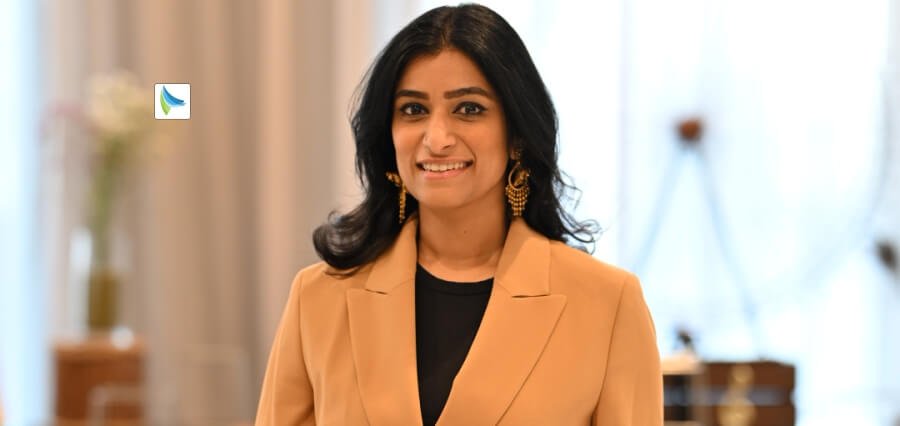
Bravery that is more subdued seldom looks for acclaim or credit. It is independent of external visibility or acceptance. Instead, it manifests itself in ordinary circumstances when choices gently deviate from the norm and challenge what is deemed normal. Deviating from the norm, investigating new ideas, and developing systems that the organization does not yet understand or recognize require courage. Vidyalakshmi Venkatraman, Head of People and Organizational Development at Sobha Realty, demonstrates this approach through consistent action, prioritizing intent over inertia and creation over comfort.
In an industry known for regular review cycles and procedural compliance, she has broadened the concept of human resources. Her work focuses on developing human systems that are precise, disciplined, and durable. This approach goes beyond standard HR procedures and shows a greater dedication to long-term staff development. Instead of being a short-term fix, the outcomes have structured foundations that are meant to endure and evolve over time.
Leading from Within
Vidya’s leadership philosophy is deeply rooted in an inside-out approach. She believes that leadership begins with personal behaviour and values, which in turn shape organizational culture. This philosophy is built on three key principles: communicating with radical clarity, asking without hesitation, and embracing self-development as a continuous way of life.
She describes this mindset as compulsive growth and is careful to distinguish it from ambition. In her view, ambition is focused on reaching a destination, while compulsive growth is part of a person’s identity. It is the difference between someone who wants to achieve a specific goal and someone who is constantly driven to improve and move forward.
According to Vidya, successful leaders often share three distinctive habits. They communicate their needs with clarity, ask for opportunities and support without hesitation, and view self-development as an ongoing mindset rather than a task to be completed. Rather than merely advocating this philosophy, Vidya consistently applies its principles in her daily leadership approach. She has formalized her thinking into what she calls the CAD model: Communicate, Ask, Develop. The framework now guides how she introduces change, develops talent, and strengthens culture across every level of the organization.
Building a Lasting Talent Culture
A defining moment in Vidya’s career came when she chose to move beyond a traditional HR role and establish a dedicated Talent and Leadership Development function at Sobha Realty. At the time, the organization did not have a standalone department focused on talent and leadership development. While employee development initiatives existed, they were often informal, inconsistent, and handled as a secondary responsibility within other functions. Vidya believed the company’s future growth required a more structured and intentional approach.
The journey was not without challenges. She faced resistance from different quarters, including HR teams that viewed the initiative as an overlap with their responsibilities, management leaders who questioned its value, and a culture that was confident in its existing practices.
Rather than confronting the resistance directly, Vidya focused on building alignment. Drawing on Sobha Realty’s core values of precision, quality, and long-term thinking, she encouraged stakeholders to consider whether the same standards were being applied to people development. She involved HR teams in shaping the vision, giving them ownership of the initiative instead of positioning it as a separate agenda. She also highlighted leadership development as a strategic business priority rather than an operational concern.
Her efforts gradually shifted the conversation from whether such a function was needed to how it could be successfully implemented. That change in mindset marked a significant breakthrough. Today, the Talent and Leadership Development department is an established part of Sobha Realty’s people strategy. It has evolved beyond an initiative or short-term project and has become a permanent institution designed to support the organization’s long-term growth and leadership pipeline.
Balancing Data and People
One of the key tensions in modern leadership is the conflict between data-driven strategy and a human-centered culture. Most organizations tend to prioritize one and compromise on the other. Vidya does not see them as separate choices.
She uses data to support people rather than choosing between data and people. Her approach focuses on both facts and context. She uses numbers to present information clearly and transparently. She then engages with people to understand the reasons behind the data instead of immediately prescribing solutions. This creates space for improvement, which she considers central to her philosophy of continuous development.
This approach also influences how she drives strategic change. She begins with the purpose behind the change and highlights the underlying challenges. She makes the data visible and allows people to understand the need for change on their own. She also ensures that individuals are engaged before any group communication. This helps people feel included in the process rather than directed by it.
High Performance Within Psychological Safety
Few ideas in organizational development are more misunderstood than the relationship between high performance and psychological safety. It is often framed as a trade-off. The belief is that pushing people too hard reduces safety, while prioritizing comfort leads to lower performance. Vidya rejects this view. She has focused on building environments where both can exist together. She challenges the assumptions behind each concept.
She explains that high performance without psychological safety may deliver short-term results but often leads to burnout and constant firefighting. In contrast, psychological safety without performance expectations can result in complacency and mediocrity. In her view, the objective is not to choose between the two but to recognize that sustainable high performance depends on a safe psychological environment.
At Sobha Realty, she has translated this thinking into practice. Teams are encouraged to take risks and view failure as part of learning and growth. Recognition systems are designed to value effort as well as outcomes, ensuring that people are not discouraged from attempting difficult work that may not succeed immediately.
She also introduces a simple but powerful practice in team meetings. Leaders are not allowed to have the final word. Every statement must be followed by a response from others in the room, whether in the form of a summary, question, challenge, or contribution. This approach shifts team dynamics. It encourages participation and helps individuals take ownership of the conversation rather than passively receiving direction.
Decentralized Leadership Through Ownership
Vidya’s most significant structural change has been the decentralization of leadership. She did not treat it as a philosophy. She implemented it as a measurable management practice. She introduced a requirement in every manager’s KPI to identify and develop at least two successors for every critical role in their team.
This approach created impact beyond succession planning. It made managers directly responsible for building future leaders within their own teams. This led to a shift in how managers viewed their roles and responsibilities.
As she explains, when managers develop someone capable of performing their role, they free themselves to focus on higher-value responsibilities that only they can perform. She frames this not as an added responsibility but as a form of professional freedom. At Sobha Realty, leadership development is no longer confined to HR processes or training schedules. It is embedded in everyday managerial conversations and performance expectations. It is part of how success is defined for every manager.
The Practice of Clear Responsibility
When decisions affect the lives of many people, a leader’s internal judgment becomes critical. Vidya’s approach is guided by the organization’s broader purpose and a deliberate discipline she has developed over time. This is the clear separation of issues from individuals.
She believes that acknowledging difficulty does not reduce capability. Instead, it reinforces awareness of the challenge while maintaining progress. She openly communicates when a task is difficult, which she sees as a responsible leadership practice rather than a limitation.
After decisions are made, she remains accessible and engaged. She ensures she is available to address questions and listen to concerns. She believes that leadership does not end with communication alone, but continues through presence and accountability after the message is delivered.
Advice for the Next Generation
Vidya does not offer emerging leaders easy comfort or generic advice. Instead, she challenges them to unlearn limiting assumptions and adopt a more disciplined mindset. She encourages them to stay open, let go of self-imposed barriers, and rely on merit, data, and the strength of professional relationships. She also emphasizes the importance of allowing people space to make mistakes. In her view, this freedom builds psychological safety, which in turn enables stronger organizational performance.
She is clear in her view on age and gender. She considers them to be simple demographics. She notes that experience comes with age and capability is not defined by gender. She believes neither should be seen as a limitation, and doing so reflects a failure of leadership.
She also encourages young leaders to embrace technology as a partner rather than a threat. She reminds them that every expert began at the starting point and no one has mastered skills from day one.