



Ask anyone who’s spent time around shipyards or industrial trade shows in Southeast Asia, and they’ll tell you the region’s capital goods market runs relationships more than catalogs. Equipment specs get you in the door. Trust is what closes the deal and keeps the customer coming back five years later. Few people understand that better than the man currently running Bühler’s Ship Loader and Unloader business across the region.
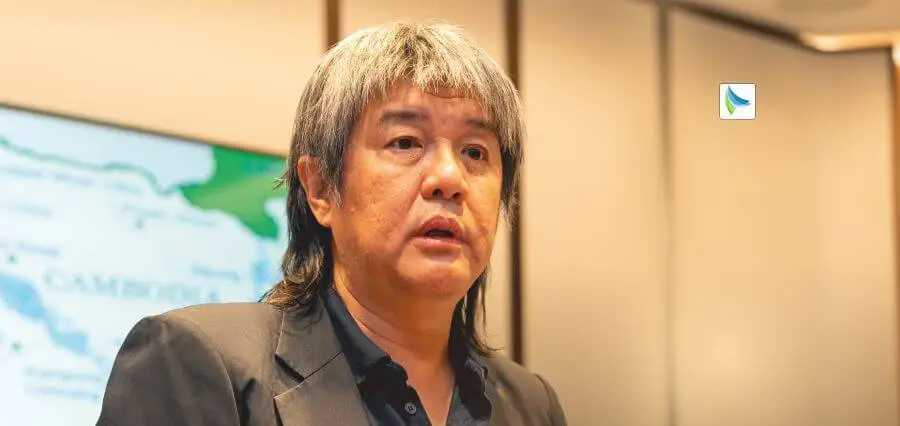
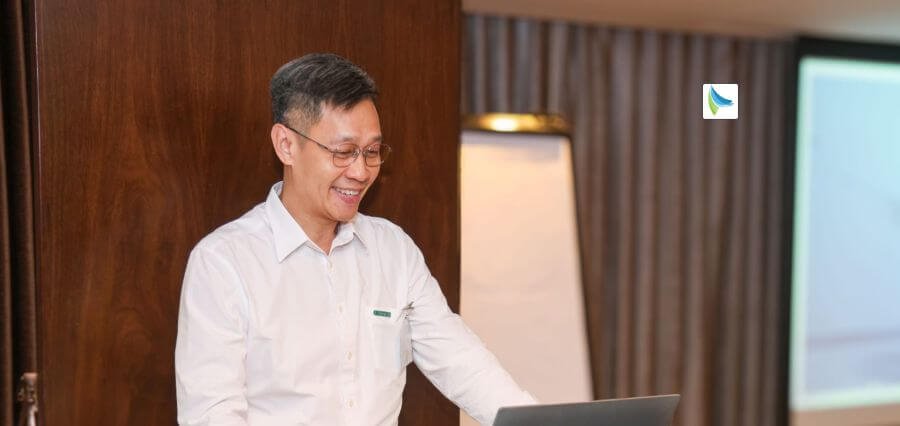
Jimmy Ong didn’t plan a career in international sales; he trained as a marine engineer and served as a commissioned officer in the Singapore Armed Forces, picking up lessons about leadership long before anyone handed him a title. That grounding followed him into capital goods sales, and eventually into his current role as International Sales Manager at Bühler Group, the Swiss industrial company founded back in 1860 and still headquartered in Uzwil. Across a career that’s taken him through product management and full commercial leadership roles across Asia Pacific, Ong has built something less flashy than a sales record: a habit of solving the actual problem in front of him, which tends to be why customers stick around.
From the Engine Room to the Boardroom
Ong is candid about where his leadership instincts come from, and it isn’t a business school case study. He says, “I learnt early that leadership is not merely about authority. It is about earning the trust of the people around you and inspiring them to achieve beyond what they believe is possible.” That conviction carried him out of marine engineering and into the world of capital goods sales across Asia Pacific, where he found something that genuinely held his interest: a mix of technical depth, relationship-building, and strategic thinking that most sales roles don’t require.
What he learned quickly is that the salespeople who last aren’t the ones with the slickest pitch. He explains, “The most effective sales professionals do not simply sell products. They solve real problems and build lasting partnerships.” That idea, sharpened across years of competitive selling in multiple industries and geographies, still shapes how he approaches every account he touches.
Milestones Earned, Not Handed
Ask Ong about his career highlights and he won’t point to a single big win. He points to a string of harder, less glamorous transitions. Moving from sales engineer into regional sales management taught him what deep customer focus and genuine product mastery look like in practice, and the recognition he earned for it still means something to him today, years on. As his responsibilities grew into product management and eventually general management, his thinking had to grow with them. He stopped looking at individual transactions and started looking at the business, weighing decisions in terms of long-term positioning rather than the next quarter’s numbers.
The chapter he calls most transformative came when he took on full commercial leadership of an organization and steered it through a period of ambitious growth, expanding its product range, opening new market channels, and turning what had been a narrow-focus distributor into a comprehensive solution provider with internationally recognized brand partnerships. No single sale, he says, taught him as much about leadership as that did, partly because nearly every part of it forced him to operate outside his comfort zone at once.
Strategy and Execution, Working in Lockstep
Plenty of leaders talk about balancing vision with execution. Ong treats the tension between the two as productive rather than something to resolve. He says, “Strategy without execution is fantasy; execution without strategy is exhaustion.” In his current role representing Bühler’s Ship Loader and Unloader business across Southeast Asia and Oceania, that balance gets tested constantly, not in theory but in live deals.
Closing a major capital equipment contract in his first year at Bühler wasn’t luck. It came out of disciplined market intelligence, consultative customer engagement, and tight coordination across engineering, technology, design, and finance teams that all had to move together for the deal to land at all.
Innovation Isn’t a Department
Ong pushes back gently on the idea that innovation belongs to a particular team or function. He says, “Innovation is not a department. It is a mindset that must be cultivated across every function of an organization.” In his experience, the breakthroughs that move the needle in industrial sales rarely come from a dramatic new piece of technology. More often, they come from rethinking how value gets delivered and how customer relationships get structured in the first place.
He’s seen that play out directly. Leading the shift from transactional product selling toward comprehensive solution and service partnerships changed the commercial results of a business he ran. More recently, he conceived and organized the first ever regional forum for ship loading and unloading customers in Southeast Asia, a platform that opened up genuine industry dialogue, deepened relationships with key stakeholders, and helped establish Bühler as a real thought leader in the region rather than just another equipment vendor.
Leading Responsibly in an Industry Under Scrutiny
The sectors Ong operates in, including bulk material handling, food processing technology, and capital equipment, face growing pressure to cut their environmental footprint and operate with real transparency. He doesn’t treat that as a compliance issue. He says, “Senior leaders have a genuine responsibility to champion sustainable practices, not merely as a corporate mandate, but as a sincere commitment to the communities and generations that follow us.”
Bühler’s own mission, built around sustainable innovation in food and mobility, lines up with how Ong already thinks. He’s proud to work for an organization that puts sustainability near the center of its long-term strategy rather than treating it as a side initiative, and he frames responsible leadership in fairly simple terms: make decisions today that the people around you, and the people who come after, will still respect decades from now.
What a Global Crisis Taught Him About Character
The hardest stretch of Ong’s career arrived during a period of acute global disruption that hit construction and industrial sectors almost overnight. Travel restrictions froze project pipelines, supply chains buckled, and the business he was leading came under real pressure within weeks. A lot of competitors chose to wait it out, hoping conditions would settle on their own. Ong didn’t.
He focused his team on what they could control: cost structure, customer relationships, and the strength of their opportunity pipeline. Through hard supplier renegotiations, sharper logistics management, and a deliberate push into new product areas that matched where customer priorities were shifting, the business didn’t just survive the period. It grew, expanding its customer base and deepening its product range at a time when most of the industry was simply trying to stay afloat. He says, “Adversity is the ultimate test of character. The measure of a leader is not whether storms are avoided. It is whether the people who depend on you are led through them with clarity, composure, and genuine care.”
Building People First
Ong’s approach to developing talent traces back to his military years, where he learned to lead under real pressure and build cohesion among people who didn’t always have much in common, whether in background, rank, or temperament. He says, “People are the only truly sustainable competitive advantage any organization possesses.” It’s a line he clearly means rather than reciting.
That belief has followed him through coaching dealer sales networks across Southeast Asia, building commercial teams inside growth businesses, and shaping regional strategy for global organizations. His method leans on placing capable people into stretch assignments, being honest with them when something doesn’t work, and genuinely celebrating their growth when it does, even when that growth eventually takes them somewhere outside his own team. Being selected for Bühler’s internal leadership development program only reinforced something he already believed: the best leaders never stop learning, and the legacy that lasts is the leaders they help develop in others.
Where the Industry Is Headed
Ong sees a handful of forces converging on the industrial and capital goods sectors over the next decade. Digitalization and Industry 4.0 will change how equipment is sold, operated, serviced, and optimized, with predictive maintenance and remote monitoring shifting from a nice to have into a baseline expectation. Companies that build digital fluency into their sales and service models now, he believes, will have a real edge later.
Southeast Asia and Oceania, in his view, are only going to grow in importance as centers of industrial and infrastructure development, rewarding leaders who can combine deep regional knowledge with global technical credibility. And after the disruptions of recent years, supply chain resilience has stopped being a back-office concern and become a strategic one, favoring partners with both engineering depth and execution capability close to where the customer operates.
The Achievement He’s Proudest Of
Of everything Ong has accomplished, the one he comes back to is the business transformation he led during an earlier period of full commercial leadership. The organization had a narrow focus and modest ambition when he took the role. Through clear vision, consistent execution, and a team that genuinely bought into the effort, it grew into a multi-dimensional solution provider with partnerships from internationally respected brands.
What makes that chapter matter most to him isn’t the commercial result, substantial as it was. It’s that the work demanded everything at once: strategic thinking, financial discipline, product innovation, people development, and sharp market intelligence, all running in parallel. It remains, in his words, the clearest picture of what good leadership can actually achieve given the right team and the right conditions.
The Legacy He’s Working Toward
Ong wants to be remembered as someone who opened doors, for the customers he served, the teams he built, and the organizations he helped transform along the way. He’d like people to say he brought both technical credibility and genuine warmth to every relationship he was part of, and that he made the people around him better at their jobs, not just more productive in the short term.
His advice to people earlier in their careers is straightforward and a little old-fashioned. He says, “Master your craft before you seek to lead. Credibility is earned through demonstrated competence, and people follow those they genuinely trust.” He’s also a strong believer in international exposure, the kind that challenges your assumptions and forces you to see markets through eyes other than your own, rather than the kind that simply adds a line to a CV. And above everything, he tells younger professionals to invest in people, reminding them that “the deals you close may define your career in the short term, but the leaders you develop will define your legacy for a generation.”
It’s a fitting note for someone whose own path started in an engine room and ended up shaping how an entire region thinks about industrial partnership. For Jimmy Ong, leadership has never really been about the title on the business card. It’s been about the trust he’s built, one relationship, one team, and one hard decision at a time, in places where shortcuts were tempting and rarely worth taking.