




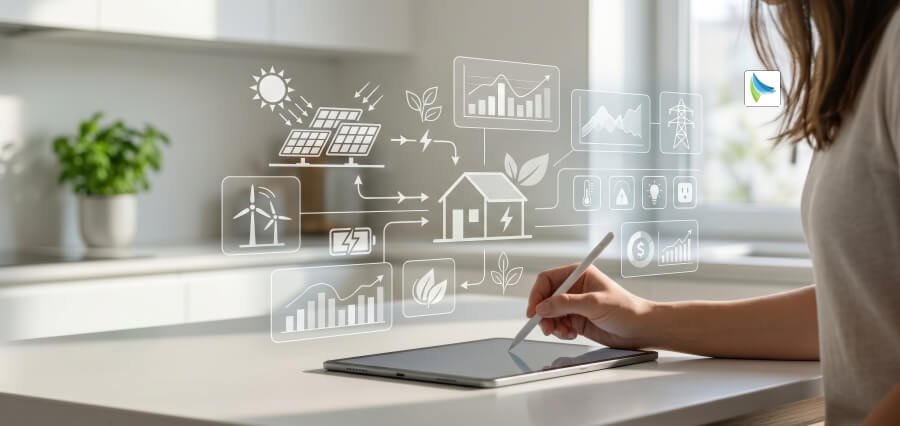
There have been shifts in the dynamics of energy in the world due to the efforts by organizations to become sustainable and resilient in their operations. The increases in energy costs, strict policies regarding the environment, and the need for reliable sources of energy have influenced companies, the government, and utilities in changing their perceptions of how energy can be produced, distributed, and consumed. Energy management systems that use static monitoring and reactive decision-making are no longer suitable in today’s business environment.
Here, the significance of an intelligent energy management system comes to light through the use of advanced technologies, automation, artificial intelligence, and digitally connected infrastructure. Smart energy systems allow companies to analyze consumption trends and inefficiencies, and based on this information, make decisions that optimize business performance and decrease their negative impact on the environment. With the help of collected data, companies are able to transition from reactionary to proactive energy management.
Intelligent Operations
It is a known fact that modern enterprises are able to produce huge amounts of operational data on a daily basis. The capability to transform this information into something useful has become one of the key features of effective energy management. With the help of intelligent analytics, sensing, and cloud computing technologies, enterprises have an opportunity to analyze energy data from their facilities, factories, office buildings, and utility infrastructure. This way, managers can see any abnormalities, anticipate the need for maintenance and optimize energy usage.
Incorporation of smart energy systems has considerably contributed to increasing efficiency without reducing productivity. The systems constantly assess the performance of the equipment, detect wasteful energy usage, and suggest remedial measures depending on historical data and current situations. The controls automatically regulate lighting, temperature, and even the operation of industrial equipment depending on occupancy, manufacturing process, and other factors. This ensures not only minimization of the wasted energy but also increases the lifespan of equipment, decreases the cost of maintenance, and allows constant operation.
Driving Sustainability
Sustainability has progressed from being a corporate social responsibility program into a strategically important business issue. The expectation from stakeholders is for organizations to show their commitment towards achieving their environmental goals without compromising on their efficiency. This can be achieved not just by minimizing their energy use but through an integration of technology, business strategy, and environmental management. Those who manage to integrate all three will be well-equipped to build their stakeholder confidence and competitive edge.
Moreover, the increased usage of renewable sources of energy, including solar and wind, has brought new chances and threats for energy management. The renewable source of energy is by nature variable, which means that the balance of supply and demand needs to be managed efficiently. Such a solution can be provided with the help of smart energy systems, which manage to coordinate the renewable source of energy, battery storage, and conventional sources of energy in an intelligent manner. The advanced system of forecasts evaluates weather, consumption, and grid conditions to allocate energy in the best possible way.
Future Readiness
The future of energy management will be characterized by flexibility, adaptability, and constant innovations. There are rapid developments in technology that have greatly changed how firms operate within energy networks by ensuring efficiency and improving the security of operations. Digital twins, predictive analytics, edge computing, and automation are some of the most important features of energy management systems. These features help organizations gain greater insights that allow them to create models of different scenarios for making better decisions before anything happens to the organization.
As industries embark on their journey to become digitally transformed, the role of smart energy solutions will be even more prominent. The interconnection of systems involving buildings, factories, charging stations for electric vehicles, and distributed energy resources will provide a highly adaptable and intelligent network of energy solutions. AI is going to play a bigger role as organizations are going to use its power to make automation decisions, optimize energy acquisition, and increase the efficiency of the whole system. Cybersecurity is another issue that will be of utmost importance in the future.
Conclusion
With the continued development of the energy industry, there is a need for firms to go beyond traditional ways and adopt intelligent methods that will help not only improve operations but also be environmentally friendly. Smart energy systems have become the key component of this development in the sense that they offer greater visibility, optimization of the use of resources, and help in making better decisions. They will therefore become an important enabler for the future.
Moving forward, companies that adopt innovations, digital systems, and adaptive energy management techniques will have a higher probability of handling the ever-changing demands and requirements of the marketplace. Intelligence systems and big data will allow organizations not only to become more efficient but also environmentally sustainable through energy use.