



Prime Highlights
- Amazon’s Leo satellite network crosses 394 satellites, nearing its 400-satellite milestone.
- The company plans to launch initial Leo internet service this year, positioning itself as a major challenger to Starlink.
Key Facts
- Amazon has completed 14 launches so far, part of a plan to deploy over 3,200 satellites for global coverage.
- The company holds roughly 100 rocket launches booked, worth at least $82 billion, to build out the full constellation.
Background
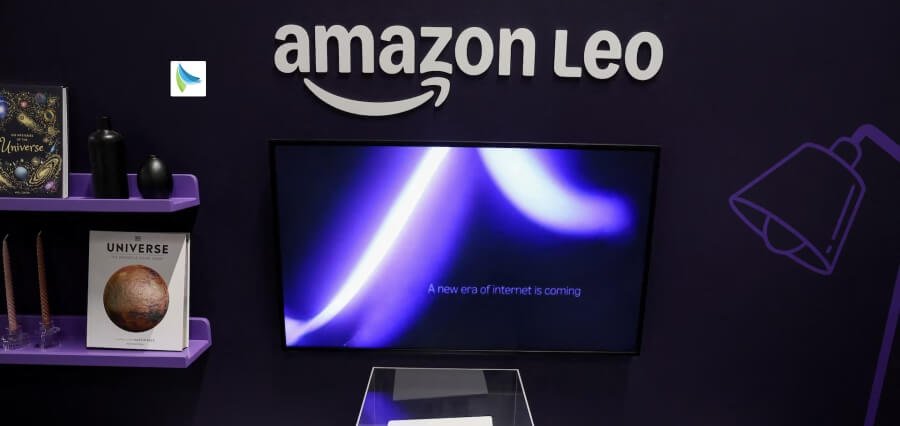
Amazon’s Leo satellite network has reached 394 satellites in orbit, putting the company on track to begin initial internet service later this year. The milestone follows the company’s latest launch, which carried 29 satellites into space aboard an Atlas V rocket from United Launch Alliance.
The mission marked Amazon’s 14th launch as part of a broader plan to deploy more than 3,200 satellites for global internet coverage. Amazon’s Leo chief, Chris Weber, said the company had completed enough launches to begin initial service this year, adding that future missions would focus on expanding coverage and capacity.
Weber did not specify which region would receive service first. Industry watchers expect coverage to begin near Earth’s polar regions and expand toward the equator as more satellites join the network.
Spaceflight analyst and Harvard astronomer Jonathan McDowell tracks 394 active satellites among the 398 launched by Amazon so far. The growing constellation positions Leo as an emerging competitor to SpaceX’s Starlink, which operates close to 10,000 satellites.
Amazon plans to offer internet access through Leo terminals ranging from laptop-sized devices to larger, more powerful units, serving consumers, governments and companies such as airlines.
The Atlas V rocket has become Amazon’s primary launch vehicle while two other planned rockets, Blue Origin’s New Glenn and ULA’s Vulcan, remain paused for safety reviews. Amazon’s chief executive, Dave Limp, expects New Glenn launches to resume by year end.
Amazon’s launch lineup also includes Arianespace’s Ariane 6 and SpaceX’s Falcon 9 rocket, which has played a key role in deploying Starlink satellites.