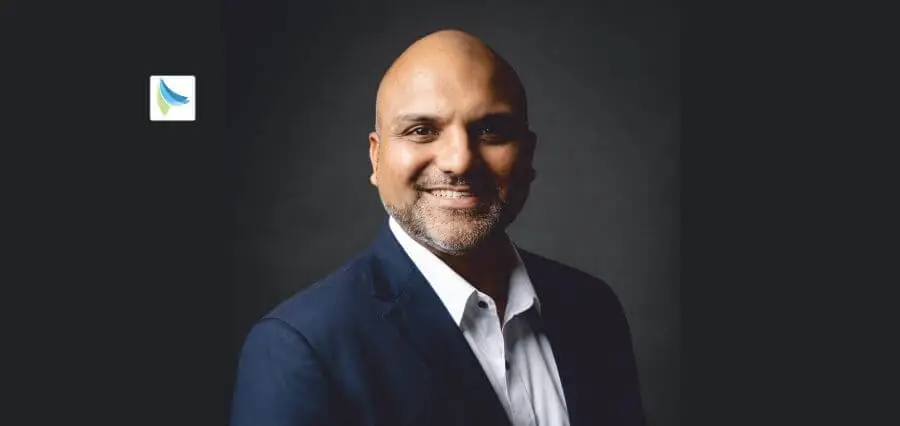




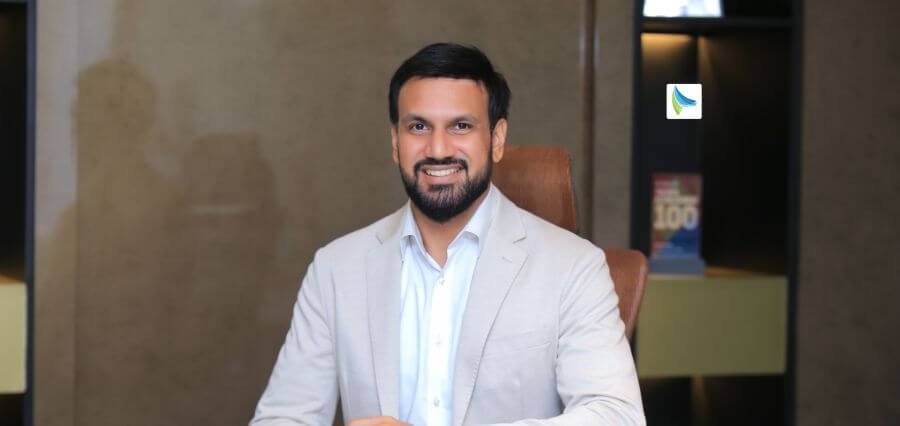
Growing up as the son of a ship captain who commanded commercial vessels with the same strict, almost military-like discipline he brought to running the family household, Mevan Peiris could have taken the easier path. The Ceyline Group his father built, one of the most diversified shipping conglomerates in Sri Lanka, represented a ready-made inheritance that most second-generation businesspeople would have embraced without question. Mevan Peiris chose differently.
He did not want things handed to him. He wanted to build something on his own terms, using the work ethic and grit instilled by a father whose principles left no room for entitlement. That choice, made deliberately and held to even when it would have been more convenient to abandon it, is the organizing thread of a career that has taken him from a petrol station in Australia to the Group Managing Director of Global Marine Group, a rapidly expanding maritime conglomerate with ten subsidiaries spanning Sri Lanka, Singapore, and Dubai.
His academic foundation was built across two continents. After completing his advanced level examinations at Royal College, one of Sri Lanka’s premier educational institutions, he moved to Australia, completed a bridging program in Economics and Accounting at Taylor’s College, and subsequently graduated from Monash University with a Bachelor of Business Management degree in 2009. He later became a member of the Chartered Institute of Logistics and Transport, adding professional credentials to an academic base that was already broader than most of his peers in the industry.
He mentions, “I wanted to forge my own path. I didn’t want things to be handed to me. I wanted to build and run a business completely on my own terms.”
Australia and the Education of an Entrepreneur
The most instructive education of Mevan’s early career happened outside the classroom. His first job in Australia was at a BP petrol station, a detail he shares without embarrassment and with genuine appreciation. His father, despite building considerable success in Sri Lanka, insisted he fend for himself abroad. The lesson embedded itself permanently: customer service is not a department. It is the foundation of every business relationship worth building and understanding it from the front line rather than the executive suite produces a quality of commercial instinct that no degree program replicates.
After completing his degree, he joined the Australian National Line as a trainee. From day one, his approach was unmistakable. Every opportunity that appeared, he applied for it. Every challenge that surfaced, he stepped toward rather than away from. Within five years, he was promoted three times, progressing from trainee to Cargo Superintendent, a trajectory that reflected not ambition for titles but a genuine and consistent drive to improve, learn, and contribute at a higher level with each passing year.
He asserts, “I wasn’t motivated by titles. What drove me was the desire to improve, learn, and make a difference.”
Coming Home and Earning Respect
In 2012,Mevan Peiris returned to Sri Lanka and joined what was then the family business. He could have entered at a senior level given his experience and his family name. Instead, he joined as a Business Development Manager, starting at the ground floor because that was how his family believed respect genuinely had to be earned, and it was a belief he shared completely. It was not a symbolic gesture designed for appearances. It was a genuine conviction that trust within an organization, particularly one where your surname already carries considerable weight, must be built through performance rather than inherited through association.
The turning point that defined his internal reputation came when he began volunteering to take over underperforming companies within the group. Colleagues and experienced advisors told him to avoid it. Getting involved with struggling businesses, they argued, was an unnecessary risk to his reputation and his longer-term future. Mevan Peiris was not interested in protecting his reputation through avoidance. He was interested in building it through demonstrable results. He took on underperforming entities in healthcare, freight forwarding, and logistics. Together with the teams involved, he turned those businesses around and returned them to growth.
Between 2018 and 2022, he grew the overall business fivefold, a trajectory that continued even through the disruption of COVID-19, which in his hands became not a crisis to be survived passively but a strategic opportunity to be recognized and seized before anyone else had framed it that way.
He highlights, “People often think opportunities are handed to you in a family business. I knew that if I wanted respect, I had to earn it through results.”
The Pandemic Strategy That Changed Everything
When COVID-19 hit global shipping, over 150,000 seafarers were stranded on vessels worldwide. Crew changes had become logistically impossible as borders closed, and lockdowns took hold simultaneously across every major maritime nation. For most operators, it was a problem to endure and wait. For Mevan Peiris , it was a problem to be solved, and Sri Lanka, which had contained the virus early, had precisely the infrastructure required to solve it at scale.
He mapped the country’s available assets with careful precision: Mattala Airport in the south, the port of Galle, surrounding tourist resorts that could be converted into quarantine facilities, all connected by a highway system at a safe distance from dense population centers. He packaged this as a comprehensive and detailed proposal to establish Sri Lanka as an international crew-change logistics hub and pitched it directly to the port chairman, General Daya Ratnayake, who formed a committee and took it to the President for approval.
The execution that followed was bold, multi-sectoral, and consequential. Chartered Sri Lankan Airlines flights transported crews safely. Empty hotels became secure quarantine centers that provided revenue to a hospitality sector facing collapse. Shipping agents, healthcare providers, and aviation businesses found new revenue streams at a moment when they desperately needed them. Critical foreign exchange entered an economy under severe strain.
He states, “We generated crucial foreign exchange for the country and built a secure, innovative solution that saved lives and kept global trade moving when the world needed it most.”
The Decision to Start Again
In 2023,Mevan Peiris made the most difficult decision of his career. He left the family business entirely. The decision was not driven by money or by a competing opportunity already waiting. It was driven by values. The environment he was working in had ceased to align with the vision and the principles he had spent his entire career building his professional identity around. Staying would have meant compromising both ways he was not prepared to accept.
In partnership with Global Feeders, an Abu Dhabi Ports Group company and one of the leading maritime organizations in the Middle East, he co-founded Global Marine Group. From that starting point in 2023, the company has grown to operate ten subsidiaries across different segments of the shipping industry, maintaining a remarkable 57% year-on-year growth trajectory and capturing approximately 8% of Sri Lanka’s total container throughput within just a few years of operation. Offices in Sri Lanka, Singapore, and Dubai anchor an organization that is built explicitly for regional and global scale rather than domestic consolidation.
The partnership with an Abu Dhabi Ports Group company is not incidental to the strategy. It reflects Mevan’s clear-eyed reading of where global trade is heading. The economic center of gravity is shifting from West to East. The Indian subcontinent is becoming a significant economic engine. Sri Lanka positioned directly adjacent to the vital East-West Sea routes, is uniquely placed as a primary distribution hub for that transformation. Global Marine Group is being built, deliberately and systematically, to be at the center of precisely that opportunity.
He reflects, “I took a leap of faith. That decision wasn’t driven by money. It was driven by values.”
Building Beyond the Business
The commercial ambition that drives Mevan Peiris is inseparable from a social purpose that gives it lasting meaning. He is not interested in growing a shipping empire for its own sake. He is interested in what growth creates for the people connected to it and the country that surrounds it.
In 2013, he founded the Young Shipping Professionals Association, YoungShip Sri Lanka, to develop the next generation of maritime leaders in a country whose geographic position makes the shipping industry central to its economic future. Creating high-value opportunities on international vessels for local seafarers, upgrading maritime education and training standards, and building the talent base that a globally integrated logistics sector requires are not peripheral concerns to his commercial strategy. They are its foundation and its long-term justification.
His recognition as one of Sri Lanka’s Top 100 Entrepreneurs in 2019 and one of the Top 45 CEOs Under 45 in 2026 reflects a career that has consistently created value well beyond the organization it immediately serves. Board appointments and committee leadership roles at the Ceylon Shipping Corporation, the Ceylon Association of Shipping Agents, and the Sri Lanka Association of Vessel Operators, alongside his Chairmanship of the Special Committee for Crew Change Logistics, demonstrate a leader who understands that industry-level impact requires sustained investment in the institutions and professional communities that the industry depends on to grow.
He affirms, “Moving cargo or scaling a corporate empire does not give me that fire. It’s about leveraging business success to build an ecosystem of opportunity.”
The Compass That Holds
Mevan’s leadership strengths are as practical as the industry he operates in. Communication sits at the top: the ability to adapt language, tone, and approach across a workforce that spans multiple generations and cultures, to keep everyone genuinely oriented around a shared vision, is not an interpersonal nicety in a business as internationally distributed as Global Marine Group. It is a core operational discipline without which the organization cannot function coherently at scale.
Quick decision-making is the second pillar. Shipping is a fast-moving environment where the cost of hesitation is measured in real commercial terms. His ability to pivot rapidly and trust his judgment has been a consistent competitive advantage across his career. He is honest about its shadow: that same urgency can become a liability in situations that require consensus, patience, and the willingness to let a complex scenario breathe before committing. The leadership maturity he continues to develop is knowing precisely which mode a given situation genuinely demands.
His wife, whom he describes as the lighthouse that keeps him close to shore and close to the values that define him, and his son Aaradh, who has become both his deepest purpose and the fuel behind his insatiable drive to build great things, are the personal infrastructure that makes the professional ambition sustainable over the long term.
He envisions, “Everything we build professionally is ultimately meant to elevate our personal lives. Balance comes down to knowing your true priorities and having a circle that fiercely supports your journey.”
Mevan Peiris chose independence over inheritance, values over comfort, and genuine impact over calculated safety at every significant decision point in a career that is still, by his own honest description, at its mid-stage. What he has built so far, across two continents, three offices, ten subsidiaries, a pandemic-era innovation that helped an entire nation, and a generation of maritime professionals he is actively developing, is the clearest possible evidence that the choices he made were exactly right.