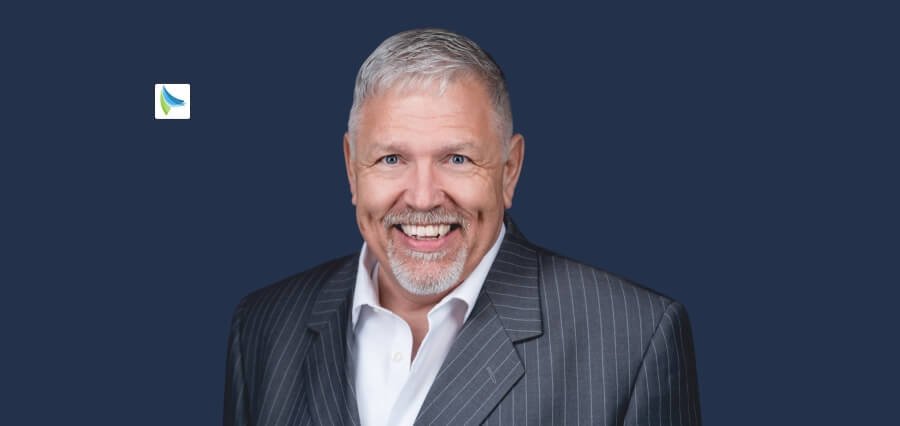





The gap between a great product and a profitable business is almost always a marketing problem. Not a quality problem. Not a pricing problem. A visibility problem, a communication problem, a fundamental gap between what an entrepreneur has built and their ability to put it consistently in front of the people who need it. Most small business owners discover this gap the hard way, after they have already invested everything into the product or service itself. Mark Newsome discovered it the same way, and instead of treating it as a setback, he spent the next three decades turning it into a career dedicated to closing that gap for every entrepreneur who came after him.
Growing up with his older brother and sister, raised by a hardworking single mother who spent her career teaching elementary school students, there was nothing that signaled a future entrepreneur was in the making. The school held his attention only briefly. He made the honor roll in ninth grade, found his enthusiasm for formal education fading through high school, graduated on time, enrolled in two colleges, dropped out of both, and entered his early twenties without a career direction or a plan. What he did have, without yet knowing it, was a willingness to pay attention to the right things when they appeared in front of him.
He mentions, “There was nothing very special happening during my early childhood years. But looking back, I wouldn’t change a thing. Because those hard-fought lessons stuck with me far more than the lessons I learned in books.”
The First Real Taste
The first hint of what Mark Newsome was actually built for came through a job at a health spa in his early twenties. His trainer taught the team a low-key approach to direct selling: go out into the public five days a week, hand out fourteen-day free membership passes, and earn a commission on whatever membership level the recipient joined at before the trial period expired.
It was unglamorous work. It required showing up daily, handling rejection without drama, and reading people well enough to know who was worth pursuing and who was not. Mark Newsome studied sales training books and discovered, to his surprise, that he was reasonably good at it. The mechanics of direct selling, of understanding human motivation, of connecting an offer to a person at the right moment and in the right way, were entering his understanding through the most practical classroom available: the real world.
He asserts, “Little did I know, this would be the catalyst for my future entrepreneurial adventure.”
The Radio Ad That Changed Everything
The pivot point arrived at the radio station. In his mid-twenties, Mark Newsome heard a no-money-down real estate expert promoting a free ninety-minute introductory workshop. He did not attend. But he started seeing the same figure on late-night cable television infomercials, promoting a home study course and five-thousand-dollar week-long wealth creation bootcamps.
What caught his attention was not the real estate content but the marketing architecture behind the entire operation. A free workshop on the front end, a high-ticket course on the back end, infomercials running on cheap late-night slots to reach the right audience at the right moment. He was watching a masterclass in direct response marketing without yet knowing what to call it.
What genuinely ignited his entrepreneurial fire was the discovery of the privately held note industry, where private institutions and individuals paid referral fees for finding and directing investment-grade residential or commercial real estate notes. He became a commissioned referral agent, studied the business with the same focus he had brought to the health spa floor years before, and began building expertise in a field that very few people understood.
He highlights, “I dove in and became a commissioned only referral agent. The institutional note buyers had toll free numbers so you could call Monday through Friday for free quotes. We pocketed the spread.”
The Workbook That Revealed the Real Problem
After becoming deeply versed in the privately held note industry, Mark Newsome self-published a 160-page workbook retailing at sixty-nine dollars. The hard cost to print was nineteen. The math looked good. The problem he had not anticipated arrived almost immediately.
Neither he nor the people buying his workbook knew how to market it. The sales strategies being taught in the industry at the time were outdated. The higher-priced training material was not meaningfully better.Mark Newsome grew frustrated and, out of what he describes as total desperation, began looking outside the industry for real answers.
What he found changed the direction of his career permanently. He was introduced to some of the most successful direct response marketers and legendary copywriters in the world. He studied their methods, absorbed their frameworks, and realized that the gap he had stumbled into was not just his personal problem. It was the defining challenge facing independently owned small businesses everywhere.
He states, “I learned more than enough of the proven fundamentals. I self-published my second workbook titled How to Make a Marketable Difference: 34 proven strategies and tactics. And if you’re not using them, you’re losing money.”
Seeing What Nobody Was Filling
The insight that shaped everything Mark Newsome built since is straightforward in retrospect and genuinely valuable in practice. The most sophisticated direct response of marketing expertise in the world was primarily available to large corporations. The independently owned small business owner, the local restaurant, the solo service provider, the everyday entrepreneur, was navigating an increasingly complex marketing landscape without adequate guidance.
Mark Newsome started publishing articles in business-related publications and was invited to annual industry events as a speaker. He built a self-hosted WordPress blog that has accumulated 4,555 posts, ninety-eight percent of them written by him and not by AI. He produced over 109 episodes of his podcast, This Is the Marketing Minute, available on Spotify. And he built Youcanmarketonlinenow, his platform for providing practical, affordable marketing strategies to the entrepreneurs who needed them most.
The philosophy behind the platform is as direct as the name: marketing capability should not be the exclusive domain of organizations with agency budgets. It should be accessible to any entrepreneur with the willingness to learn and apply what works.
He reflects, “Seeing all of these real world gaps, and the top marketers in the world primarily being available to big corporations, I began to realize what a huge, virtually untapped market the independently owned small business market is.”
When the Pandemic Dried Up Everything
When COVID-19 arrived,Mark Newsome did not pretend to have had it figured out from the start. The pandemic was genuinely disruptive, and he says so plainly. Public speaking opportunities have dried up. The conventional approaches he had relied upon needed immediate supplementation. Guest podcasting became an immediate and enduring alternative, one that remains among his most versatile marketing options today.
What the pandemic also accelerated was a shift he had been working toward for years. Traditional small business owners who had previously crossed their arms when social media marketing was mentioned suddenly had no choice. Their daily foot traffic had disappeared. Their cash flow was under severe pressure. The choice was adaptation or closure, and the ones who chose adaptation needed exactly the kind of practical, no-jargon guidance that Mark Newsome had been building his platform to provide.
He affirms, “Small business owners who previously rolled their eyes whenever social media marketing was mentioned were suddenly all in. We both chose to adapt and adjust. This is how I managed to successfully survive during the pandemic.”
The Hard Lessons That Actually Stuck
Mark’s most honest reflection on his career is about the coaches, mentors, and consultants whose advice he resisted before he eventually followed it. He invested in qualified guidance across his entrepreneurial journey and acknowledges with characteristic directness that he gave them more than his fair share of pushback when he could not immediately see the value of what they were saying.
He was not difficult for the sake of it. He genuinely had not yet appreciated that these people had already traveled the roads he was choosing. His ego got him into situations he could have avoided. He learned by stubbing his toe and hitting his head against the wall more times than was strictly necessary. And he is grateful for all of it, because those hard lessons embedded themselves in a way that borrowed wisdom never quite manages.
He reflects, “Those bitter, hard fought lessons have stuck with me far more than the lessons I learned in books. I wouldn’t change a thing.”
The Advice He Now Passes Forward
To aspiring leaders and entrepreneurs, Mark’s counsel is grounded in the same practical honesty that defines his entire story. Real leadership is working before it is a title. Track what is actually happening in your business. Learn when to act yourself and when to delegate. Develop the ability to know who to hire, who to let go, and who to trust. These capabilities take time and cannot be a shortcut.
Study books on leadership. Accept that your real teachers will be your lived experiences, including the ones that do not go the way you planned. Make your bad decisions early, learn from them quickly, and apply your common sense to every subsequent choice. And above all, invest in your own development before anything else. Until you develop yourself internally, it does not matter what opportunities appear externally.
He reminds, “Whatever you do, do not be tricked into believing that the success that fits your particular skills and desires is out of your reach. You have a unique set of gifts that no one else has. Don’t stop selling yourself short.”
Mark Newsome did not follow a blueprint. There was no mentor waiting at the right moment, no prestigious institution that set up his course, no single defining advantage that explained everything that followed. What he had was attention, persistence, the willingness to look outside the obvious sources for real answers, and the discipline to keep showing up long after the initial enthusiasm had been replaced by the harder, quieter work of building something real. From a health spa sales floor in his early twenties to 4,555 blog posts, two self-published workbooks, and a platform dedicated to giving small business owners the marketing tools they deserve, he made it the way most lasting things are made: one hard lesson at a time.