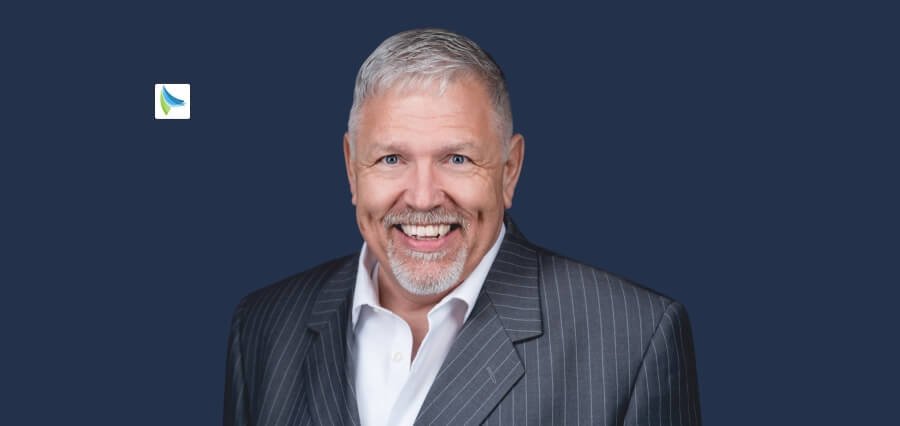




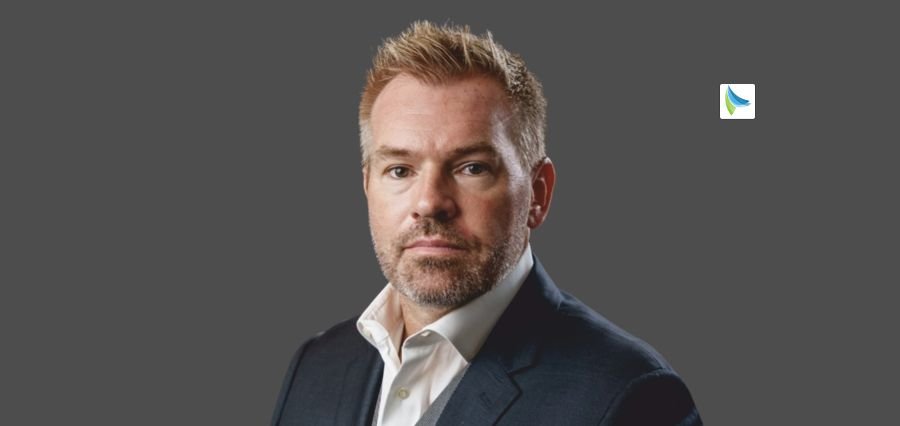
In today’s landscape, few founders remain solely focused on building individual companies. Jason Butcher, Founder of Orbit Capital, represents a different kind of founder, one who measures success not just by what he builds, but by what he enables.
He defines success through the creation of interconnected networks that allow founders, investors, and knowledge partners to expand opportunities over time.
Orbit Capital’s portfolio, spanning fintech, AI, infrastructure, and sustainability, reflects a core philosophy: the future belongs to those who build networks that connect ideas, people, and resources. This philosophy has been shaped over decades through experience, continuous learning, and a sustained commitment to growth and development.
A Leadership Philosophy Forged Through Experience
Butcher’s leadership journey began long before the language of “startups” and “ecosystems” became mainstream. His early entrepreneurial ventures in publishing, marketing, and technology laid the foundation for a mindset rooted in adaptability and resilience.
“I didn’t start with capital; I started with curiosity and necessity. That forces you to learn quickly, to listen, and to build with intention,” he reflects.
Over the years, navigating multiple industries and economic cycles taught him that leadership isn’t about control, it’s about clarity. Many of his most defining experiences came during periods of uncertainty: market downturns, shifting technologies, and complex partnerships.
Those moments force leaders to decide who they are. They either become reactive or intentional. This realization became foundational to his leadership philosophy: remain grounded in long-term vision while staying flexible in execution.
Turning Vision into Execution
At Orbit Capital, vision is not a static statement, it’s a living framework that informs decision-making at every level.
Butcher approaches strategy through what he describes as “aligned autonomy.” Rather than relying on rigid, top-down directives, teams are guided by clear principles and long-term objectives, then empowered to execute within those boundaries.
“The role of a founder is not to have all the answers; it’s to create an environment where the right answers can emerge consistently,” he says.
This is operationalized through structured communication, shared metrics, and a strong emphasis on context. Teams are not just told what to do, they understand why it matters. By ensuring every initiative ties back to Orbit Capital’s broader mission of supporting founder ecosystems, alignment becomes natural rather than forced.
A Culture Built on Trust, Ownership, and Curiosity
For Butcher, culture is not an abstract concept, it is a daily practice. From the outset, Orbit Capital has been built on three core principles: trust, ownership, and curiosity.
Trust enables speed. Ownership drives accountability. Curiosity fuels innovation.
“We hire people who think like founders, even if they’re not founders yet. That mindset changes everything,” he explains.
This culture is reinforced through leadership behavior. He maintains an open, collaborative approach, encouraging dialogue, challenging assumptions, and supporting calculated risk-taking. Importantly, failure is not penalized, it is analyzed.
Decision-Making in High-Stakes Environments
In high-growth environments, decision-making becomes both more frequent and more complex. Butcher’s approach balances data with intuition, a skill developed over decades.
“Data tells you where you are. Experience helps you understand where you’re going,” he says.
When facing uncertainty, he prioritizes speed with accountability. Decisions are made using the best available information, supported by mechanisms for rapid iteration. Rather than waiting for perfect clarity, which rarely exists, teams move forward, measure progress, and adjust accordingly.
This approach reduces paralysis while maintaining strategic direction, a critical advantage in fast-moving sectors like AI and fintech.
Empowering Teams Without Losing Alignment
Empowerment, in Butcher’s view, is not about decentralization for its own sake, it’s about enabling effective execution.
At Orbit Capital, teams are given clear mandates and measurable outcomes, alongside the autonomy to determine how those outcomes are achieved. He believes alignment doesn’t come from control, it comes from shared understanding.
This is reinforced through continuous feedback loops, transparent reporting, and a culture that encourages initiative. When individuals feel ownership over their work, performance improves naturally.
He views this sense of ownership as one of the most undervalued drivers of organizational success.
Balancing Innovation with Stability
Operating at the intersection of emerging technologies and established markets requires a careful balance between innovation and stability.
Butcher addresses this through a dual-track approach: maintaining strong operational foundations while actively exploring new opportunities.
Orbit Capital’s diversified portfolio allows for experimentation without compromising resilience. Investments in infrastructure and established sectors provide stability, while ventures in AI and emerging technologies drive growth.
This balance ensures that innovation is sustainable, not reactive.
Resilience in the Face of Challenges
Every founder faces setbacks. For Butcher, resilience is not just about persistence, it’s about perspective.
“Challenges are not interruptions; they’re part of the process.”
Throughout his career, he has navigated market shifts, regulatory complexities, and operational hurdles. Each experience reinforced the importance of staying focused on long-term objectives while adapting to immediate realities.
“Resilience is also about maintaining clarity under pressure. When things get difficult, that’s when leadership matters most. Your team looks to you for direction, not perfection,” he notes.
Communication as a Strategic Advantage
In growing organizations, communication often becomes a bottleneck. Butcher has made transparency a priority.
“Information silos slow everything down.”
At Orbit Capital, communication is both structured and open. Regular updates, accessible leadership, and clear documentation ensure alignment across teams.
During periods of transformation, such as entering new markets or launching new initiatives, this transparency becomes even more critical.
“People don’t resist change; they resist uncertainty. Communication reduces that uncertainty,” he explains.
Evolving as a Leader
As Orbit Capital has grown, so too has Butcher’s leadership style.
“In the early days, you’re involved in everything. Over time, you must learn to step back,” he says.
This transition, from operator to strategist, has been one of the most significant shifts in his career. It requires trust in the team, clarity in vision, and a willingness to let go of control.
A key lesson he emphasizes is the importance of self-awareness.
“Your leadership style needs to evolve as the organization evolves. What worked at one stage may not work at the next.”
Advice for the Next Generation of Founders
For aspiring founders, Butcher offers practical yet forward-looking advice.
He emphasizes building value rather than focusing solely on raising capital, noting that capital naturally follows clarity and strong execution. He also highlights the importance of relationships, describing a strong network as not just a resource, but a powerful multiplier.
He encourages long-term thinking, stressing that meaningful outcomes require time and should not be sacrificed for short-term gains. Finally, he underscores adaptability, the ability to learn, unlearn, and relearn, as one of the most important advantages in a rapidly changing world.
Looking Ahead: The Future of Founder Ecosystems
As the business landscape continues to evolve, Butcher believes the next wave of innovation will not come from isolated companies, but from interconnected ecosystems.
“The next generation of venture success will be driven by collective intelligence, where founders, investors, and communities collaborate in real time.”
Orbit Capital is positioned at the center of this shift, supporting more than 45 companies and initiatives globally. By combining capital, advisory, and community, the firm is building environments where innovation can thrive.
For Butcher, this is only the beginning. He sees a future where access to intelligence, capital, and opportunity becomes increasingly fluid, empowering founders to build more meaningful and impactful ventures.
A Founder Focused on Impact
Beyond business, Butcher’s work reflects a broader commitment to impact, including support for environmental initiatives, mental health programs, and community-driven projects.
“Success should be measured not just by what you build, but by what you enable,” he says.
This perspective underpins everything he does, from investments to mentorship to ecosystem development.
Conclusion
Jason Butcher represents a new kind of founder, one who looks beyond individual ventures to the systems that support them.
Through Orbit Capital, he is not just investing in companies, he is building a framework for sustained innovation, collaboration, and impact.
In an era defined by complexity and change, that vision may prove to be one of the most valuable assets of all.